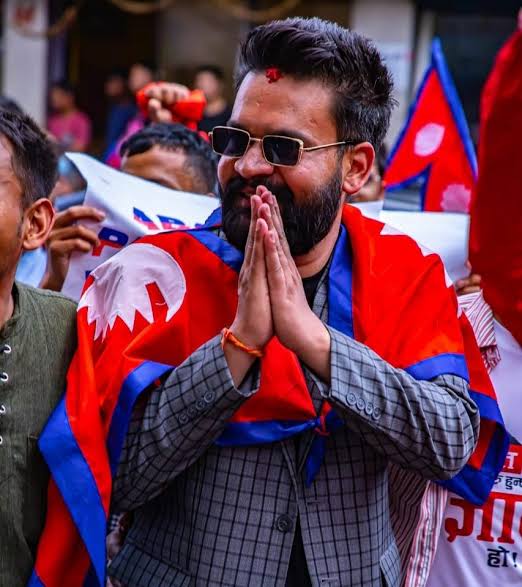
Kathmandu: The growing political influence of Balen Shah in has sparked debate across South Asia about how the country’s future leadership may reshape its relationships with neighboring India, global actors such as philanthropist George Soros-linked organizations, Christian evangelical networks, and regional power China . Analysts say Nepal’s evolving political landscape reflects both domestic frustration with traditional parties and the broader geopolitical competition playing out in the Himalayan region.
Shah, a civil engineer and former rapper who rose to prominence as mayor of Kathmandu , has emerged as a symbol of youth-driven politics and anti-establishment sentiment. His growing popularity and links with reformist political forces have led to intense discussion about Nepal’s strategic direction.
A New Political Wave in Nepal
The rise of Balen Shah is part of a broader political shift in Nepal, where younger voters are increasingly disillusioned with traditional parties such as the Nepal Congress and the Communist party of Nepal.
Political analyst Aditya Adhikari told Reuters :
“The emergence of leaders like Balen Shah shows a deep frustration among urban voters with the traditional political elite.”
Shah’s governance style in Kathmandu focused on urban reforms, anti-corruption drives, and stricter enforcement of city regulations, which earned him a strong following among young voters.
Implications for Nepal–India Relations
Nepal shares one of the most unique relationships in the region with India, including an open border and deep economic ties. Any shift in Nepal’s political leadership can have direct implications for bilateral relations.
According to a report by The Hindu, India remains Nepal’s largest trading partner and a major source of fuel and essential goods.
A South Asia expert at the observer research foundation said:
“No Nepali government can ignore India because the economic interdependence is simply too strong.”
However, analysts believe emerging leaders may try to pursue a more balanced foreign policy between India and China.
China’s Strategic Interests
Over the past decade, China has expanded its influence in Nepal through infrastructure investment and connectivity projects under the Belt and road initiative.
Projects such as cross-border highways, hydropower plants, and rail connectivity have increased Beijing’s presence in the Himalayan nation.
A report by notes Al Jazeera Notes:
“Nepal has increasingly become a geopolitical balancing ground between India and China.”
Some analysts suggest that any new political leadership in Kathmandu will have to carefully manage these competing influences.
Western NGOs and George Soros Debate
In political discussions across South Asia, some commentators have also pointed to the activities of international NGOs funded by organizations connected to George soros , particularly through the Open Society Foundations.
These organizations fund projects related to democracy promotion, civil society development, and human rights in several countries, including Nepal.
However, experts caution against exaggerating their political influence.
A statement cited by Reuters notes:
“Civil society funding does not necessarily translate into political control or influence.”
Evangelical Networks and Religious Concerns
Nepal’s religious landscape has also been part of the political debate. Once the world’s only Hindu kingdom, Nepal became a secular republic in 2008.
Since then, Christian organizations and missionary groups have expanded humanitarian and social service work in the country.
According to research by the Pew research centre, Christianity remains a small but growing minority in Nepal.
Some political groups claim evangelical networks are influencing social dynamics, while others say the growth is largely driven by grassroots religious conversions rather than organized foreign campaigns.
Balancing Global Pressures
For emerging political leaders like Balen Shah, the challenge will be balancing Nepal’s internal reform agenda with complex external pressures.
A South Asia analyst quoted by Al Jazeera summarized the dilemma:
“Nepal’s future leadership must navigate a delicate triangle—India, China, and the West—while responding to domestic demands for governance reform.”
The Road Ahead
While Shah’s political future is still evolving, his rise highlights a broader transformation in Nepali politics driven by youth activism, urban governance reforms, and demands for transparency.
Whether this movement will significantly alter Nepal’s foreign policy orientation remains uncertain, but observers agree that the Himalayan nation is entering a new phase of political experimentation.