Amid rapidly escalating conflict conditions in West Asia, the United States has successfully rescued the second crew member of a downed fighter jet inside Iran—an operation being described as one of the most daring military rescue missions in modern history.
What Happened? – The Incident Explained
- A U.S. F-15E Strike Eagle fighter jet was shot down by Iranian forces during heightened military tensions.
- Both crew members ejected safely, but only one was immediately recovered.
- The second airman remained stranded deep inside Iranian territory, triggering an urgent high-risk rescue mission.
According to reports, the downed aircraft incident significantly intensified the already volatile situation between the U.S. and Iran.
The Rescue Mission – 48 Hours of High-Risk Warfare
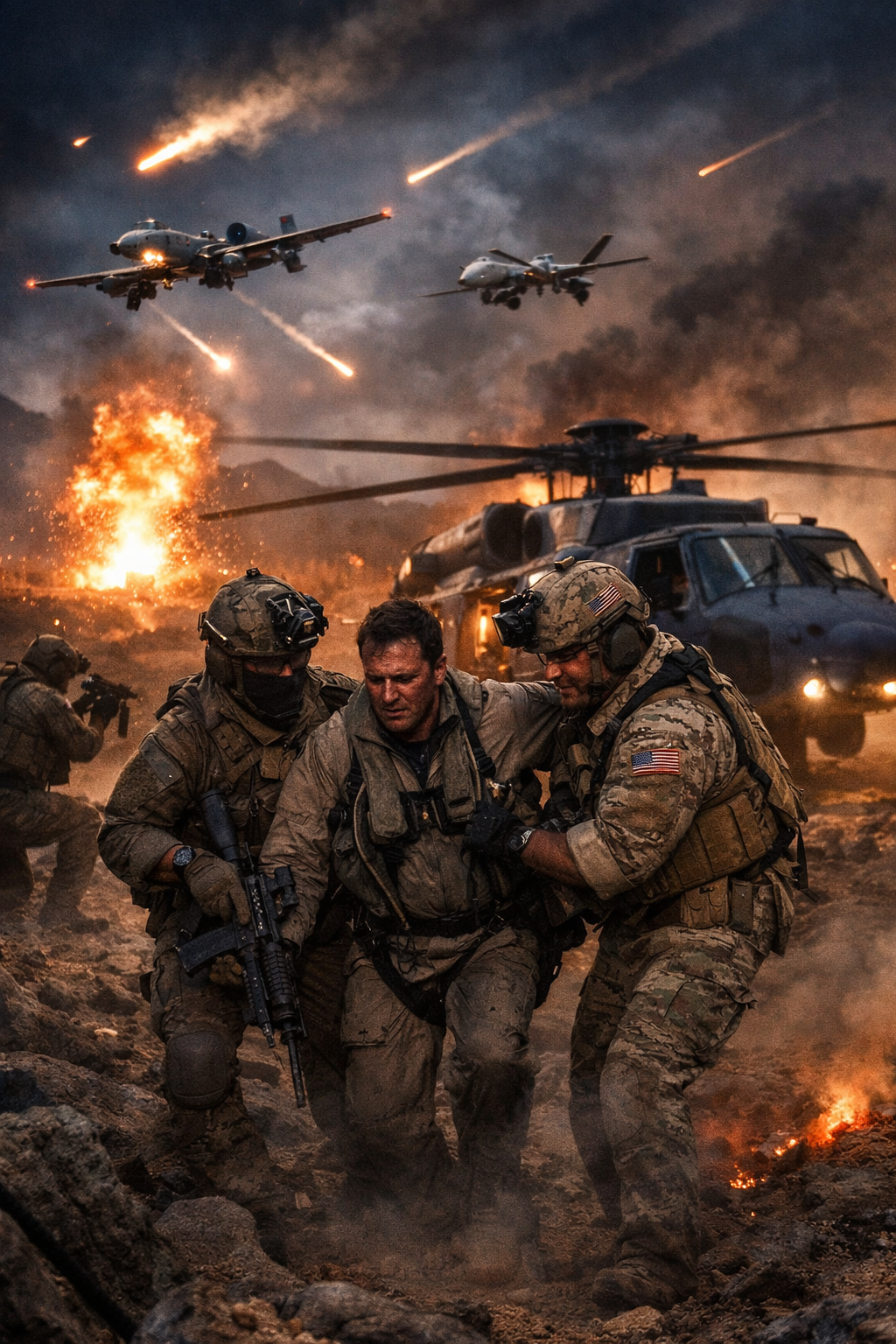
The U.S. military launched a massive combat search-and-rescue (CSAR) operation involving:
- Special Operations Forces
- Pararescue teams
- Helicopters (HH-60 Pave Hawk)
- Surveillance drones and fighter escorts
- Support aircraft including C-130 transport planes
The mission lasted nearly 48 hours, with the stranded airman reportedly hiding in mountainous terrain while evading Iranian patrols.
A senior official described the situation:
“Enemies were getting closer,” highlighting how narrowly the airman avoided capture.
Clashes During the Operation
- U.S. rescue teams reportedly came under direct fire from Iranian forces, including units linked to the Islamic Revolutionary Guard Corps (IRGC).
- Iran claimed it shot down or damaged multiple U.S. aircraft during the rescue attempt.
- U.S. officials, however, stated that both crew members were recovered safely, with no confirmed American casualties.
U.S. leadership called the mission:
“One of the most daring search and rescue operations in U.S. history.”
Covert Tactics and Intelligence Role
Reports indicate that the mission involved:
- CIA-led deception strategies to mislead Iranian defenses
- Real-time satellite and drone surveillance
- Electronic warfare to disrupt enemy tracking
These elements helped U.S. forces penetrate hostile territory and extract the stranded airman without a prolonged ground conflict.
Historical Context – U.S.–Iran Tensions
This incident is part of a long history of hostility between the United States and Iran:
- 1979 Iranian Revolution & Hostage Crisis – U.S.–Iran relations collapsed after American diplomats were held hostage in Tehran.
- Operation Eagle Claw (1980) – A failed U.S. rescue mission in Iran, often compared to the current operation.
- Ongoing proxy conflicts across Iraq, Syria, and the Gulf region.
- Recent weeks have seen direct military exchanges, marking one of the most dangerous escalations in decades.
Wider Impact – Region on Edge
- The conflict has now lasted several weeks, with rising casualties and military deployments.
- Oil markets have reacted sharply, raising global economic concerns.
- Regional powers, including Israel and Gulf nations, are closely monitoring or participating in developments.
Conflicting Narratives
United States:
- Mission successful
- Both airmen rescued
- No major losses
Iran:
- Claims multiple U.S. aircraft destroyed
- Portrays operation as a defensive success
👉 Independent verification of all claims remains limited.
Conclusion
The rescue of the second U.S. airman inside Iran marks a critical flashpoint in an already dangerous geopolitical conflict. While the mission demonstrates advanced military capability and coordination, it also underscores how close the region may be to a broader war.
As tensions continue to rise, this incident could become a defining moment in modern U.S.–Iran relations.