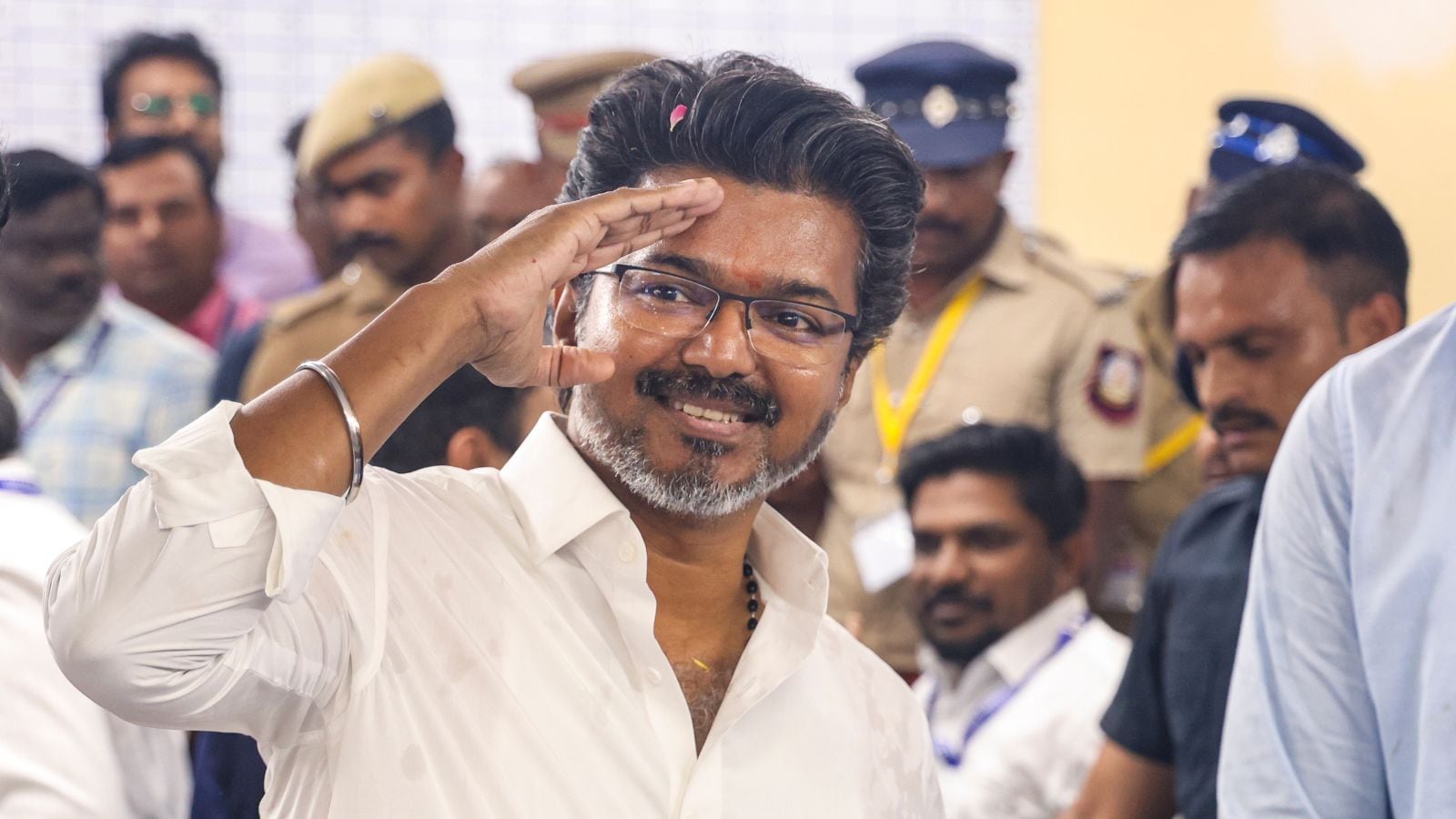
The 2026 Tamil Nadu Assembly election is emerging as one of the biggest political upheavals in the state’s history. -led (TVK) has delivered a sensational performance in its very first election, rapidly transforming into a major political force in Tamil Nadu.
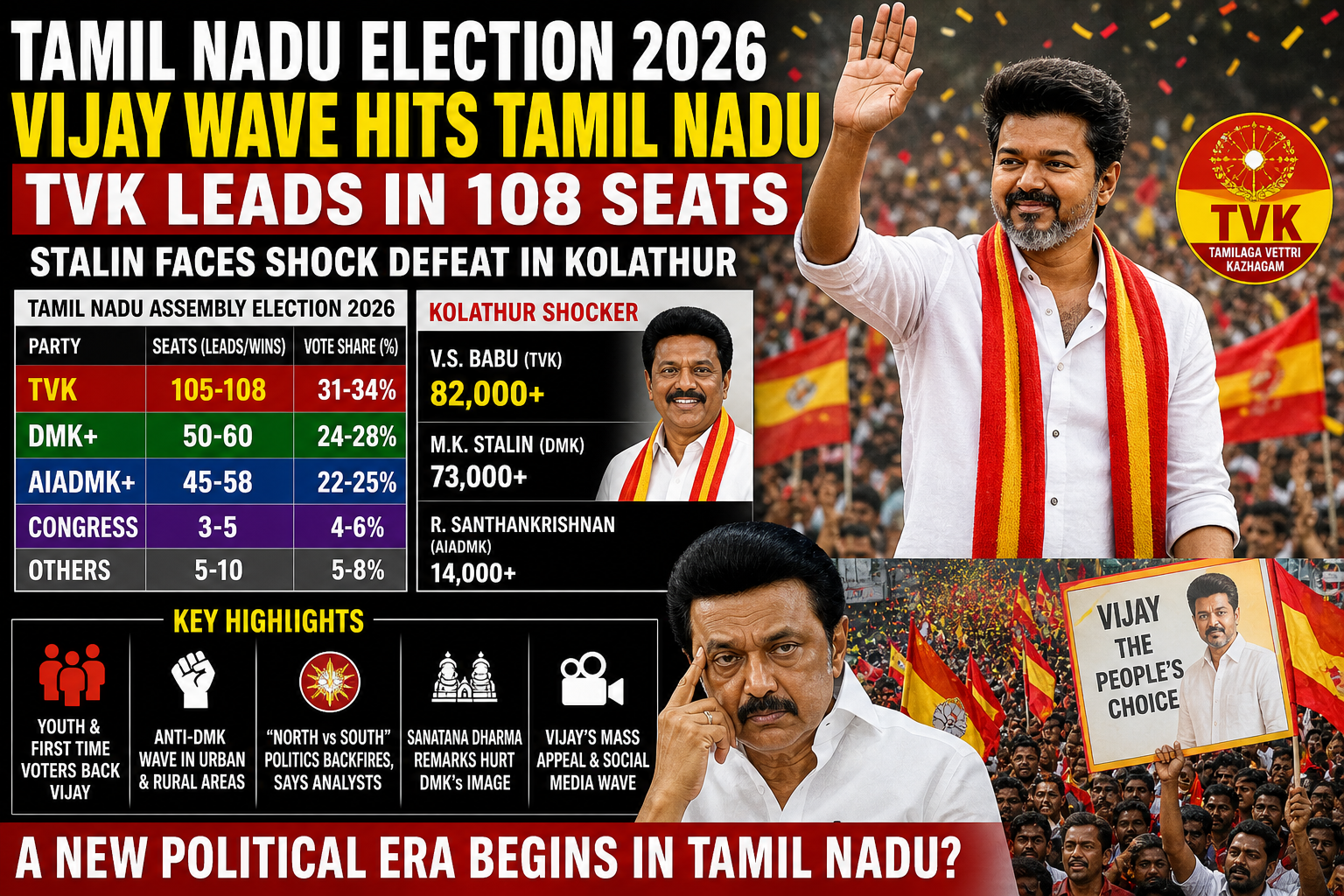
According to early Election Commission trends and multiple national media reports, TVK is leading in nearly 108 constituencies, putting the party within striking distance of power. The results indicate a dramatic shift away from the decades-old DMK–AIADMK political dominance.
Key Seat Trends (234-member Assembly)
| Party | Leads / Wins (Trend) | Estimated Vote Share |
|---|---|---|
| TVK | 105–108 | 31–34% |
| DMK+ | 50–60 | 24–28% |
| AIADMK+ | 45–58 | 22–25% |
| Congress | 3–5 | 4–6% |
| PMK / Others | 5–10 | 5–8% |
A majority in the Assembly requires 118 seats. Current trends suggest TVK may emerge as the single largest party and could even attempt to form the government.
TVK Breaks Into Traditional DMK Strongholds
-led (DMK) appears to have suffered major losses even in its traditional bastions.
TVK has reportedly performed strongly in:
- Chennai urban constituencies
- Northern Tamil Nadu
- Cauvery Delta belt
- Western Tamil Nadu
- Urban seats with large youth voter populations
Political observers are describing the result as “Tamil Nadu’s biggest political realignment since 1967.”
Shock Defeat for Stalin in Kolathur
One of the election’s biggest upsets came from Kolathur, Chief Minister Stalin’s own constituency.
TVK candidate defeated Stalin in a result that stunned Tamil Nadu politics.
Reported Vote Count Trends
| Candidate | Party | Votes |
|---|---|---|
| V.S. Babu | TVK | 82,000+ |
| M.K. Stalin | DMK | 73,000+ |
| R. Santhankrishnan | AIADMK | 14,000+ |
Victory margin: Around 9,000 votes.
National media described the result as one of the most dramatic defeats in DMK’s recent political history.
“Kolathur, once Stalin’s fortress, fell to Vijay’s TVK in one of Tamil Nadu’s biggest political upsets.”
Major Winners and Losers
Key TVK Winners
| Leader | Constituency | Party |
|---|---|---|
| V.S. Babu | Kolathur | TVK |
| Ravi M.S | Ponneri | TVK |
| T. Arunkumar | Thiruvallur | TVK |
| Prakasam R | Poonamallee | TVK |
Major Setbacks
| Leader | Result |
|---|---|
| M.K. Stalin | Lost in Kolathur |
| Udhayanidhi Stalin | Trailed in early rounds in Chepauk-Thiruvallikeni |
| Edappadi K. Palaniswami | AIADMK underperformed expectations |
Backlash Against “North vs South” Politics?
Several political analysts believe DMK’s campaign strategy may have backfired.
Major criticisms directed at the party included:
- “North vs South” political rhetoric
- Aggressive anti-Centre positioning
- Anti-Hindi campaigns
- Controversial remarks on Sanatan Dharma
In particular, comments made by regarding “Sanatan Dharma” became a major national controversy and were repeatedly used by rival parties during the campaign.
Analysts argue the election reflects a shift in voter priorities:
“Anti-Hindi rhetoric alone is no longer enough; jobs, development, and youth aspirations now matter more.”
Did TVK Gain Youth and Hindu Votes?
Political assessments suggest TVK benefited significantly from:
- Urban middle-class voters
- First-time voters
- Vijay’s massive cinema fan base
- Anti-DMK youth sentiment
A DMK spokesperson reportedly admitted:
“It’s a Gen-Z wave towards Vijay.”
However, analysts caution that claims regarding religious voting patterns are not supported by official demographic data.
Vijay’s Campaign: From Cinema Superstar to Political Challenger
ran a carefully crafted campaign focused on:
- Anti-corruption governance
- Youth-driven political change
- “New Tamil Nadu”
- Jobs and education
- Welfare-oriented development
TVK’s social media outreach, branded as the “Whistle Podu Wave,” became especially popular among younger voters and first-time electors.
Did AIADMK Votes Shift Towards TVK?
Political observers believe TVK may have consolidated:
- Traditional anti-DMK votes
- Sections of AIADMK supporters
- Younger undecided voters
- Voters fatigued by the decades-long DMK–AIADMK rivalry
This has led many analysts to conclude that Tamil Nadu’s long-standing two-party Dravidian political structure may be entering a new phase.
A New Chapter in Tamil Nadu Politics
| Period | Dominant Political Force |
|---|---|
| 1967–2021 | DMK / AIADMK |
| 2026 onward | TVK surge |
If Vijay succeeds in forming the government or becomes the principal opposition force, analysts say Tamil Nadu could witness a new era of cinema-driven political leadership similar to the rise of MGR and Jayalalithaa in earlier decades.
National Political Impact
TVK’s rise could have wider implications beyond Tamil Nadu:
- It may reshape South Indian regional politics.
- National parties may rethink their South India strategies.
- A new youth-centric political model could emerge.
Political analysts believe the election sends a strong message:
“Tamil Nadu voters are now prioritizing governance, jobs, and political alternatives over traditional identity rhetoric.”
Conclusion
TVK’s performance in its very first election is being described as one of the most remarkable political debuts in modern Indian state politics.
The 2026 Tamil Nadu election suggests that is no longer just a cinema superstar — he is rapidly emerging as a central force in Tamil Nadu’s power politics.