Full Historical Background, ASI Excavation Findings, and Landmark Judicial Verdict
Why the Bhojshala Dispute Is Historically Significant
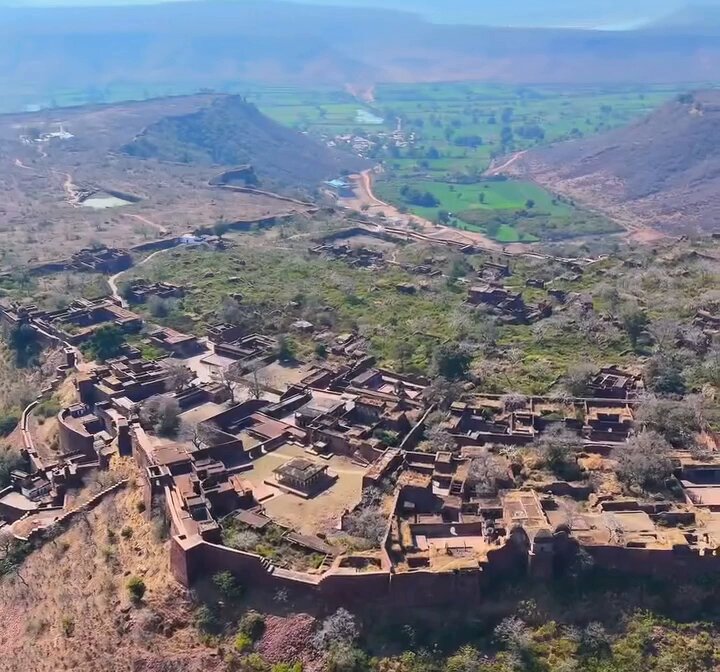
The Bhojshala–Kamal Maula complex in Dhar, Madhya Pradesh, is one of India’s oldest and most sensitive heritage-religious disputes. Hindu organisations have long maintained that the site was originally a temple dedicated to Goddess Vagdevi (Saraswati), established by King Bhoja of the Paramara dynasty, while Muslim groups regard it as the historic Kamal Maula Mosque.
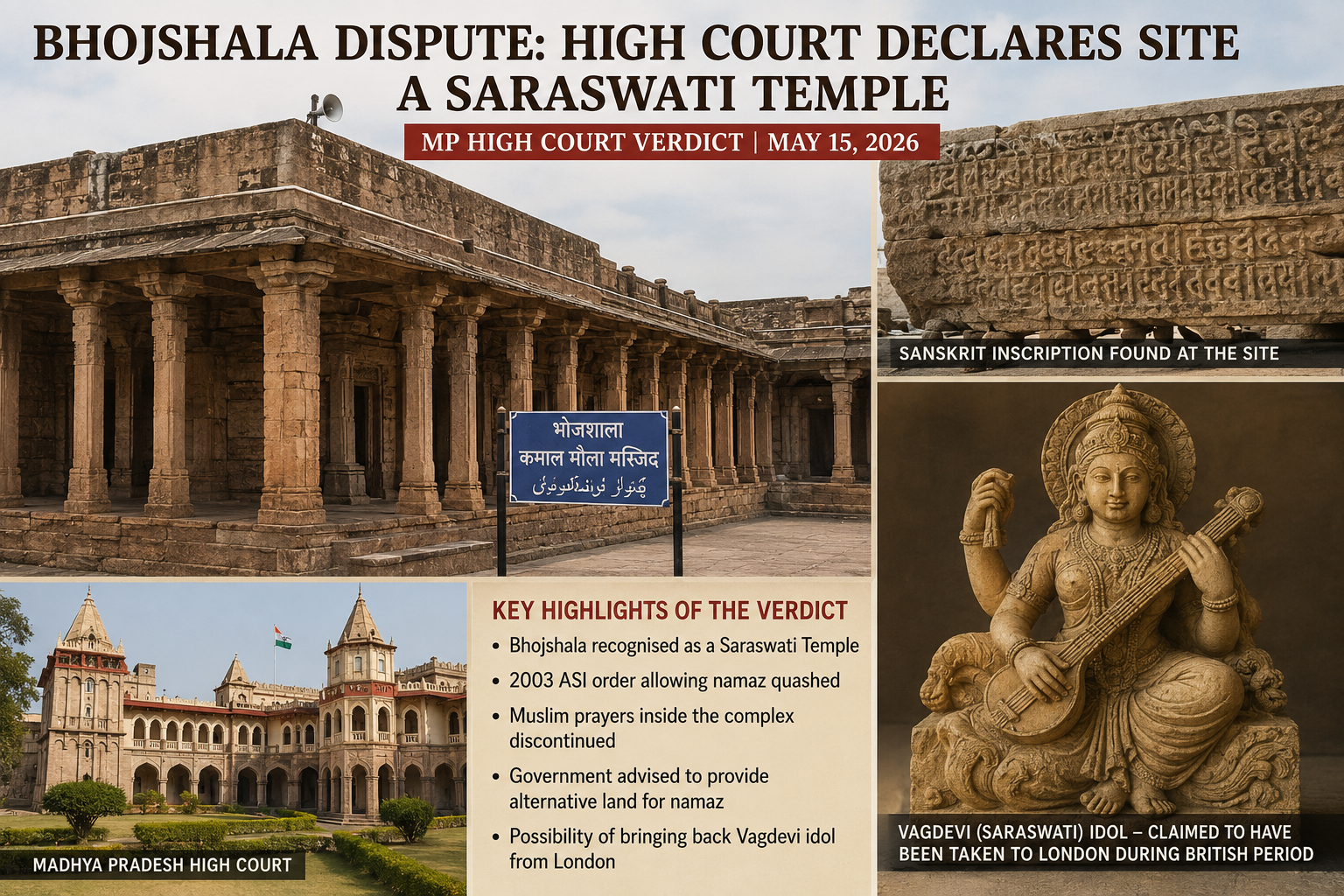
On May 15, 2026, the Madhya Pradesh High Court delivered a landmark judgment that dramatically altered the legal and historical trajectory of the dispute.
Origins of Bhojshala: The Era of Raja Bhoja (1000–1055 CE)
Who Was Raja Bhoja?
Raja Bhoja was one of medieval India’s most celebrated rulers and scholars. During his reign between 1000 and 1055 CE, Dhar emerged as a major centre of Sanskrit learning, philosophy, and classical education.
Historical records and literary traditions describe Bhojshala as:
- A renowned Sanskrit university or scholastic centre
- A temple dedicated to Goddess Saraswati, also known as Vagdevi
- A gathering place for scholars, poets, and philosophers
Several inscriptions and sculptural remains discovered later were cited as evidence supporting these claims.
Islamic Rule and the Emergence of Kamal Maula Mosque
Between the 13th and 14th centuries, Islamic rule expanded into the Malwa region. According to archaeological studies and historical interpretations:
- Portions of the earlier temple structure were reused
- Temple pillars and sculptural fragments were incorporated into later construction
- The site gradually came to be associated with the Sufi saint Kamal Maula
The structure thereafter became known as the Kamal Maula Mosque complex.
British-Era Documentation and Archaeological Interest
The 1902–03 ASI Survey
During British rule, The Archaeological survey of India the conducted one of the earliest formal surveys of the complex.
The survey reportedly documented:
- Sanskrit inscriptions
- Temple-style pillars
- Hindu and Jain iconography
- Sculptural fragments depicting deities
These records later became important evidence in court proceedings.
The 1935 Dhar State “Elan”
Following communal tensions in 1935, the princely administration of Dhar issued an “Elan” (official proclamation) regulating religious use of the site.
The proclamation reportedly allowed:
- Friday namaz by Muslims
- Controlled public access on other days
- Maintenance of communal peace
Muslim litigants later relied heavily on this proclamation to establish continuity of worship.
The Controversial ASI Order of 2003
April 7, 2003
The ASI introduced a controversial arrangement governing access to the complex:
| Day | Permitted Activity |
|---|---|
| Tuesday | Hindu worship |
| Friday | Muslim namaz |
| Other days | Public visitation |
This administrative formula remained in place for years but became the focal point of intensified legal disputes.
The 2024 Scientific ASI Survey
High Court Order – March 11, 2024
The Madhya Pradesh high court ordered the ASI to conduct a comprehensive scientific survey to determine the original nature of the disputed structure.
The 98-Day Archaeological Investigation
The ASI team carried out an extensive 98-day investigation employing modern archaeological methods.
Technologies and Methods Used
1. Ground Penetrating Radar (GPR)
Used to identify buried structural remains beneath the complex.
2. Structural Analysis
Architectural examination of pillars, foundations, and load-bearing structures.
3. Epigraphic Studies
Detailed study of Sanskrit inscriptions and stone engravings.
4. Excavation and Chamber Inspection
Sealed sections and underground chambers were examined.
5. Photogrammetry and 3D Mapping
Digital reconstruction and scientific documentation of the monument.
Findings of the 2,100-Page ASI Report
Scale of the Report
The ASI reportedly submitted a report exceeding 2,100 pages, including:
- Architectural diagrams
- Archaeological photographs
- Inscriptional records
- Structural analysis reports
Key Archaeological Findings
A. Temple-Style Pillars
Investigators identified:
- Mandapa-style pillar architecture
- Hindu ornamental carvings
- Sculptural depictions associated with temple art traditions
B. Sanskrit Inscriptions
Several inscriptions allegedly referred to:
- Goddess Vagdevi
- Educational traditions associated with Raja Bhoja
C. Hindu and Jain Artefacts
The survey documented:
- Broken idol fragments
- Floral motifs
- Yaksha and divine figures
- Reused temple stones
D. Absence of Typical Mosque Features
The Hindu petitioners argued that the structure lacked several characteristics commonly associated with medieval mosques, including:
- Minarets
- Fully developed mihrab architecture
- Clearly identifiable wudu facilities
Arguments Presented Before the High Court
Hindu Petitioners Argued
- Bhojshala was historically a Saraswati temple
- Hindu worship had continued for centuries
- ASI evidence strongly supported temple origins
Muslim Petitioners Argued
- Namaz had been continuously offered since at least 1935
- The ASI report was biased and selective
- The site historically functioned as a mosque
The 2026 Madhya Pradesh High Court Judgment
The Bench
The judgment was delivered by:
- Justice Vijay Kumar Shukla
- Justice Alok Awasthi
Key Judicial Observations
1. Bhojshala Recognised as a Saraswati Temple
The court reportedly observed:
“Historical literature, archaeological material and literary evidence establish the existence of a Saraswati temple.”
The bench relied heavily on archaeological findings and historical records.
2. The 2003 ASI Order Was Quashed
The court held that:
- The 2003 arrangement was merely an administrative compromise
- It could not create permanent religious rights
3. Muslim Prayer Rights Inside the Complex Revoked
The High Court invalidated the arrangement permitting namaz within the disputed premises, prioritising:
- ASI conservation obligations
- Hindu worship claims
- Archaeological continuity
4. Suggestion of Alternative Land
In a significant observation reminiscent of the Ayodhya judgment, the court suggested that the government may consider allocating alternative land for Muslim worship elsewhere in Dhar district.
Influence of the Ayodhya Judgment
The High Court reportedly referred to principles developed in the Ayodhya Verdict, particularly concerning:
- Archaeological evidence
- Continuity of worship
- Historical documentation
- Evaluation of religious character
The Vagdevi Idol Controversy
Hindu groups have also renewed demands for the return of the original Vagdevi idol, which they claim was removed during the British period and taken to a museum in London.
The issue has reignited broader debates over the repatriation of Indian cultural artefacts held overseas.
Chronological Timeline of the Bhojshala Dispute
| Year | Event |
|---|---|
| 1000–1055 CE | Raja Bhoja establishes Bhojshala |
| 13th–14th Century | Structural modifications during Islamic rule |
| 1902–03 | British ASI survey conducted |
| 1935 | Dhar State permits Muslim namaz |
| April 7, 2003 | ASI issues worship-sharing arrangement |
| March 11, 2024 | High Court orders ASI scientific survey |
| 2024 | 98-day archaeological investigation conducted |
| May 15, 2026 | High Court recognises site as Saraswati temple |
National Significance of the Verdict
The Bhojshala ruling is widely viewed as one of the most consequential heritage-religious judgments in India after Ayodhya.
Legal experts believe the verdict could influence future disputes involving:
- Archaeological interpretation
- Religious claims over historical structures
- Preservation of protected monuments
- Balancing faith and heritage law
The case has once again brought national attention to the role of archaeology, history, and constitutional law in resolving deeply contested historical disputes.