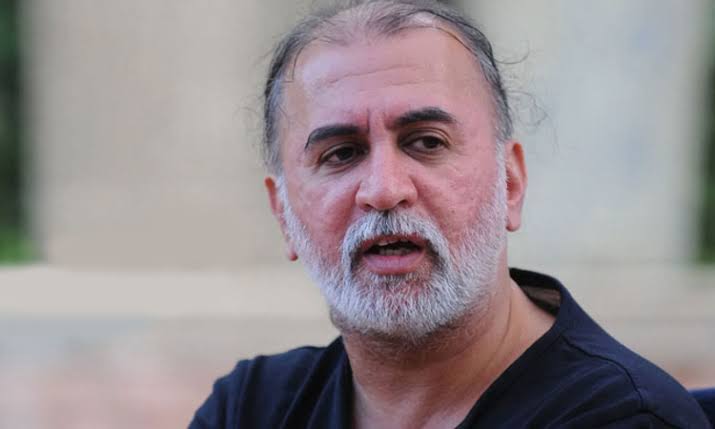
New Delhi/Panaji: The Bombay High Court’s Goa Bench has sentenced former Tehelka editor-in-chief and founder Tarun Tejpal to 10 years of rigorous imprisonment and imposed a fine after convicting him in the 2013 sexual assault case involving a junior colleague. The court overturned the 2021 trial court verdict that had acquitted Tejpal, granting him the benefit of doubt.
A Division Bench comprising Justices Neela Gokhale and Amit Borkar (verify bench composition before publication if necessary) convicted Tejpal and ordered his immediate custody following the pronouncement of the judgment. The court also directed him to surrender before the Goa Police within two weeks.
Under Section 376 of the Indian Penal Code, Tejpal was sentenced to 10 years of rigorous imprisonment along with a fine. He was also awarded one year of rigorous imprisonment and a ₹10,000 fine under Section 354A, and three years of rigorous imprisonment under Section 354B. Since the sentences will run concurrently, he will serve a total of 10 years in prison. Reports differ on the exact amount of the fine under the rape conviction, placing it between ₹5 lakh and ₹10 lakh.
The case stems from an incident on November 7 and 8, 2013, during the ThinkFest event in Goa, where Tejpal was accused of sexually assaulting a junior journalist inside a hotel elevator. The Goa Crime Branch arrested him later that year, before he was granted bail by the Supreme Court. The trial formally commenced in 2017.
In May 2021, a Goa sessions court acquitted Tejpal, citing insufficient evidence and extending the benefit of doubt. The Goa government challenged the acquittal before the Bombay High Court. Solicitor General Tushar Mehta, appearing for the state, argued that the trial court had misappreciated the evidence. The High Court treated emails sent by Tejpal to the complainant after the incident as crucial evidence and rejected his defence that he, rather than the complainant, was the real victim. The court observed that such conduct was unacceptable, particularly from a person old enough to be the complainant’s father.
The Tehelka Sting That Rocked Indian Politics
Long before the sexual assault case, Tarun Tejpal became one of India’s most prominent investigative journalists through Operation West End, the Tehelka sting operation that shook Indian politics in 2001.
Posing as representatives of a fictitious defence equipment supplier, Tehelka journalists secretly recorded politicians, defence officials and middlemen. The most explosive footage showed then Bharatiya Janata Party (BJP) president Bangaru Laxman accepting cash on camera in exchange for allegedly facilitating defence deals. The revelations forced his resignation as BJP president, and he was later convicted in a corruption case.
The sting also raised serious questions over defence procurement during the National Democratic Alliance (NDA) government led by Prime Minister Atal Bihari Vajpayee. The political fallout prompted then Defence Minister George Fernandes to resign. However, it is important to note that Fernandes was not shown accepting a bribe in the sting, nor was he convicted in connection with the operation. He later returned to the Union Cabinet.
The Tehelka exposé triggered nationwide outrage, paralysed Parliament for days, and intensified demands for greater transparency in defence procurement. It remains one of the most consequential investigative journalism operations in modern Indian political history.
Headlines That Defined the Tehelka Exposé
“Tehelka tapes rock NDA Government.”
“BJP President caught taking bribe on camera.”
“Defence deals under cloud after Tehelka expose.”
“George Fernandes quits after Tehelka storm.”
More than two decades after transforming Indian investigative journalism through the Tehelka exposé, Tarun Tejpal has now been convicted and sentenced to 10 years in prison for sexually assaulting a junior colleague, marking a dramatic and deeply ironic chapter in India’s media and political history.