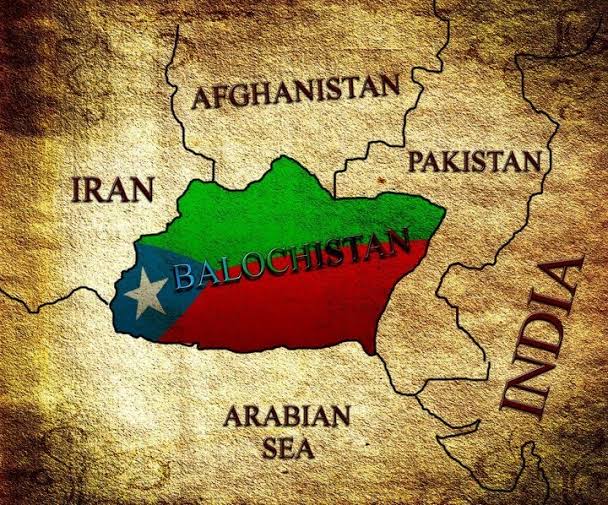
Balochistan is a region that is historically and culturally significant, and it spans parts of three countries: Iran, Afghanistan, and Pakistan. The Baloch people, the native ethnic group of this region, have long sought greater autonomy or even independence from the central governments of the countries they inhabit. The region is rich in natural resources, which has made the area strategically important and a focal point for political and military conflicts.

The Baloch Liberation Army (BLA)
The Baloch Liberation Army (BLA) is one of the most prominent separatist militant organizations operating primarily in Pakistani Balochistan. It was founded with the aim of securing an independent Balochistan, free from Pakistan’s control. The BLA has been involved in various attacks on military and civilian targets, as well as infrastructure like pipelines, gas fields, and military installations, seeking to disrupt Pakistan’s control over the region.
The BLA’s core goal is the independence of Balochistan, as it believes that the Baloch people have been marginalized, oppressed, and exploited by the Pakistani state. Balochistan has faced severe underdevelopment, despite its wealth in resources, and many Baloch activists view the region’s political and economic struggles as the result of Pakistan’s exploitation and neglect.
History and Background of the BLA
The origins of the BLA can be traced back to the 1970s when the Baloch people first launched uprisings against the central government of Pakistan, which culminated in the Balochistan conflict. Following the independence of Pakistan in 1947, Balochistan was incorporated into Pakistan, but tensions persisted as Baloch nationalists felt that their cultural and political autonomy was being suppressed.
The BLA emerged in the 1990s during a period of heightened resistance against Pakistani military operations in Balochistan. The group’s activities have included acts of sabotage, attacks on security forces, and assassinations of individuals they consider to be collaborating with the Pakistani state. The BLA is believed to have gained significant support from Baloch expatriates, especially in the Middle East and Europe.

Some of the key leaders associated with the BLA, historically and presently, include:
1. Khalid Baloch
- Background: Khalid Baloch was one of the prominent leaders of the Balochistan Liberation Army and a key figure in its militant operations. He was known for his strong stance on the independence of Balochistan and his criticism of the Pakistani government’s policies in the region.
- Death: Khalid Baloch was reportedly killed in a military operation by Pakistani forces in 2010. His death marked a significant moment in the group’s history, but his legacy continues to inspire many separatist movements in the region.
2. Brahumdagh Bugti
- Background: Brahumdagh Bugti is a key leader of the Baloch Republican Party (BRP) and is closely associated with the Baloch nationalist movement. He is the grandson of Akbar Bugti, a prominent Baloch leader and former governor of Balochistan who was killed by Pakistani forces in 2006.
- Role in BLA: While Brahumdagh Bugti is primarily known for his political activities, he has been linked to the Baloch insurgent movement, including the BLA. He has called for Balochistan’s independence and has been involved in raising international awareness about the Baloch issue.
- Exile: Bugti has been living in self-imposed exile, primarily in Switzerland, after fleeing Pakistan due to threats to his life from the Pakistani government.
3. Hyrbyair Marri
- Background: Hyrbyair Marri is another prominent leader associated with Baloch nationalism. He is a key figure in the Balochistan Liberation Front (BLF) and has expressed strong support for the independence of Balochistan.
- Role in BLA: Marri has also been linked to the BLA in the context of the broader insurgent struggle for Baloch independence. He has lived in exile, primarily in the United Kingdom, and continues to advocate for the rights of the Baloch people.
4. Aslam Baloch
- Background: Aslam Baloch, also known as Aslam Achu, was a senior leader of the Balochistan Liberation Army. He was considered a key figure in the armed resistance against Pakistani forces.
- Death: Aslam Baloch was killed in a military operation by Pakistani security forces in 2018. His death further fueled the BLA’s efforts to resist the Pakistani government’s control over Balochistan.
5. Majeed Baloch
- Background: Majeed Baloch is another leader of the BLA who was involved in organizing and leading militant activities. He is known for his commitment to the cause of Baloch independence.
- Death: Majeed Baloch was killed in a Pakistani military operation in 2015, but his contributions to the cause of Baloch independence continue to be celebrated by many within the Baloch nationalist movement.
The BLA’s leadership structure is often decentralized, and its members operate across different regions of Balochistan and in exile. The group continues to challenge the Pakistani state’s control over Balochistan, with its leaders advocating for greater autonomy or full independence for the region. However, many of these leaders operate from outside Pakistan, particularly in countries like the United States, the United Kingdom, and Switzerland, due to threats from the Pakistani government.

Geopolitical Implications
The situation in Balochistan, especially in Pakistan’s Balochistan province, has become a source of regional and international concern due to the involvement of various geopolitical actors. Pakistan often accuses neighboring India, particularly through its intelligence agency RAW (Research and Analysis Wing), of supporting separatist groups like the BLA in a bid to destabilize Pakistan and support the cause of Baloch independence. While these claims have been made by Pakistan, India has denied any involvement in supporting separatism in Balochistan.
Moreover, Balochistan’s strategic location, rich natural resources, and geopolitical significance have attracted attention from multiple international powers. The region’s proximity to key trade routes and the Gulf of Oman has made it a critical area, especially in the context of the China-Pakistan Economic Corridor (CPEC), which passes through the province.

Current Situation
The Pakistani government has responded to the BLA’s insurgency with military operations, often involving heavy-handed tactics. These operations have led to allegations of human rights abuses, including extrajudicial killings, disappearances, and the suppression of Baloch culture and political expression. The BLA, in turn, has continued to wage a violent struggle, though its support base is said to be divided, with some factions advocating for peace talks while others maintain a hardline stance.
The situation remains tense, and the question of Baloch independence continues to be a point of contention between Baloch nationalists and the Pakistani state. The BLA’s activities and the broader Baloch nationalist movement remain a significant challenge for Pakistan’s central government.

The Baloch Liberation Army is a key player in the larger Baloch nationalist movement, and it has been engaged in an armed struggle against the Pakistani state for decades. While their demands for an independent Balochistan have gained significant attention, the situation remains complex, with accusations of foreign involvement and the suppression of Baloch aspirations by Pakistan. The region’s geopolitical significance and resource wealth continue to make Balochistan a focal point of regional tensions.
The Balochistan issue in Pakistan is a complex and multifaceted conflict that has persisted for decades. It involves political, economic, social, and ethnic grievances, particularly related to the demand for greater autonomy, equitable distribution of resources, and addressing the historical neglect of the region. Here are some potential solutions to address the Balochistan issue:
- Political Dialogue and Inclusion
Meaningful Autonomy: Grant Balochistan greater political autonomy under the framework of Pakistan’s constitution. This could include more control over local governance, natural resources, and decision-making processes.
Engagement with Baloch Leaders: Establish inclusive dialogues with all political stakeholders, including Baloch nationalist groups, to create a space for peaceful resolution.
Representation in National Institutions: Ensure better representation of Baloch leaders in national politics, particularly in the national parliament and cabinet, to address the political alienation felt by many Baloch.
- Economic Development and Resource Sharing
Equitable Distribution of Resources: Address the longstanding grievances over the control and distribution of Balochistan’s natural resources, including natural gas, minerals, and the Gwadar port. Implement a transparent mechanism to ensure that the local population benefits from these resources.
Investment in Infrastructure: Focus on developing infrastructure in Balochistan, such as roads, healthcare, education, and communication systems, to bring economic growth to the region and reduce disparities.
Employment Opportunities: Develop policies that create job opportunities for Baloch youth, especially in areas related to the region’s natural resources, industry, and commerce.
- Human Rights Protection
Addressing Enforced Disappearances: Ensure that human rights violations, such as enforced disappearances and extrajudicial killings, are thoroughly investigated, and accountability is established.
Strengthening Rule of Law: Enhance the presence of justice institutions and the rule of law to address grievances and instill confidence in the local population regarding their rights and security.
Promote Cultural Rights: Respect and protect the cultural, linguistic, and religious rights of the Baloch people, including the right to speak their native language and practice their customs.
- De-Militarization and Confidence-Building
Reduce Military Presence: Gradually reduce the military presence in the region, which is seen by many Baloch as oppressive. Instead, focus on local law enforcement and civilian governance.
Promote Trust-Building Initiatives: Establish confidence-building measures between the Baloch community, the Pakistani government, and military to reduce tensions and foster peaceful coexistence.
- Regional Cooperation and Connectivity
Gwadar Port Development: Ensure that the development of the Gwadar Port benefits not just the federal government but also the local population by creating jobs, business opportunities, and regional trade.
Cross-Border Cooperation: Engage with neighboring countries like Iran and Afghanistan in a cooperative manner, leveraging cross-border trade, security, and cultural ties to build a more stable regional environment for Balochistan.
- Public Awareness and Education
Promote Education and Literacy: Increase investments in education and vocational training to uplift the socio-economic status of Baloch youth and reduce radicalization.
Awareness Campaigns: Educate the public on the importance of peaceful coexistence, respecting the rights of marginalized communities, and the value of national unity.
By addressing these issues through a combination of political, economic, and social solutions, the Balochistan conflict can be eased and resolved in a manner that is inclusive and fair to all stakeholders involved.