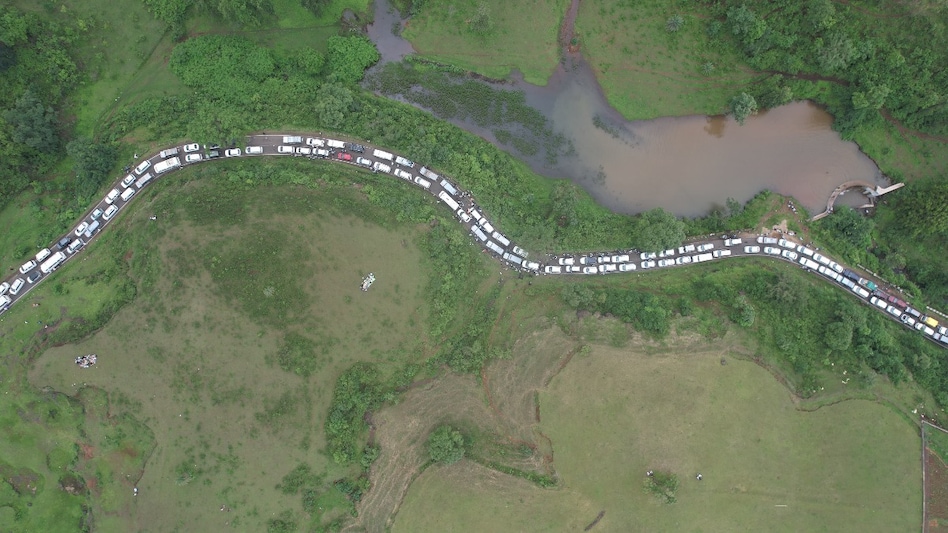
Amravati, Maharashtra – July 14, 2025 – The picturesque Chikhaldara hill station in Maharashtra’s Amravati district, known for its lush green landscapes and misty ambiance during the monsoon, experienced an unprecedented surge in tourist footfall over the past weekend (July 12-14). The massive influx of visitors led to a chaotic situation, including a 10-kilometer long traffic jam and a significant hike in prices for food and other essentials, leaving many tourists frustrated.
According to reports from national media, approximately one lakh (100,000) tourists descended upon Chikhaldara between Friday and Sunday, transforming the serene hill station into a scene of “tourism gridlock.” The situation was particularly severe on Sunday, with vehicle queues stretching for about 10 kilometers from Paratwada to Chikhaldara.
The overwhelming crowd meant that many tourists, despite waiting for 4 to 5 hours in traffic, were unable to even exit their vehicles and eventually had to turn back without reaching their destination. The sudden and massive demand also led to exorbitant prices for food items. Reports indicate that a single ‘roti’ (Indian bread) was being sold for as much as ₹250, while a ‘samosa’ fetched ₹50, reflecting a clear exploitation of the situation by local vendors.
Police and forest department personnel, who are typically responsible for managing the flow of tourists, were reportedly overwhelmed and exhausted by the sheer volume of visitors. Despite efforts, the lack of adequate traffic planning and control was evident as vehicles remained stuck for hours, frustrating travelers from Amravati, Nagpur, Akola, Yavatmal, and other parts of the state who had come to enjoy the monsoon beauty of Chikhaldara and its various attractions, including the waterfalls at Bhimkund.
Chikhaldara, the only coffee-growing hill station in Maharashtra and located in the Vidarbha region, has typically been considered a more offbeat and less crowded destination compared to other popular hill stations in the state. However, the allure of its misty mountains and verdant landscapes during the monsoon season appears to have drawn an unforeseen number of tourists this year, leading to severe infrastructure and management challenges.