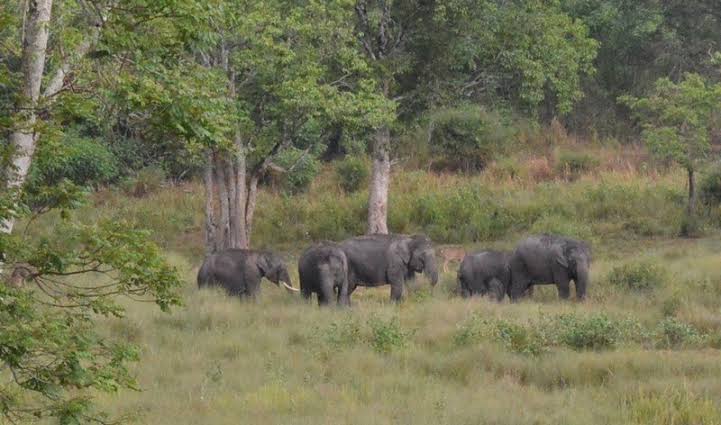
N.Badusha, Wayanad
Worldwide, 12th August is celebrated as World Elephant Day, not just to honour one of Earth’s most intelligent and empathetic being, the elephant, but also to remind ourselves that the biggest living being is fast moving towards extinction from the planet because of all human interventions we had done on the ecosystem and its wellbeing and balance.
Western Ghats of Kerala, is fast becoming a dangerous graveyard of elephants. We, humans should realize that they are not just inhabitants of our forests; they very much play a big role in ecosystem maintenance and our shared ecological future. Yet, their survival is under increasing threat from habitat loss created by immense profit motive of humans, leading to fragmentation of the forest ecosystem and thereby ending up in human–elephant (or broadly wildlife) conflict. Every encounter between people and elephants is a reminder of the delicate balance we must preserve.
Elephants are more than wildlife — they are gardeners of the forest, shaping ecosystems that sustain countless species. They are bearers of culture and symbols of resilience. Protecting them means protecting biodiversity, cultural heritage, and the ecological health of Kerala itself.
Coexistence Collective Kerala, believe that true conservation is not about domination, but coexistence — protecting wild habitats, securing safe corridors, and fostering compassion in how we share space with wildlife.
- Protect and restore elephant habitats so they remain wild and safe.
- Safeguard traditional elephant corridors to keep migration routes open. Stress is built up intensely because of human intrusions happening inside forest stretches in the form of illegal tourism activities, mining and Linear Intrusions in the name of convenience and profit motive.
- The methods like throwing firecrackers and fireballs at wildlife are immensely primitive acts, and lakhs of rupees is spend by Forest Department, opting for these methods is extremely shameful. This is absolutely going to create more conflicts and less coexistence, so this should be stopped straight away.
- Reduce conflict through science-based, ethical measures, avoiding cruelty and exploitation.
- Speak out against practices that harm elephants, whether physical, emotional, or ecological.
- Unabated tourism and related activities especially set inside forest areas or forest fringes, upsetting their delicate balance of wildlife to feed and forage in peace.
- Mismanagement and dumping of waste in forested areas and fringes leading every wildlife to become easy feeders and slaves to human tastes, especially salty items.
- The elephant camps like Muthanga, Kottoor etc run by Forest Department has become concentration camps for elephants. All these camps should be deployed at the earliest and these elephants should be allowed to thrive in semi-wild conditions in the forest areas of concerned Division.
- Elephants have been dying unnaturally and in huge numbers in Kerala Forest, which has never happened in the past years. From poisoning to Electrocution has been said as the reasons for this.
- We suspect the involvement of newly formed fake farmers mafia groups and human rights groups which has usurped wildlife and wilderness and encroached the forest areas proclaiming it as their rights. These groups need to be curbed and warned legally for their anti- wildlife and forest wide spreading narratives as this is against the Constitution of India.
- Under the leadership and support of MoEF&CC unless a team of experts work, all these deaths are to be whitewashed as natural deaths and the carcasses will be burnt denying further investigations. Technology for Coexistence – Tracking Without Harm
Modern wildlife conservation can be strengthened by ethical use of technology. Microchips that help protect elephants by enabling early warning, conflict prevention, and individual monitoring — provided they are used responsibly and only where justified. All over the world this is being practised alone of the best methods to address issues of human-wildlife conflicts.
India should at the earliest stop the inhuman practice of tranquilisation and radio collaring wildlife. The cost of radio collars for Indian scenario, can cost around ₹6.5 lakh per unit, while locally developed ones are much cheaper, costing around ₹1.8 lakh per unit. Some Bengaluru-based startups offer them for prices ranging from ₹25,000 to ₹40,000. The total cost of collaring an elephant can also include expenses for capture, anesthesia, and fitting, potentially reaching up to ₹22 lakh.
• Microchips (Passive Integrated Transponders – PIT Tags) placed under the skin, usually in a minimally invasive procedure. Each microchip carries a unique ID number. When scanned with a handheld reader, it transmits this number — allowing precise identification. They are long-lasting, non-intrusive devices and enables safe identification during veterinary care, rescue, or anti-poaching efforts.
• GPS Tracking Uses satellite positioning to monitor elephant movement in near real time. They help in alerting and giving early warning for communities when elephants approach human settlements. Also helps scientists understand migration routes, seasonal patterns, and corridor use and supports data-driven corridor protection and conflict mitigation strategies. But should only be deployed under veterinary supervision and where clear conservation benefit outweighs any stress caused to the animal.
Even in Kerala, in the case of captive elephants, microchips were provided free of charge, and the forest department maintains a register with details about each elephant. Similarly, for pet dogs in Kollam, municipal veterinary hospitals charge a fee of Rs 250 for microchipping.
The microchips which can be are provided free of charge, need Electronic devices called “readers” needed to scan the microchips and retrieve the information. These are purchased and distributed to different districts. Veterinary officers need training to properly administer the microchips. A register or database needs to be maintained to store information about the animals, including their microchip numbers, personal details, and ownership information.
The Kerala State Planning Board has a 10-year plan addressing human-wildlife conflict since 2013, with a total budget of Rs. 1150.00 Crore, and even now they say ‘which may include costs related to microchipping and other interventions’. It is extremely disheartening to realize that even now these things are only under consideration and not under implementation.
As a group of science-based conservation oriented Collective we strongly advocate and recommend the government for adopting responsible, science-based use of tracking technology. Data should be used for protection, not surveillance — information must be used only for conservation, not for harassment or commercial exploitation.
On this World Elephant Day, let’s choose compassion over conflict, science over guesswork, and coexistence over control. Together, we can ensure a future where elephants and people thrive — side by side, as they were always meant to.