BEIJING– China’s recent decision to withdraw financial support for a key segment of Pakistan’s flagship railway project has sent ripples through the China-Pakistan Economic Corridor (CPEC). While officials cite Pakistan’s financial woes and escalating security threats as the primary reasons, a deeper geopolitical analysis suggests that the move may be part of a broader strategic recalibration influenced by the evolving relationship between China, India, and Russia.
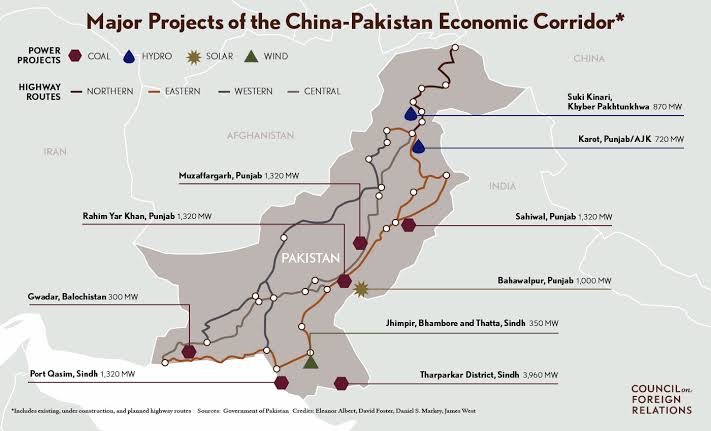
The ML-1 project was the crown jewel of CPEC, a vital artery of China’s Belt and Road Initiative (BRI) that was to link China’s Xinjiang province to the Arabian Sea. By pulling back from the critical Karachi-Rohri section, China has signaled a shift in its investment priorities and a growing reluctance to bear the full burden of high-risk, high-cost projects, particularly those fraught with security challenges.
Financial and Security Concerns: The Official Narrative.
The official line from Beijing focuses on a pragmatic assessment of the project’s viability. Reports indicate that China is increasingly frustrated with Pakistan’s mounting unpaid debts, especially the estimated $1.5 billion owed to Chinese power companies. The perilous state of Pakistan’s economy, which has repeatedly required IMF bailouts, has made Beijing wary of further exposure.
Furthermore, the security of Chinese nationals working on CPEC projects has become a major point of contention. Frequent attacks by separatist groups, particularly in Balochistan, have raised alarm in Beijing. China has reportedly sought to deploy its own security personnel, a request that Islamabad has been hesitant to grant due to sovereignty concerns. This impasse has created a significant hurdle for new Chinese investment.
The Geopolitical Dimension: An India-China-Russia Triangle.
Beyond the immediate financial and security factors, analysts are examining the decision through the lens of a shifting geopolitical landscape, particularly the trilateral dynamics of India, China, and Russia.
In recent years, India and China have been working on a quiet rapprochement, moving beyond the border tensions of 2020. Both nations have recognized the need for strategic autonomy and have expressed a desire to stabilize relations, citing the importance of their economies for world trade. This new understanding, championed at forums like the Shanghai Cooperation Organisation (SCO) and BRICS, could be a key factor.
The withdrawal from the ML-1 project, which traverses Pakistan-occupied Kashmir (PoK)—a territory claimed by India—can be seen as a gesture to New Delhi. India has long opposed CPEC due to its passage through a disputed region, viewing it as a violation of its sovereignty. By pausing a major component of the project, China may be seeking to reduce a key irritant in its relations with India, thereby fostering a more stable and cooperative environment.
Russia’s role in this equation is also significant. As a long-standing partner of India and a close strategic ally of China, Russia has a vested interest in regional stability. It has been a consistent advocate for trilateral cooperation and a multipolar world order. A move that de-escalates tensions between its two key partners, China and India, would be viewed favorably by Moscow.
This strategic recalibration suggests that China may be prioritizing its broader geopolitical interests over a single, troubled infrastructure project. By re-evaluating its high-risk investments in Pakistan, it can dedicate more resources to other strategic areas while simultaneously signaling a willingness to accommodate India’s core concerns in the region.
While the immediate causes for China’s withdrawal from the ML-1 project are financial and security-related, the decision carries significant geopolitical weight. It serves as a stark reminder that even the “iron-clad friendship” between China and Pakistan is subject to pragmatic economic and security calculations.
The move could be a sign of a new, more nuanced Chinese foreign policy that seeks to balance its commitments to Pakistan with its evolving, and increasingly complex, relationship with India, all within the context of a new world order where the China-India-Russia partnership is gaining prominence.