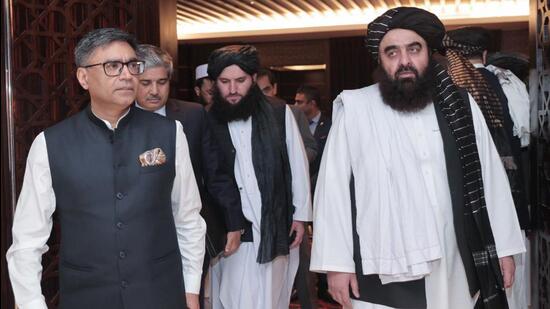
New Delhi, October 9, 2025 — Afghanistan’s Acting Foreign Minister, Amir Khan Muttaqi, arrived in New Delhi on Thursday for a six-day visit, marking the first high-level ministerial trip by a Taliban leader to India since the group seized power in Kabul in August 2021. The visit, facilitated by a special travel exemption from the UN Security Council’s Taliban Sanctions Committee, signals a major pragmatic shift in India’s Afghanistan policy and is expected to have far-reaching geopolitical implications.
Objectives of the Visit
The agenda of Muttaqi’s visit is multifaceted, reflecting both the Taliban’s immediate needs and India’s strategic priorities:
- Taliban’s Goals: The Taliban aims to secure international legitimacy and recognition by engaging with India, a major regional power with historic and economic ties to Afghanistan. The visit also focuses on economic cooperation, trade expansion, and seeking humanitarian and developmental assistance to address the regime’s pressing economic challenges.
- India’s Goals: New Delhi’s invitation to Muttaqi reflects a pragmatic recalibration of its Afghanistan policy. Key priorities include:
- Security Concerns: Ensuring Afghan territory is not used for terrorist activities against India.
- Regional Influence: Reasserting its presence in Kabul to counter rivals like China and Pakistan.
- Economic Interests: Discussing connectivity projects, including Afghanistan’s access to Iran’s Chabahar Port.
- Humanitarian Engagement: Continuing aid and development support to the Afghan population.
During his visit, Muttaqi is scheduled to meet External Affairs Minister S. Jaishankar and National Security Advisor Ajit Doval to discuss bilateral relations, economic cooperation, and regional stability. He will also engage with Indian business leaders and visit cultural sites such as the Taj Mahal and the Darul Uloom Deoband seminary.
Geopolitical Implications
Experts view the visit as a pivotal moment that could reshape regional dynamics:
- India’s Pragmatic Shift: By officially engaging a UN-sanctioned Taliban leader, India demonstrates a focus on strategic and security interests over ideological considerations, positioning itself as a practical actor responding to realities on the ground.
- Pakistan’s Concerns: The India-Taliban dialogue is closely monitored in Islamabad, as it could limit Pakistan’s traditional influence in Kabul, especially amid ongoing border and security tensions.
- Taliban’s Quest for Legitimacy: The visit strengthens the Taliban’s diplomatic profile, potentially setting a precedent for engagement by other nations.
- The Regional ‘Great Game’: India’s engagement is part of the broader contest for influence in Afghanistan, countering China’s expanding regional presence and protecting its strategic interests.
US Perspective: Strategic Implications
Muttaqi’s visit could influence US strategic objectives in Afghanistan:
- Limiting US Footprint: Regional coordination, including India and Russia, signals opposition to any potential US return to strategic sites like the Bagram Air Base.
- Reducing US Diplomatic Leverage: India’s direct engagement with the Taliban, while non-recognizing, bypasses the US-led international consensus, potentially diluting Washington’s influence.
- Pragmatism vs. Principles: India’s self-interest-driven approach, though cautious, risks weakening collective international pressure on the Taliban regarding human rights and inclusive governance.
In conclusion, Amir Khan Muttaqi’s visit marks a strategic realignment for India, prioritizing security and regional influence while maintaining a policy of non-recognition. For the Taliban, it provides critical diplomatic visibility and signals that regional powers are increasingly taking the lead in shaping Afghanistan’s future, complicating the strategic calculus for external actors like the United States.