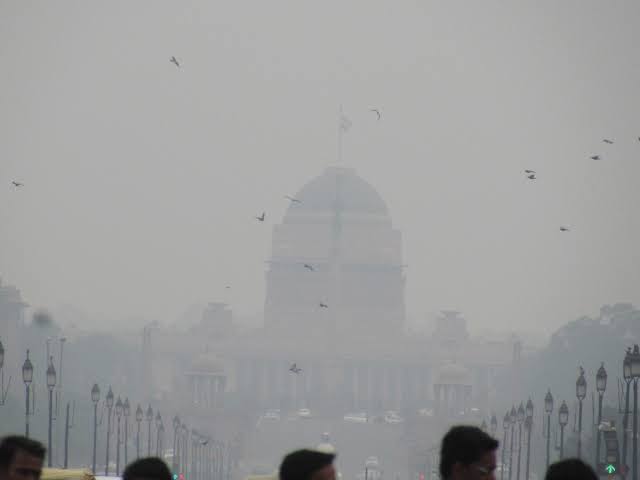
NEW DELHI: A day after Diwali celebrations, air pollution levels in the national capital have spiked to critical levels, enveloping Delhi in a thick layer of smog and haze.
On Tuesday morning, the air quality index (AQI) plunged into the “very poor” category. According to data recorded at 5:30 am, Delhi’s average Air Quality Index stood at 346. This reading is a sharp increase and places most of the city’s areas in the “Red Zone” of pollution, with several monitoring stations even breaching the 400-mark and entering the “Severe” category.
The deterioration is largely attributed to the widespread bursting of firecrackers during the Diwali night, compounded by unfavourable meteorological conditions like low wind speed and seasonal factors such as crop residue burning in neighbouring states.
As per the Central Pollution Control Board (CPCB) standards, an AQI between 301 and 400 is classified as ‘Very Poor,’ which can cause respiratory illness upon prolonged exposure. An AQI above 400 is termed ‘Severe,’ affecting healthy people and seriously impacting those with existing diseases.
The crisis has prompted health advisories, urging residents, especially children, the elderly, and those with respiratory ailments, to avoid non-essential outdoor activities and wear face masks. Authorities had earlier imposed Stage II of the Graded Response Action Plan (GRAP) across the Delhi-NCR region in anticipation of worsening air quality.
Severe Air Pollution Grips Delhi Post-Diwali; AQI Hits ‘Very Poor’ 346.