C Mahesh
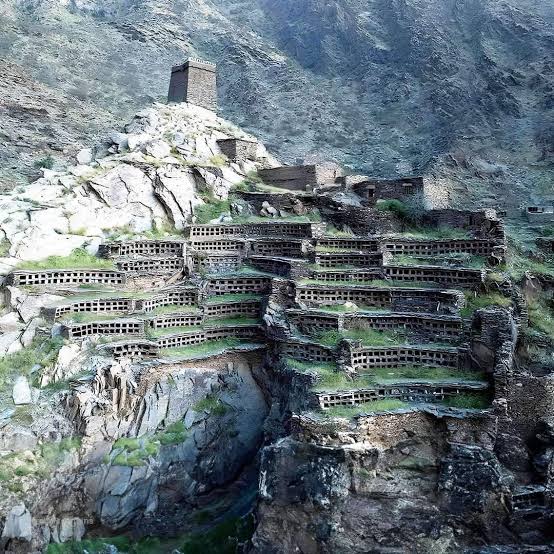
Nestled in the rugged highlands south of Taif, Saudi Arabia, lies the abandoned village of Al-Kharfi, a silent testament to human resilience and desert ingenuity. Among its crumbling clay houses and forgotten paths, archaeologists and local historians have uncovered over 1,200 ancient beehives, painstakingly crafted from clay and mud. These remarkable remnants, dating back several centuries, offer a rare glimpse into the survival strategies of early desert communities — people who turned the unforgiving environment of the Arabian Peninsula into a place of sustenance and innovation.
A Desert Civilization Built on Honey
Long before modern beekeeping reached Arabia, the inhabitants of Al-Kharfi mastered the art of apiculture — the practice of maintaining bee colonies for honey and wax. The beehives, cylindrical in form and built from locally sourced mud, straw, and stone, were designed to regulate internal temperature and protect the bees from the scorching desert sun and cold night winds. Each hive was stacked neatly within specially built walls or clustered along the slopes, creating a labyrinthine landscape of earthen cylinders.
Honey was not merely a sweetener for these desert dwellers. It was a cornerstone of survival. In an age when agriculture was limited by arid conditions, honey provided a reliable source of nutrition, natural medicine, and trade commodity. Rich in energy and antimicrobial properties, it helped sustain communities through droughts and scarcity.
The Strategic Role of Al-Kharfi
Al-Kharfi occupied a crucial position on ancient caravan routes linking Taif, Makkah, and southern Arabia. This made it an important rest stop for traders carrying frankincense, spices, and textiles. The honey produced in the region — famed for its purity and medicinal value — likely became a valuable export, exchanged for grains, cloth, and metal goods.
Historical sources and oral traditions suggest that tribes in the Taif highlands were known for their mastery in beekeeping, cultivating wild bees in rock crevices and later adapting their knowledge into structured clay hives. Over time, this knowledge spread across Arabia, influencing later honey production practices in Asir, Jizan, and Yemen.
Engineering Ingenuity in Clay and Mud
The 1,200 beehives of Al-Kharfi are a marvel of early environmental engineering. Archaeologists note that each hive was carefully positioned to face away from the direct desert wind while allowing optimal sun exposure. The thick clay walls acted as natural insulation, keeping the internal temperature stable — a critical factor for bee survival in such extreme conditions.
Some structures show signs of multi-tiered arrangements, where hives were stacked in vertical patterns to maximize space and hive density. The bees, likely of native Arabian species such as Apis mellifera jemenitica, adapted perfectly to the arid conditions, thriving on the wild flora and acacia trees that still dot the nearby valleys.
Honey as Healing: The Medicinal Legacy
Beyond nutrition, honey in Al-Kharfi played a significant spiritual and medicinal role. In Islamic tradition, honey is described as a cure for many ailments — the Qur’an itself refers to it as a “healing for mankind.” The villagers used honey to treat wounds, respiratory infections, and digestive issues, often mixing it with herbs native to the Taif highlands.
Even today, the region remains renowned for its mountain honey, celebrated for its dark color, strong flavor, and healing qualities. Modern apiarists in Taif and Asir trace their methods back to these early innovations, preserving techniques that originated centuries ago in villages like Al-Kharfi.
Rediscovery and Preservation
In recent years, Saudi archaeologists and heritage experts have begun documenting and preserving the Al-Kharfi site, recognizing its cultural and historical importance. The discovery of the beehive clusters has added a new dimension to the understanding of early Arabian desert life — showing that these communities were not merely surviving, but innovating.
There are ongoing efforts to conserve the mud-brick structures, study pollen samples trapped in the ancient hives, and possibly reconstruct a functional traditional apiary as part of a cultural heritage project. Such initiatives aim to revive interest in traditional beekeeping and connect it to the Kingdom’s broader Vision 2030 goals of preserving heritage and promoting sustainable rural tourism.
A Testament to Desert Resilience
The story of Al-Kharfi’s beehives is, above all, a story of human perseverance. In a landscape of scarcity, the people of this forgotten village harnessed nature’s smallest creatures to sustain life, trade, and health. Today, the 1,200 silent clay hives stand like earthen monuments — whispering of an age when ingenuity was the difference between survival and extinction.
As archaeologists continue to unearth the secrets of Al-Kharfi, one thing is clear: the bees of the desert once helped build a civilization — and their legacy still hums quietly through the sands of time.
Sources & References
- “Beehives of Saudi Arabia’s Maysan believed to be over 1,000 years old” – Arab News / Saudi Press Agency:
• Approximately 1,200 beehives, in the Maysan Governorate (south of Taif) between the Sarawat Mountains and Tihamah. Arab News+2Arab News PK+2 - “The Rural Cultural Landscapes of Sarawat Mountains – UNESCO Tentative List” – UNESCO:
• It lists “Kherfi and Historical Beehives” as one of the elements of the serial property. UNESCO World Heritage Centre - “The Clay Hives of Al-Kharfi: Bees, Survival, and Innovation in the Desert” – TheArchaeologist blog:
• More detailed archaeological/ethnographic discussion of the site, the design of the hives, micro-climate choice, survival strategy. The Archaeologist - Additional note: Maysan region being described as a historic hub of “mountain honey” production, deeply embedded in the Kingdom’s cultural and trade heritage. Saudi Arabia News Express+1