C Mahesh
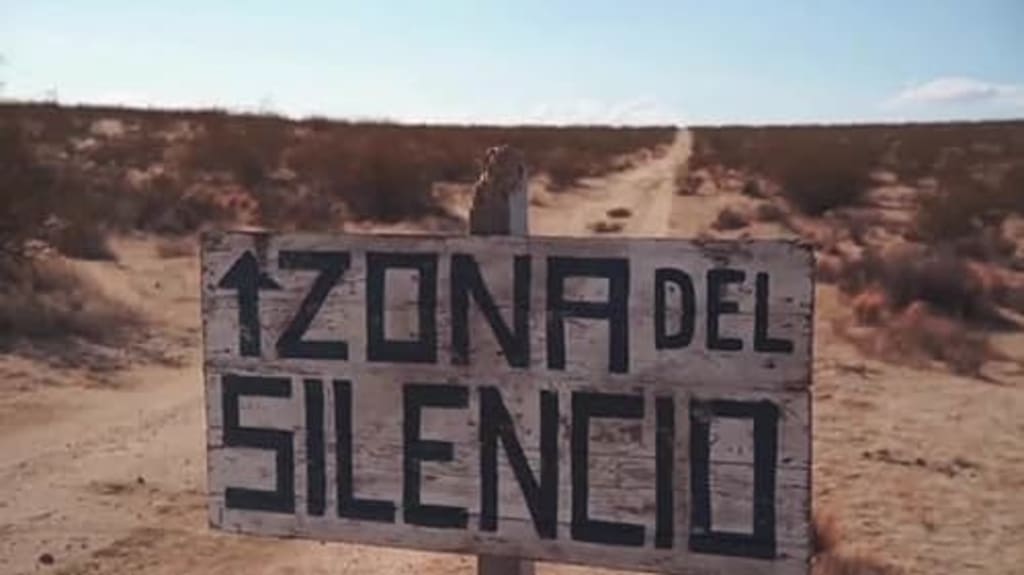
MAPIMÍ BIOSPHERE RESERVE, MEXICO — Deep in the remote expanse of the Chihuahuan Desert, researchers are once again turning their attention to La Zona del Silencio — the Zone of Silence — a region long shrouded in folklore, scientific puzzles, and unexplained incidents. Frequently compared to the Bermuda Triangle, this 50-kilometre stretch where the borders of Chihuahua, Coahuila and Durango meet is famed for disrupting radio signals and compasses, and for hosting a series of events that have defied conventional explanations.
A Desert Where Signals Die Out
Reports of radio failures in the area date back nearly a century. Engineers working on early telecommunication lines in the 1930s described sudden “dead zones” where equipment became unresponsive, and pilots later reported similar experiences.
“The electromagnetic irregularities in this region are real, though not supernatural,” said Dr. Héctor Rojas, a geophysicist at the National Autonomous University of Mexico (UNAM).
“High concentrations of magnetite and other iron-rich minerals in the desert’s ancient seabed create conditions that can distort radio waves.”
A Missile That Should Never Have Landed Here
The Zone entered global headlines in July 1970 when a U.S. military Athena test missile, launched from Utah, dramatically veered off-course and crashed inside the region — hundreds of kilometres south of its intended trajectory.
A tightly controlled American recovery mission moved into the desert, collecting debris under secrecy. The unusual nature of the crash fed theories that the Zone exerted a magnetic pull strong enough to alter the missile’s path.
“There is no evidence the missile was ‘dragged’ here,” noted Col. David S. Reiner (Retd.), former U.S. ballistic missile analyst.
“The more plausible explanation is a guidance malfunction. Still, the coincidence certainly amplified the mystique around the Zone.”
Meteorites, Space Debris, and a Desert That ‘Attracts the Sky’
The area is also known for its uncanny number of meteorite falls, including fragments of the famous Allende Meteorite in 1969, one of the most studied carbonaceous chondrites on Earth.
“The desert’s iron-rich geology may create minor magnetic anomalies, but not enough to pull objects from space,” explained Dr. Alejandra Jiménez, astrophysicist with Mexico’s Institute of Astronomy.
“Meteorite clustering here is likely a statistical coincidence combined with clear desert visibility and easy recovery.”
Folklore: Lights, UFOs, and Mysterious Visitors
Local communities continue to share stories of unexplained lights, hovering discs, and encounters with tall, blonde strangers who allegedly vanish into the desert.
Scientists, however, view these accounts as cultural folklore.
“No credible physical evidence supports extraterrestrial encounters in the Zone,” said Dr. Rojas.
“But folklore is part of the region’s identity and attracts tourists, which benefits local communities.”
A Living Laboratory for Science
Despite the myths, experts stress that the Zone’s true value lies in its ecology and geology:
- High magnetite and mineral concentration
- Rare desert flora and fauna
- Geological formations dating back to an ancient Permian-era sea
- Habitat of endangered species like the Bolson tortoise
Researchers currently study drought resilience, climate adaptation, and mineral fields within the Mapimí Biosphere Reserve, a UNESCO-recognised conservation zone.
“For scientists, this is one of the most important desert ecosystems in North America,” said Dr. Jiménez.
“Its mysteries are fascinating, but its science is even more important.”