New Delhi:
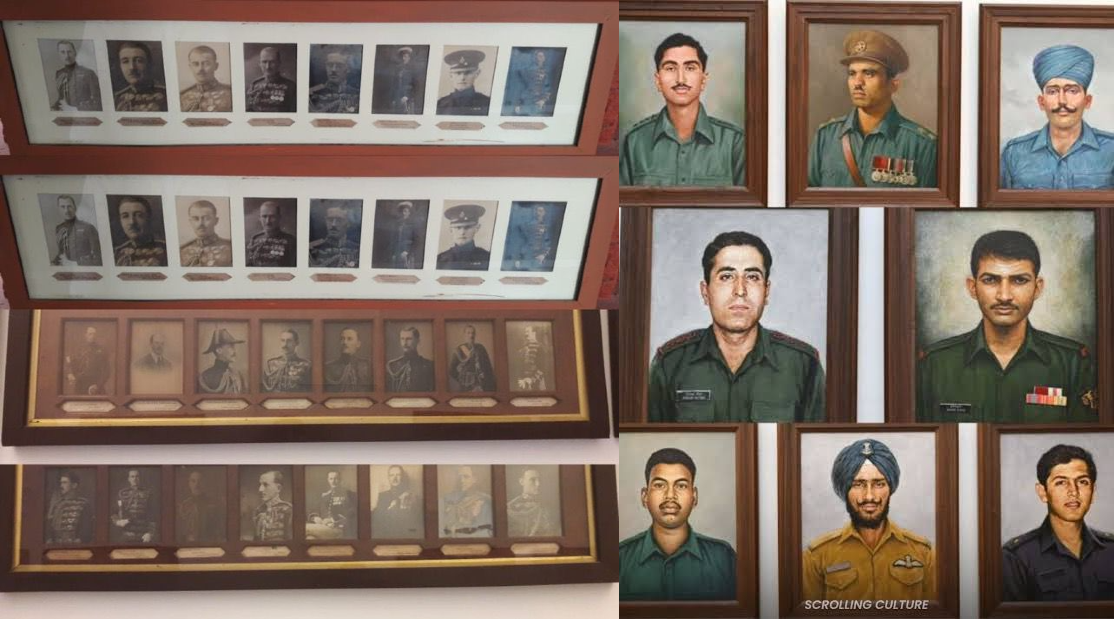
In a decisive continuation of the Union government’s efforts to dismantle lingering colonial symbols, 96 portraits of British-era Aides-de-Camp (ADCs) have been removed from a gallery inside Rashtrapati Bhavan. In their place, portraits of over 21 Indian soldiers who received the Vir Chakra for exceptional gallantry in various wars and military operations have been installed.
The government stated that the move reflects the spirit of post-independence India’s self-respect, military honour, and national confidence.
Vir Chakra Awardees Installed – Representative List
The government has not yet released the complete official list of all portraits installed. The following is a representative list of well-known Vir Chakra awardees from different wars and operations.
Indian Army
- Major K. C. Banerjee – 1947–48 Kashmir War
- Captain Gurbaksh Singh – 1962 India–China War
- Major R. S. Dayal – 1965 India–Pakistan War
- Lieutenant Colonel B. Singh – 1971 Bangladesh Liberation War
- Major M. K. Sharma – Siachen operations
- Captain Vijayant Thapar – Kargil War (1999)
- Major Rajesh Adhikari – Kargil War
- Naib Subedar Sanjay Kumar – Kargil War
- Major P. Ajith Kumar – Counter-terror operation (Jammu & Kashmir)
- Captain Arun Kumar – Counter-insurgency operations in the North East
Indian Air Force
- Squadron Leader P. K. Das – 1965 aerial combat missions
- Wing Commander S. K. Gupta – 1971 air strike missions
- Flight Lieutenant A. Nair – Deep-penetration enemy territory missions
Indian Navy
- Commander M. N. Samant – Naval operations during the 1971 war
- Lieutenant Commander R. Nair – Maritime surveillance missions
Recent Operations
- Major Anuj Nair – Counter-terror operation in Uri sector
- Captain Deepak Singh – Mountain warfare engagement
- Major Harish Chandra – Ladakh operations
- Captain Mohit Sharma – Special Forces mission
- Naik Amit Kumar – Protection of military convoy
- Havildar Ramesh Lal – Border engagement
Each portrait is displayed along with unit details, the conflict involved, and a brief description of the act of gallantry.
Removed Portraits: British ADCs
The 96 portraits removed belonged to:
- British Viceroys’ and Governors-General’s ADCs
- Military and civil officials representing the colonial administration
- Officers from the 19th century up to 1947
Government’s position:
“There is no place for symbols of imperial dominance at the seat of governance of a sovereign India.”
Political and Opposition Responses: A Balanced Analysis
Ruling Party’s Stand
- This is not rewriting history, but delivering historical justice
- Honouring the armed forces within the country’s highest constitutional space strengthens civil–military relations
Mixed Response from the Opposition
Congress and Left parties:
- No objection to honouring soldiers
- However, they caution that:
- “History should not be politicised”
- “The colonial period must be remembered and studied, not erased”
Some regional parties:
- Criticised the move as symbolic politics
- Argued that greater focus is needed on veterans’ welfare, pensions, and service benefits
Neutral Assessment
- Honouring war heroes → Broad national consensus
- Removing colonial symbols → Ideological debate
However:
- Rashtrapati Bhavan is not a historical museum, but a centre of governance
- Giving prominence to Indian heroes is therefore seen as politically assertive and socially acceptable
Symbolism and National Message
- Inspires patriotism and respect for the armed forces among the youth
- Signals that India is now writing its history through its own heroes
- Represents a declaration of psychological liberation from colonial mindsets
In Summary
Replacing British ADC portraits with those of Vir Chakra awardees at Rashtrapati Bhavan is not a cosmetic change—
it is a visual proclamation of India’s evolving national consciousness and governance philosophy.