Riyadh:
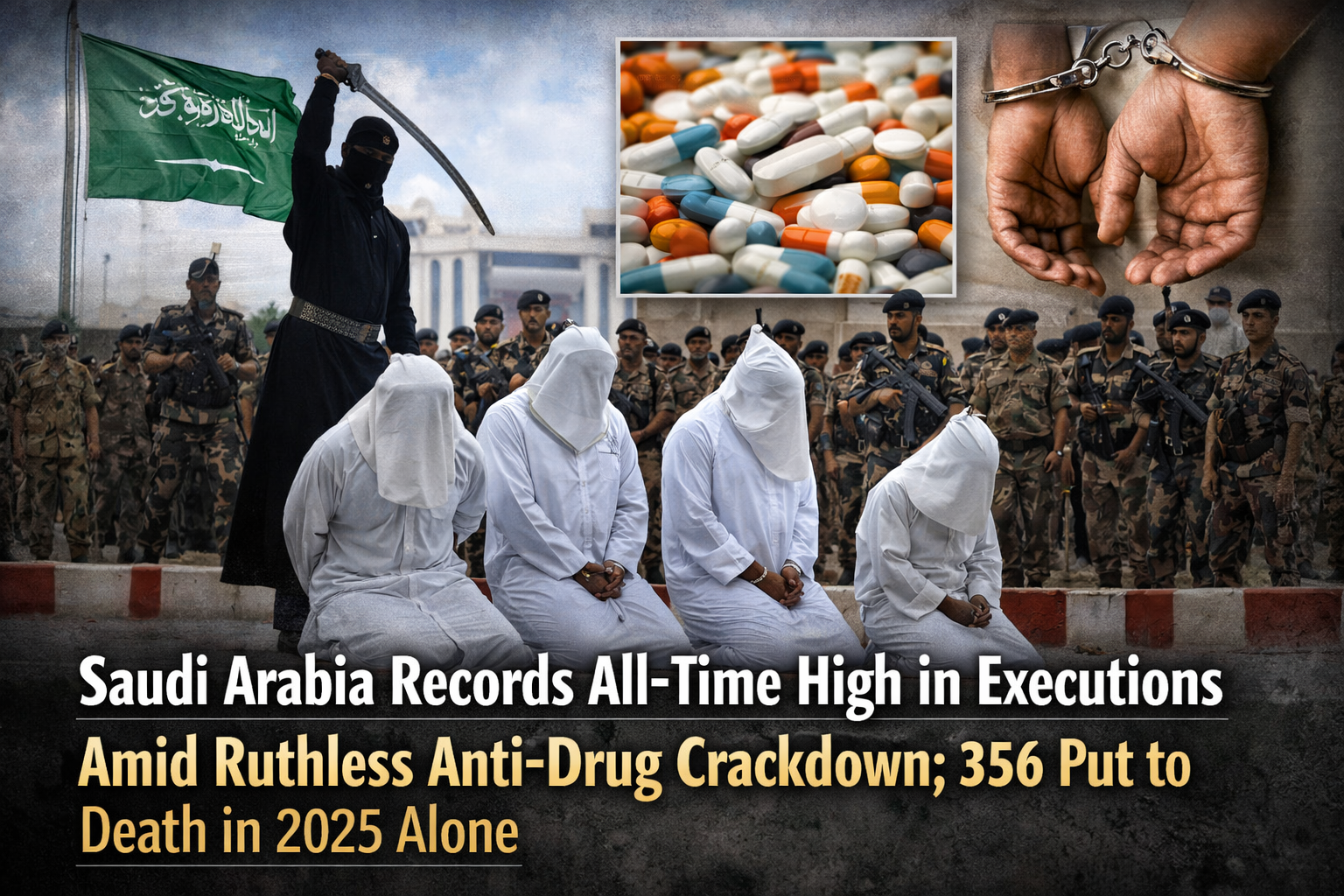
Saudi Arabia has carried out an unprecedented number of executions, reaching an all-time record, with at least 356 people executed in 2025 alone, according to data compiled from official announcements and human rights monitoring groups. A significant portion of these executions were linked to drug-related offences, underscoring the Kingdom’s declared policy of “zero tolerance” in its war against narcotics.
The shocking figures have emerged at a time when Crown Prince Mohammed bin Salman (MBS) is globally projecting Saudi Arabia as a country undergoing sweeping social and economic reforms under the Vision 2030 programme. The surge in executions has, however, reignited international criticism, highlighting a stark contrast between liberalising reforms and the Kingdom’s continued reliance on the death penalty.
Relentless Drug Crackdown
Saudi authorities have made it clear that drug trafficking and smuggling are treated as crimes against national security. Officials argue that harsh punishments are essential to protect Saudi society from the social and economic damage caused by narcotics.
In 2025, executions were carried out for offences including:
- Drug trafficking and smuggling
- Murder and violent crimes
- Terror-related charges
Human rights organisations note that drug-related executions alone account for a substantial share of the total, marking a sharp increase compared to previous years.
Record-Breaking Numbers
The execution count in 2025 has already surpassed all previous annual records in the Kingdom’s modern history. Analysts say the pace of executions indicates an institutional hardening of criminal justice policies, particularly towards narcotics, despite earlier signals from the Saudi leadership suggesting a possible reduction in capital punishment.
In recent years, Saudi Arabia had announced a temporary halt on executions for certain non-violent offences. However, observers point out that drug crimes were never fully excluded, and enforcement has now intensified significantly.
International and Rights Group Reaction
Global human rights organisations have condemned the spike, calling it a grave setback for human rights. Concerns have been raised over:
- Fair trial standards
- Use of confessions allegedly obtained under coercion
- Limited access to legal representation, particularly for foreign nationals
Several executed prisoners were reportedly migrant workers, triggering diplomatic unease in parts of Asia and Africa.
Western governments have largely responded cautiously, balancing criticism with strategic and economic ties to Riyadh, including cooperation in energy, defence, and regional security.
Saudi Government’s Stand
Saudi officials maintain that executions are conducted strictly under Sharia law and national legislation, following multiple levels of judicial review. The government insists the death penalty is applied only in the most serious cases, and that the tough stance has contributed to maintaining internal security and social stability.
State-linked media have defended the policy, arguing that leniency on drug crimes would open the door to organised crime networks and regional trafficking routes.
Reform vs Reality
Under MBS, Saudi Arabia has witnessed notable social changes—women driving, expansion of entertainment, tourism, and foreign investment. Yet, critics argue that legal and political reforms have not kept pace, particularly in areas of criminal justice and civil liberties.
The record number of executions in 2025 has intensified debate over whether Saudi Arabia’s reforms are selective and economic in nature, while core aspects of the justice system remain uncompromising.
As the Kingdom continues its transformation on the world stage, the soaring execution figures stand as a stark reminder that Saudi Arabia’s approach to law enforcement—especially in the fight against drugs—remains among the harshest in the world.