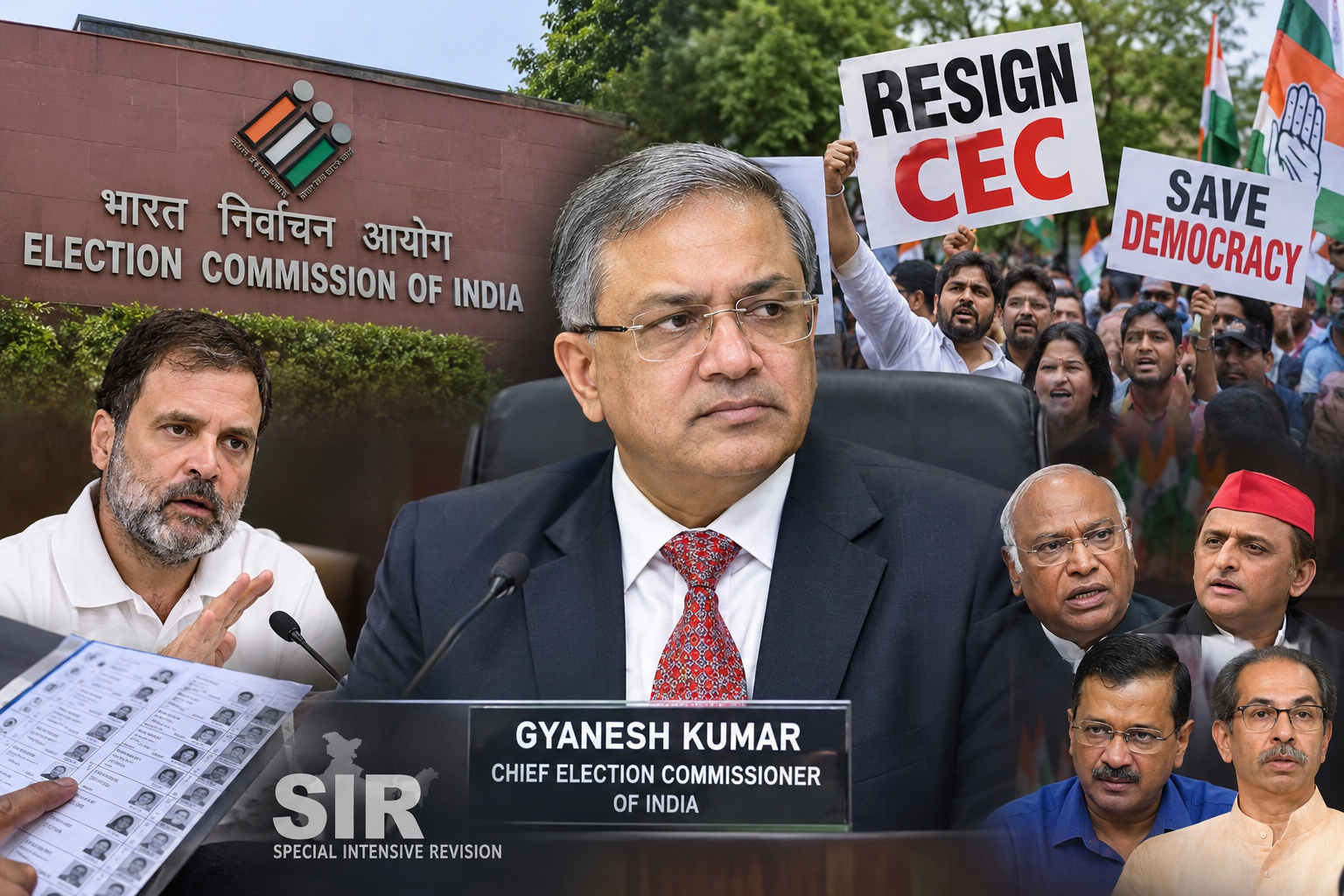
The schedule for the legislative assembly elections in five Indian states has been officially announced by the Election Commission of India, marking a crucial phase in the country’s democratic process. Approximately 174 million voters across Kerala, Assam, Tamil Nadu, Puducherry and West Bengal will exercise their franchise in the upcoming polls. Political analysts say the elections are expected to have a significant impact on the national political landscape.
Election Schedule and Preparations
The election schedule was announced during a press conference held by the Election Commission of India. Officials stated that extensive administrative and security arrangements are being made to ensure that the elections are conducted in a free, fair and peaceful manner.
Millions of polling officials will be deployed and security forces will be stationed across sensitive areas. Voting will be conducted using Electronic Voting Machines (EVMs). Special arrangements are also expected to be made for senior citizens, persons with disabilities and first-time voters.
Kerala: Intense Contest Among Major Fronts
In Kerala, elections will be held for all 140 seats in the state legislative assembly. The main contest is expected among three political alliances: the ruling Left Democratic Front (LDF), the opposition United Democratic Front (UDF), and the alliance led by the Bharatiya Janata Party (BJP).
Key campaign issues are likely to include development initiatives, welfare programmes, employment opportunities and improvements in healthcare and education sectors.
Tamil Nadu: Traditional Political Rivalry
The political battle in Tamil Nadu is expected to be intense, as is usually the case in the state’s elections. The primary competition will be between alliances led by the Dravida Munnetra Kazhagam (DMK) and the All India Anna Dravida Munnetra Kazhagam (AIADMK).
Major campaign themes are expected to revolve around social justice, economic growth, welfare policies and the relationship between the state and the central government.
West Bengal: A Politically Significant Battle
The elections in West Bengal are drawing national attention. The ruling All India Trinamool Congress (TMC) will face strong competition from the Bharatiya Janata Party (BJP).
Political observers believe the outcome will play a key role in shaping the political direction of the state and may also influence national political dynamics.
Assam: Key Issues in Focus
In Assam, the election is expected to focus on issues such as migration, national security and regional development. The ruling alliance led by the BJP will face opposition coalitions aiming to challenge its dominance in the state.
Puducherry: Small Territory, High Political Stakes
Although the legislative assembly is relatively small in Puducherry, the elections there are politically significant. Alliances between national and regional parties are likely to play a decisive role in determining the outcome.
174 Million Voters in a Major Democratic Exercise
Across the five states, around 174 million voters are eligible to cast their votes. To ensure transparency and fairness, the Election Commission of India has introduced several monitoring mechanisms, including a large number of polling stations, deployment of central security forces, video monitoring of sensitive polling booths and strict enforcement of the Model Code of Conduct.
Implications for National Politics
The results of these elections are expected to provide an important indicator of the strength of national and regional political parties in India. Analysts believe the outcomes could influence future political alliances and strategies ahead of upcoming national electoral contests.
With millions of voters preparing to participate, the elections in these five states are set to become one of the largest democratic exercises in the country, reflecting the vitality of India’s electoral system.