New Delhi: India may be on the verge of a major electoral overhaul, as the Union government weighs options to accelerate the rollout of the Women’s Reservation Act, potentially delinking it from the long-pending national census.
Key Developments
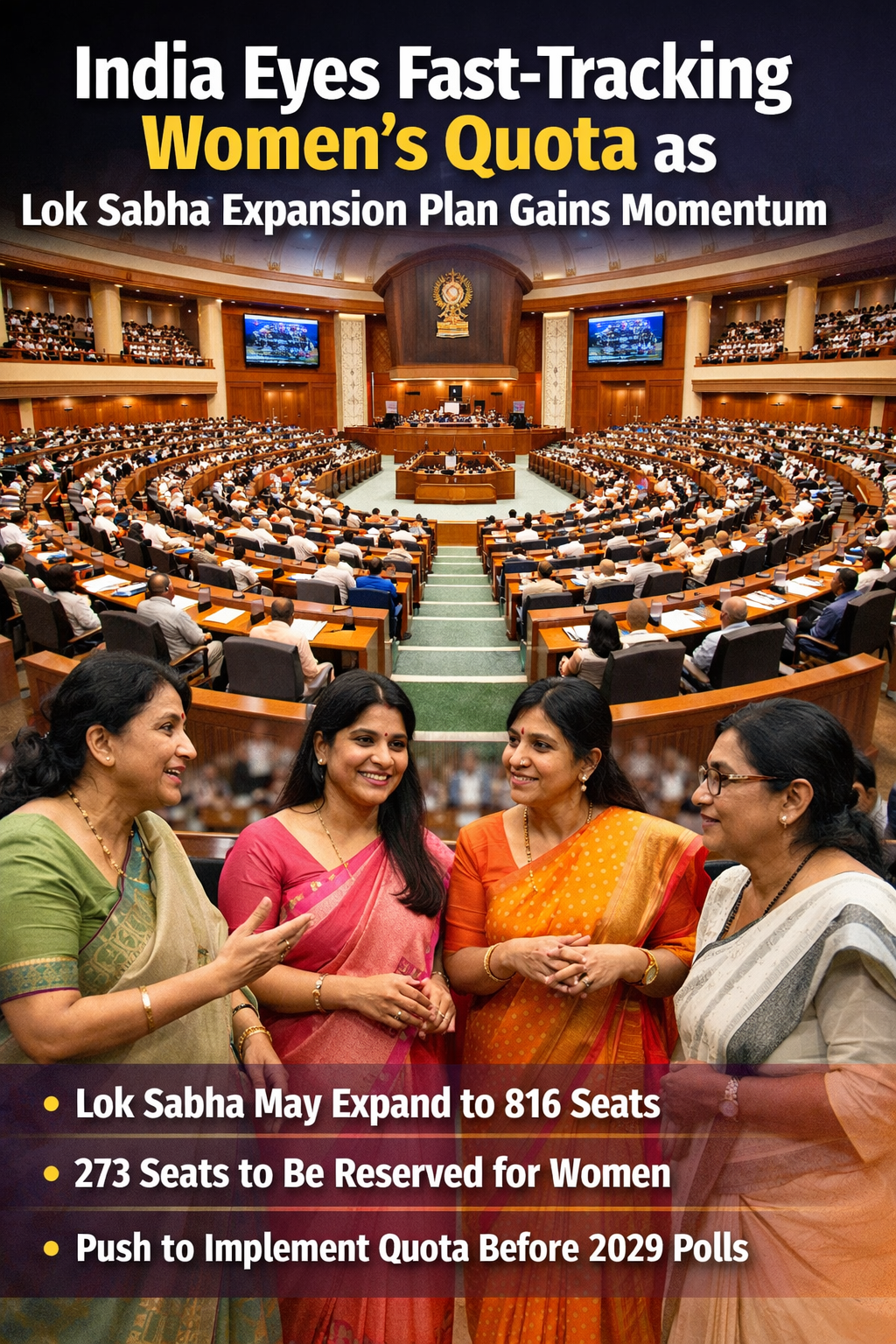
- The strength of the Lok Sabha could rise from 543 to 816 seats
- Nearly one-third (273 seats) may be reserved for women
- Implementation is being targeted ahead of the 2029 general elections
A Shift in Implementation Strategy
The Women’s Reservation Act, passed in 2023, provides for 33% reservation for women in the Lok Sabha and state legislative assemblies. However, the law’s rollout was initially contingent on two conditions:
a fresh census and a subsequent delimitation exercise.
Officials are now considering an alternative route — using 2011 census data to carry out delimitation, alongside possible constitutional amendments to remove or ease the census-linked condition.
Proposed Expansion of Parliament
Under the emerging framework, the Lok Sabha could be significantly expanded to 816 members, with 273 seats earmarked for women.
If implemented, the move would represent one of the most substantial reforms in India’s parliamentary structure, dramatically increasing women’s representation in national politics.
Why the Urgency?
The delay in conducting the next census has slowed the implementation timeline. By advancing the process without waiting for updated population data, the government aims to expedite gender-based political reforms.
Sources indicate that legislative changes enabling this shift could be introduced in an upcoming parliamentary session.
Implications for States
The reservation policy is also set to extend to state legislative assemblies, potentially altering seat distributions across the country.
In Kerala, for instance, the current composition stands at 20 Members of Parliament and 140 MLAs. Any increase in representation would depend on the outcomes of the delimitation process. Reports suggesting significantly higher numbers remain unconfirmed.
Context and Significance
Women currently account for roughly 14% of Lok Sabha members, highlighting a persistent gender gap in political representation.
The reservation policy, first proposed in the 1990s and passed in various forms over the decades, was finally enacted as a constitutional amendment in 2023, marking a long-awaited milestone.
Challenges Ahead
Despite broad political support, key hurdles remain:
- Building consensus across parties
- Managing the complexities of delimitation
- Addressing concerns over regional representation
Outlook
If the government succeeds in fast-tracking the implementation, India’s 2029 general election could become a defining moment for gender representation in politics — positioning women, or “Nari Shakti,” at the forefront of the country’s democratic future.