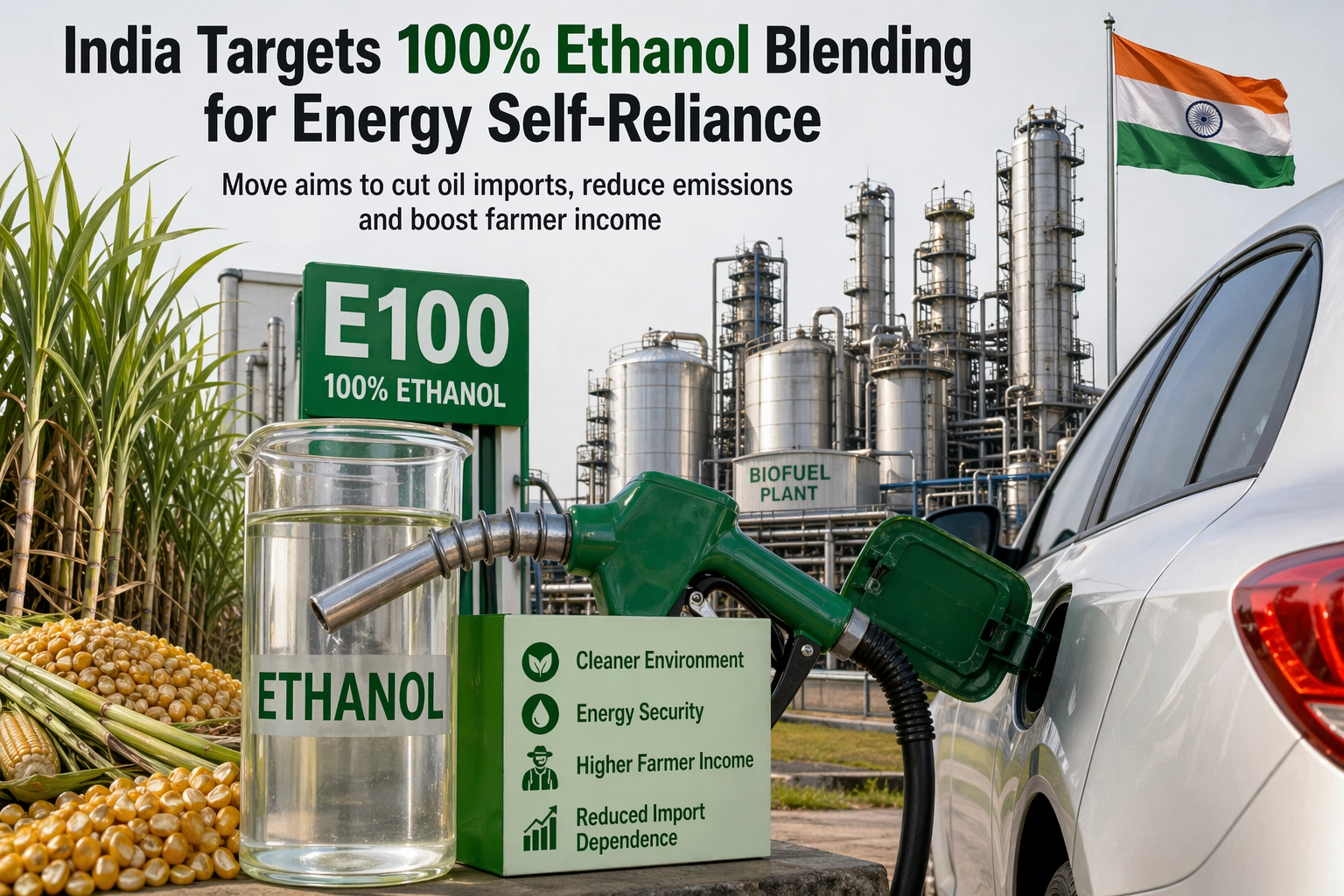
India is moving towards achieving energy self-reliance by planning to implement 100% ethanol blending (E100) in the coming years. Union Minister for Road Transport and Highways, Nitin Gadkari, has stated that this initiative aims to reduce the country’s dependence on crude oil imports and promote cleaner, sustainable fuel alternatives.
What is Ethanol?
Ethanol is a renewable biofuel produced from agricultural resources such as sugarcane, maize (corn), and other grains. When blended with petrol, it helps reduce harmful emissions from vehicles and supports environmentally friendly energy use.
Key Features:
- Renewable and sustainable fuel
- Reduces carbon monoxide and greenhouse gas emissions
- Supports the agricultural sector
Ethanol Production Process
Ethanol is mainly produced through a fermentation process involving the following steps:
1. Raw Material Collection
Sugarcane (molasses), maize, and other grains are collected.
2. Sugar Extraction
Sugar is extracted from sugarcane, while starch from grains is converted into fermentable sugars.
3. Fermentation
Yeast is added to convert sugars into alcohol. This process usually takes 2–3 days.
4. Distillation
The fermented mixture is heated to separate ethanol from water and other components.
5. Dehydration
Remaining water content is removed to obtain high-purity ethanol (about 99%).
Current Status in India
India is currently progressing toward E20 (20% ethanol blending) as an intermediate target. The government aims to achieve this milestone by 2025, paving the way for a future transition to E100 fuel.
Benefits of E100 Implementation
Reduced Import Costs
Lower dependence on imported crude oil will save foreign exchange.
Environmental Protection
Carbon emissions and air pollution levels will significantly decrease.
Farmer Income Growth
Increased demand for crops like sugarcane and maize will benefit farmers.
Energy Security
Domestic production of fuel will enhance national energy independence.
Challenges Ahead
- Vehicles need to be adapted or redesigned to run on E100
- Expansion of ethanol production capacity is required
- High water usage in sugarcane farming must be managed
- Infrastructure and fuel distribution systems need development
Conclusion
India’s push towards 100% ethanol blending marks a significant step in achieving sustainable energy goals and reducing environmental impact. While challenges remain, strong policy support and technological advancements can make this vision a reality, benefiting the economy, farmers, and the environment alike.