Vijay, BJP, DMK-Congress Rift and the Political Earthquake Reshaping India.
C. Mahesh
Tamil Nadu politics has entered its most transformative phase since the rise of the Dravidian movement. The 2026 Assembly election was not merely an electoral contest; it became a referendum on the future of Dravidian politics itself.
For nearly six decades, Tamil Nadu was dominated by two Dravidian giants — the Dravida Munnetra Kazhagam (DMK) and the All India Anna Dravida Munnetra Kazhagam (AIADMK). But actor-turned-politician Vijay and his party Tamilaga Vettri Kazhagam (TVK) have disrupted this entrenched order.
With TVK emerging as the single largest party with 108 seats, Tamil Nadu has entered an era of political uncertainty, ideological reconfiguration, and generational transition. (Reuters)
The Decline of Traditional Dravidian Dominance
The central question now being debated across India is whether Dravidian politics itself is collapsing.
The answer is more complex than a simple yes or no.
Dravidian ideology — rooted in:
- social justice,
- linguistic identity,
- state autonomy,
- anti-Hindi politics,
- and federalism —
still retains emotional and political relevance among Tamil voters.
What is fading is not the ideology, but the monopoly of the traditional Dravidian parties.
The deaths of M. Karunanidhi and J. Jayalalithaa created a leadership vacuum that neither DMK nor AIADMK fully managed to fill. The emotional connect that once sustained cadre-based politics weakened significantly.
India Today described the present transition as:
“The era of the solitary oak was over.”
(India Today)
Tamil Nadu is therefore not abandoning Dravidianism; rather, it is redefining it through a new political language centered on youth aspirations, anti-incumbency, governance, and celebrity-driven populism.
BJP’s Long-Term Mission: Has It Succeeded?
For decades, the Bharatiya Janata Party (BJP) sought to weaken the Dravidian political ecosystem in Tamil Nadu.
Its strategic objectives were:
- Break the DMK-AIADMK duopoly
- Expand Hindu nationalist politics in the state
- Integrate Tamil Nadu into the BJP’s broader national ideological framework
In one sense, the BJP partially succeeded.
The old bipolar Dravidian order has undeniably fractured.
However, the BJP failed to become the direct beneficiary of that collapse.
Instead, Vijay occupied the anti-establishment political space.
The Times of India observed:
“BJP’s push faltered as Vijay seized the prize.”
(Times of India)
This is politically significant because Tamil voters did not move toward ideological Hindutva politics. They moved toward a regional alternative promising change without abandoning Tamil identity politics.
Thus, BJP may have weakened traditional Dravidian structures indirectly, but it did not replace them.
Vijay’s Political Rise and the Transformation of Tamil Politics
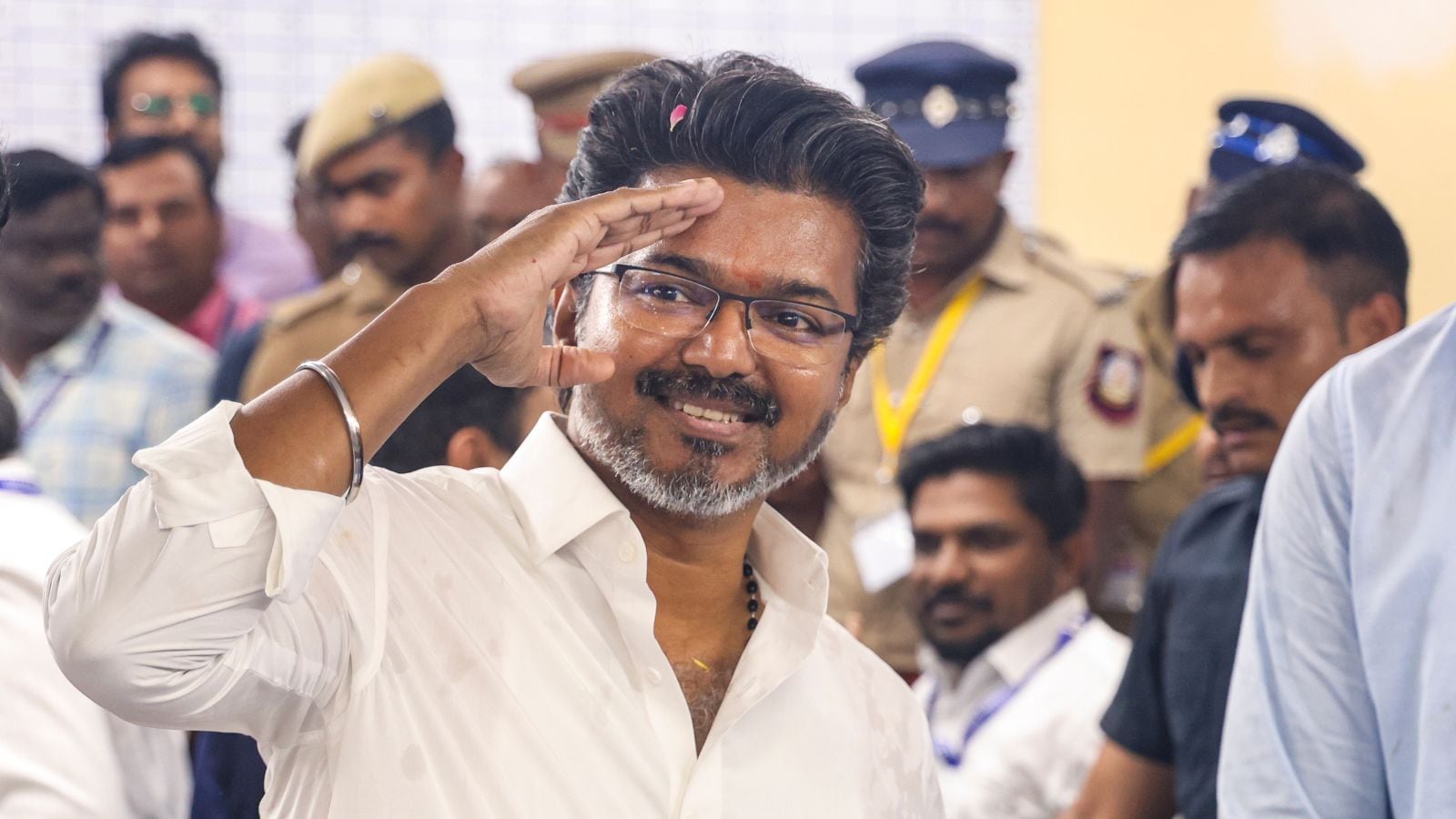
Vijay’s entry into politics represents more than celebrity influence.
His rise combines:
- youth mobilization,
- anti-incumbency sentiment,
- welfare populism,
- governance promises,
- and emotional mass appeal.
Unlike earlier Dravidian leaders, Vijay avoided rigid ideological positioning. Instead, he projected himself as a “clean alternative” to exhausted political establishments.
Reuters reported:
“Anti-incumbency and desire for change drove TVK.”
(Reuters)
Al Jazeera highlighted another critical trend:
“Vijay attracted Dalit and minority votes.”
(Al Jazeera)
This shift deeply hurt the DMK because:
- minority voters partially migrated to TVK,
- younger voters embraced Vijay as a generational leader,
- and anti-DMK votes consolidated around TVK instead of AIADMK.
Vijay effectively converted cinematic charisma into a broad anti-establishment political movement.
The Magic Number 118: How TVK Reached Power
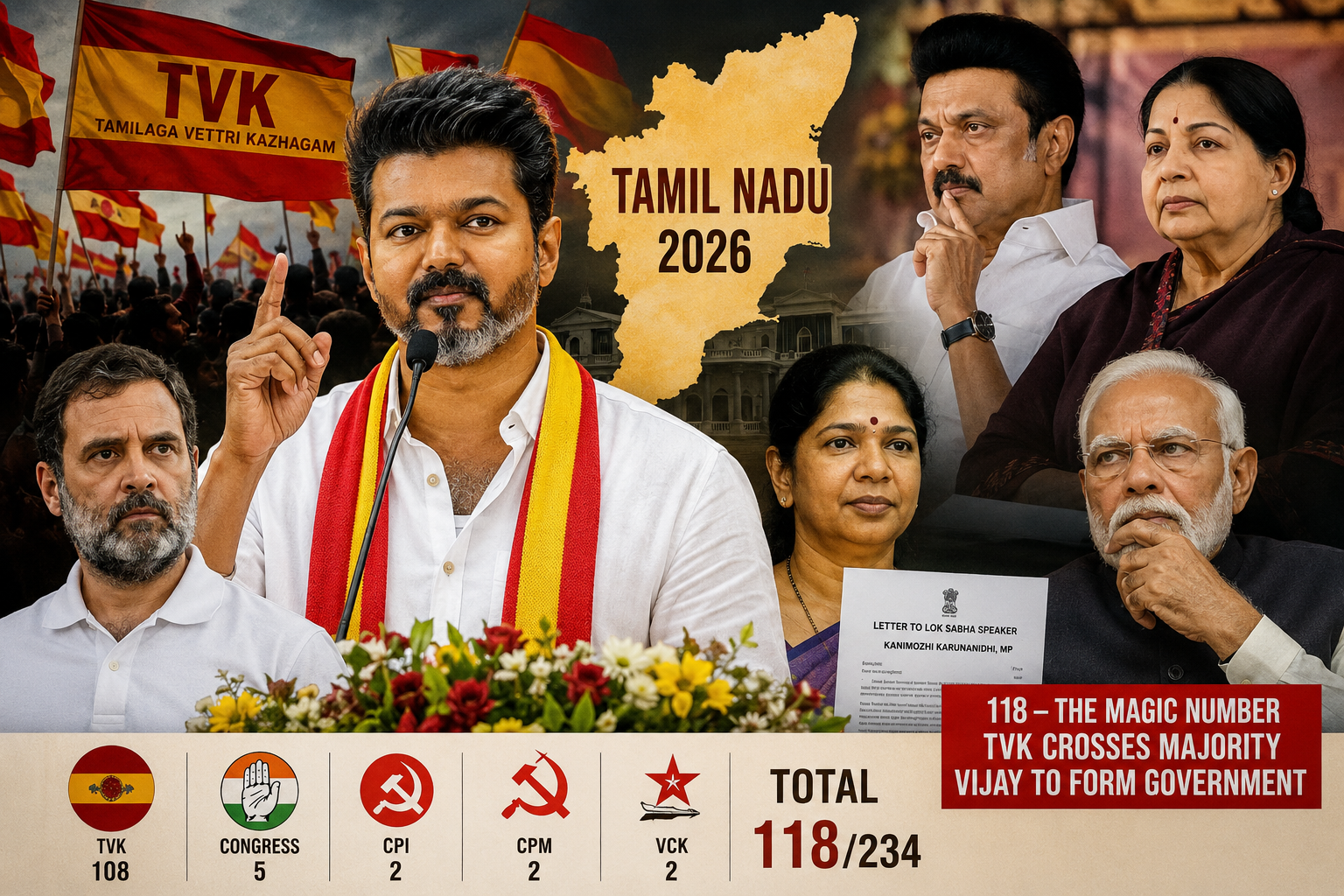
In the 234-member Tamil Nadu Assembly, 118 seats are required for a majority.
TVK won 108 seats.
(Times of India)
Soon after the results:
- Congress extended support,
- Left parties joined hands,
- smaller allies moved toward TVK.
This enabled Vijay to cross the majority threshold.
Economic Times reported:
“This ends the long-standing control of DMK and AIADMK.”
(Economic Times)
This moment marks the first serious structural disruption of Dravidian two-party dominance in modern Tamil Nadu history.
DMK’s Strategic Miscalculation and Congress Realignment
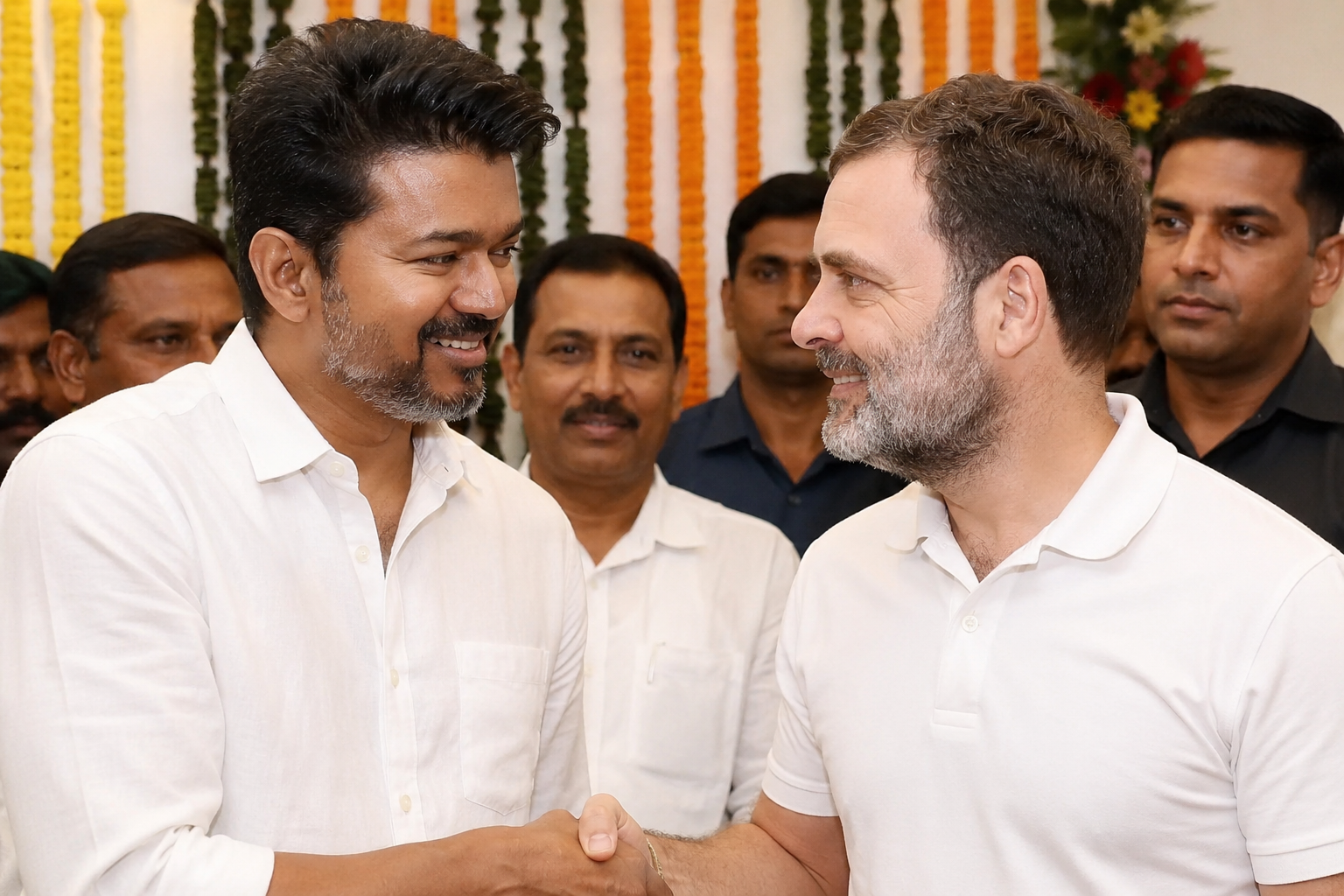
Perhaps the biggest shock after the election was Congress distancing itself from DMK and moving closer to TVK.
For decades, DMK had been one of Congress’s most dependable allies in southern India.
However, post-election political calculations changed rapidly.
Congress appeared to conclude that:
- Vijay represented the future,
- DMK’s dominance was weakening,
- and supporting TVK would preserve Congress relevance in Tamil Nadu.
NDTV reported:
“Congress extended conditional support to TVK.”
(NDTV)
This was perceived within DMK circles as a political betrayal.
Kanimozhi’s Letter and the National Fallout
The tensions escalated dramatically when Kanimozhi wrote to the Lok Sabha Speaker requesting separate seating arrangements for DMK MPs away from Congress members.
According to reports, the request cited:
“Changed political circumstances.”
(Times of India)
Symbolically, this was far more than a seating issue.
It signaled:
- a visible rupture within the INDIA opposition bloc,
- the collapse of trust between DMK and Congress,
- and the emergence of Vijay as a new political center in opposition politics.
What began in Chennai now appears to be reshaping opposition dynamics in New Delhi.
Impact on the INDIA Alliance
The DMK-Congress partnership had long been a crucial pillar of the INDIA alliance.
If this fracture deepens:
- opposition unity against BJP may weaken,
- southern regional coordination may suffer,
- and parliamentary opposition strategy could become unstable.
At the same time, another possibility is emerging.
TVK may evolve into a new federal opposition force capable of aligning with Congress, Left parties, and regional blocs.
Hindustan Times noted:
“TVK’s inclusion may strengthen the opposition bloc.”
(Hindustan Times)
This would fundamentally alter opposition politics ahead of future national elections.
Is Vijay Helping BJP or Blocking BJP?
This remains the most debated question.
On one hand:
- Vijay weakened traditional Dravidian parties,
- fragmented anti-BJP political structures,
- and accelerated political instability.
On the other hand:
- he prevented BJP from directly occupying the opposition vacuum,
- consolidated minority and youth votes away from BJP,
- and strengthened Tamil regional identity politics.
Therefore, Vijay may ultimately become not BJP’s ally, but its strongest regional obstacle in Tamil Nadu.
Conclusion: The Second Birth of Dravidian Politics
Tamil Nadu is not witnessing the death of Dravidian politics.
It is witnessing its reinvention.
The 2026 election represents:
- the decline of old Dravidian monopolies,
- the rise of personality-driven populism,
- generational transition in leadership,
- and the emergence of new coalition politics.
Vijay’s ascent marks the beginning of a new phase where Tamil identity politics, youth aspirations, governance demands, and celebrity influence merge into a new political grammar.
The old Dravidian era may be ending.
But a new Dravidian age may only just be beginning.