Prime Minister Keir Starmer Resigns as Britain Enters a New Era of Political Uncertainty
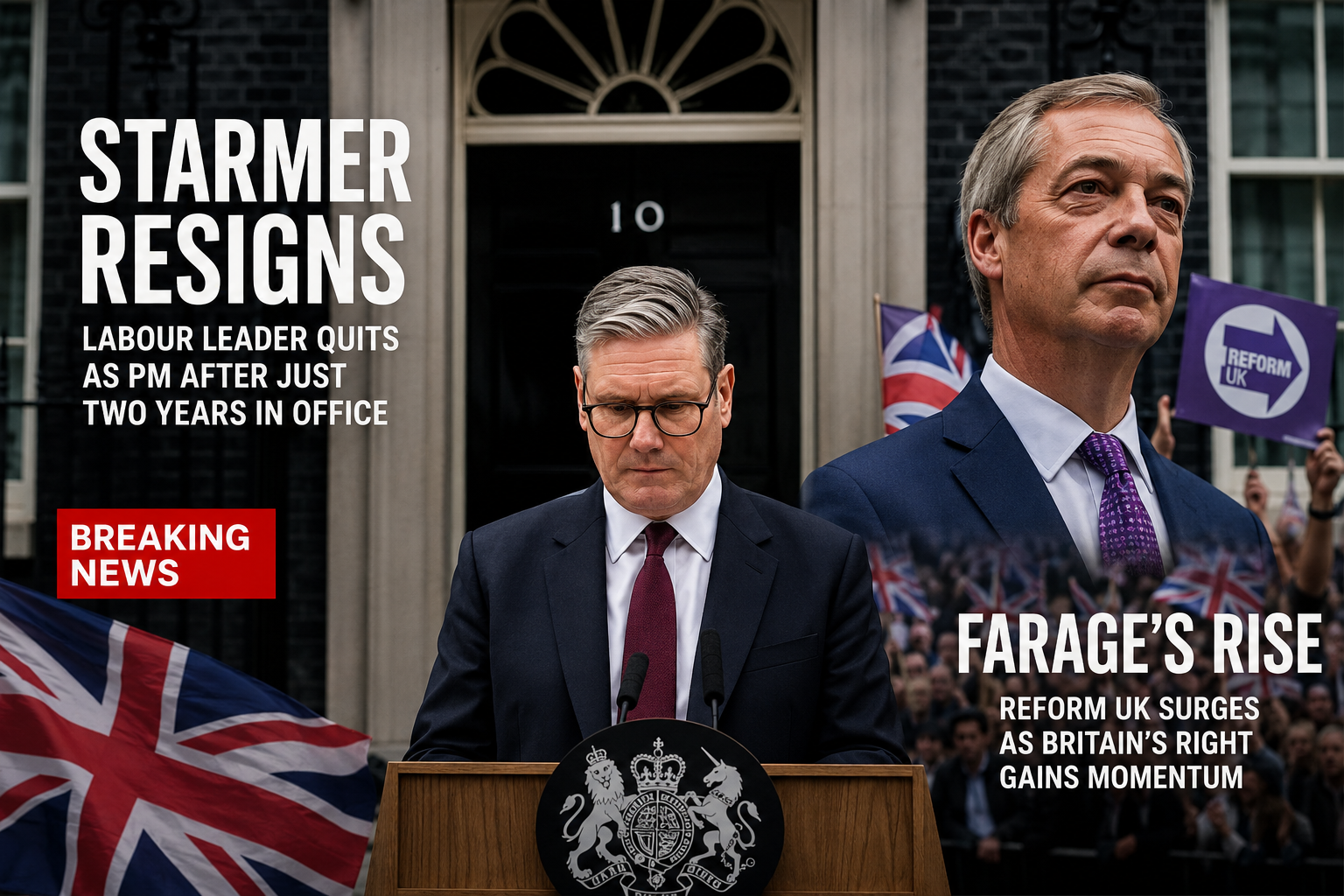
British politics has been thrust into turmoil following the resignation of Prime Minister Keir Starmer, just two years after leading the Labour Party to a historic landslide victory in the 2024 general election. His departure marks not only the end of a short-lived premiership but also signals a deeper transformation taking place across British society and politics.
International observers argue that Starmer’s resignation is about more than one leader’s failure. It reflects growing public frustration with the political establishment and the rapid rise of right-wing populist forces that are increasingly challenging Britain’s traditional political order.
Why Did Starmer Resign?
When Labour swept to power in 2024, Starmer promised stability, economic renewal, and a restoration of trust in government after years of Conservative rule. However, his administration soon faced mounting difficulties.
Despite efforts to stimulate growth, the British economy continued to struggle with weak productivity, persistent cost-of-living pressures, and public concerns over living standards. Long waiting times in the National Health Service remained a major issue, while the government faced criticism over its handling of migration and border policies.
Labour’s disappointing performance in a series of local elections further intensified pressure on the Prime Minister. As dissatisfaction spread among voters and unease grew within Labour’s parliamentary ranks, calls for a leadership change became increasingly difficult to ignore.
Political analysts note that Starmer’s resignation was the culmination of months of declining public support, internal party tensions, and growing doubts about Labour’s ability to deliver the transformative change voters expected in 2024.
The Bigger Story: The Rise of Britain’s Right
While Starmer’s resignation dominates headlines, many international commentators believe the more significant story is the growing strength of Britain’s right-wing populist movement.
At the center of this shift is Nigel Farage and his party, Reform UK.
Over the past year, Reform UK has gained momentum in opinion polls, attracting voters frustrated with both Labour and the Conservatives. The party has positioned itself as an anti-establishment force, arguing that Britain’s traditional political parties have failed to address the concerns of ordinary citizens.
Its message focuses heavily on:
• Stricter immigration controls
• National sovereignty and British identity
• Reduced bureaucracy
• Opposition to what it describes as elite political consensus
• Greater emphasis on law, order, and border security
Supporters view Reform UK as a movement that speaks for voters who feel ignored by mainstream politics. Critics, however, warn that some of its rhetoric reflects broader trends associated with right-wing populism that have emerged across Europe and North America.
Why Is Right-Wing Populism Growing?
Immigration Concerns
Migration remains one of the most debated issues in British politics. Many voters believe successive governments have failed to adequately manage immigration levels and border enforcement.
Economic Frustration
Rising housing costs, pressure on public services, wage stagnation, and concerns about economic security have fueled public dissatisfaction.
Distrust of Established Parties
A growing number of voters feel that both Labour and the Conservatives have become disconnected from everyday concerns, creating space for alternative political movements.
Questions of National Identity
Debates over Britain’s cultural identity, social cohesion, and post-Brexit future continue to shape political attitudes, particularly among voters seeking a stronger emphasis on national interests.
Who Could Replace Starmer?
Attention is now turning to Labour’s leadership contest.
Among the figures frequently mentioned as potential successors is Andy Burnham, the Mayor of Greater Manchester and a prominent Labour figure with significant grassroots support.
Burnham is widely regarded as a politician capable of reconnecting Labour with working-class voters while maintaining the party’s broad electoral coalition. His supporters argue that he could provide the fresh leadership needed to rebuild public confidence.
Part of a Wider European Trend
Britain’s political shift is not occurring in isolation.
Across Europe, nationalist and populist parties have gained ground amid concerns over immigration, economic insecurity, and dissatisfaction with traditional political elites.
From France and Germany to Italy and the Netherlands, established parties are increasingly being challenged by movements promising stronger borders, national sovereignty, and a break from conventional politics.
The developments in Britain therefore reflect a broader political realignment taking place across much of the Western world.
A Turning Point for British Politics
Keir Starmer’s resignation may ultimately be remembered not simply as the end of a premiership, but as a symbol of a changing political era.
Labour came to power promising renewal and reform, yet many voters remain unconvinced that meaningful change has been delivered. The resulting frustration has opened political space for new challengers, particularly on the right.
Whether Labour can recover under new leadership—or whether Nigel Farage and Reform UK can convert growing public support into lasting political influence—may become one of the defining questions in Britain’s next chapter.
For now, Britain finds itself at a crossroads, with the country’s political future more uncertain and contested than at any point in recent years.