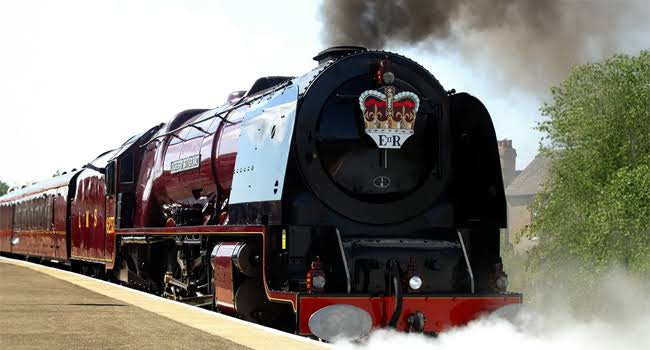
LONDON – The British Royal Train, a symbol of royal travel since 1842, is set to be decommissioned by 2027 as part of a significant cost-saving initiative by Buckingham Palace. The decision, announced on Monday, June 30, 2025, follows a comprehensive review of the train’s usage and value for money, according to the annual Royal Household accounts.
The Royal Train’s history dates back to Queen Victoria’s inaugural journey from Slough to London Paddington on a specially constructed train. The current nine-carriage Royal Train, which includes sleeping quarters and an office, was introduced in 1977 for Queen Elizabeth II’s Silver Jubilee.
However, the operating costs have come under increasing scrutiny. The Royal Household’s annual accounts report that a single visit by King Charles to Staffordshire in February cost £44,822 (approximately $61,800). Another journey to luxury car manufacturer Bentley’s Cheshire headquarters last year incurred an additional £33,000 (around $45,700).
Furthermore, significant expenses are associated with storing the Royal Train at its secure facility in Wolverton, England.
Reports indicate that the decision to decommission the train stems from the prohibitive costs of keeping it operational beyond 2027, including substantial investments required for modernization. As an alternative, the Royal Family will increasingly rely on two new helicopters. The Royal Family currently undertakes over 140 helicopter journeys annually, with each trip costing an average of $4,600.
The Royal Family receives an annual sum from the British government, known as the Sovereign Grant, which this year amounted to £86.3 million (approximately $118.50 million). This grant is intended to cover the maintenance of royal palaces, official duties of the Royal Family, and travel expenses, though it does not include security funding. In exchange for the grant, dating back to a 1760 agreement, the monarch remits all profits from the Crown Estate to the government. This vast portfolio includes extensive properties in central London, Ascot Racecourse, and coastal areas around England, Wales, and Northern Ireland.
While the Royal Train holds a cherished place in royal history, the move reflects a broader effort by the Royal Household to demonstrate “fiscal discipline” and ensure “value for money” for the British taxpayer. The King is said to have fond memories of the train, with a carriage specifically created for him in the mid-1980s, which he still uses. However, the Palace states that the time has come to modernize and adapt royal operations to reflect contemporary realities. Discussions are expected to begin on finding a long-term home for some of the historic carriages, potentially for public display.