Tawang– July 11:
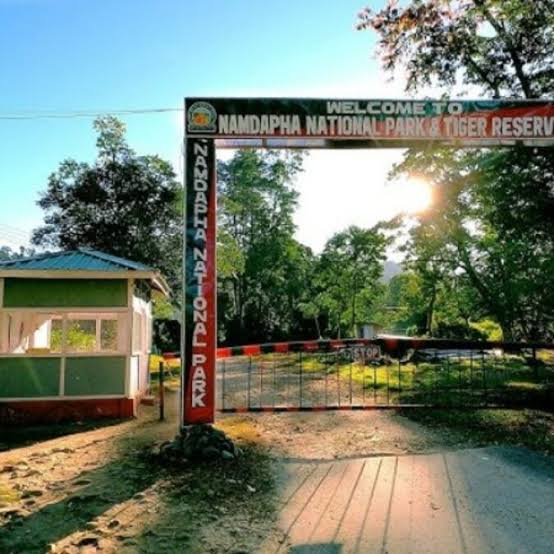
The Standing Committee of the National Board for Wildlife (NBWL) has granted “in principle” approval for the diversion of 310 hectares of core forest land from the Namdapha Tiger Reserve in Arunachal Pradesh. This decision, taken during a committee meeting on June 26, 2025, allows for the construction of a critical section of the Arunachal Frontier Highway (NH-913), a strategically important infrastructure project near the India-Myanmar border.
The land in question, located in Changlang district, will facilitate the construction of a highway stretch connecting NH-215 near Kharsang to the Miao-Gandhigram-Vijaynagar road. The Arunachal Pradesh Public Works Department (PWD) had proposed the diversion of 248.79 hectares for road widening and an additional 61.21 hectares for muck disposal.
However, the approval has drawn significant criticism from environmental experts and some committee members due to its potential ecological impact. Concerns were raised by members Dr. R. Sukumar and H.S. Singh, along with the Chief Wildlife Warden of Arunachal Pradesh. A key issue highlighted was the estimated felling of approximately 155,000 trees within the biodiverse Namdapha Tiger Reserve.
Dr. Sukumar acknowledged the strategic necessity of the highway for national security but criticized the current design of wildlife crossings. He pointed out that the proposed structures rely on standard culvert models developed by the PWD, which are widely regarded as inadequate for safe and effective animal movement. He further questioned the need for extensive road widening in such an ecologically sensitive area. Similarly, H.S. Singh recommended the preparation of a revised wildlife mitigation plan before the final approval is granted.
Despite these reservations, the committee gave the project conditional approval. As part of the clearance terms, the Wildlife Institute of India (WII) has been tasked with developing a detailed, site-specific wildlife passage plan within three months. The plan is expected to be based on real-time data on animal movement and will include mitigation measures to reduce the ecological footprint of the highway. The state government has assured the committee that this plan will be fully implemented.
The Namdapha Tiger Reserve, part of the Eastern Himalayan biodiversity hotspot, is home to several endangered species, including the clouded leopard and various lesser-known carnivores. Although the tiger population in the area is relatively low, the National Tiger Conservation Authority (NTCA) emphasized the reserve’s vital role in large carnivore conservation.
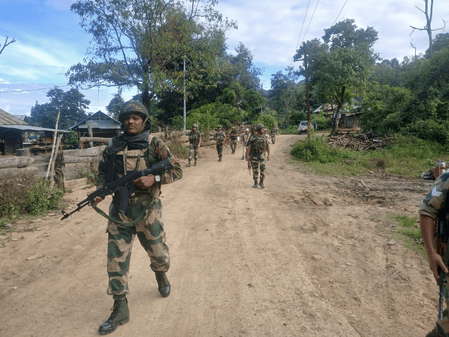
The Arunachal Frontier Highway is a key part of India’s strategy to improve border infrastructure along the Line of Actual Control (LAC) with China. It is aimed at enhancing military mobility, surveillance, and asserting sovereignty in remote frontier regions. The project also holds the promise of development for underserved communities in Arunachal Pradesh.
As the government moves forward with construction, environmentalists and conservation groups are expected to closely monitor the implementation of wildlife protection measures. The final approval will depend on the successful integration of robust ecological safeguards into the highway design.good title