SAN JUAN, Puerto Rico (AP) — The world’s smallest known snake, feared extinct for nearly two decades, has been rediscovered on the Caribbean island of Barbados, rekindling hope for the conservation of one of the planet’s most elusive reptiles.
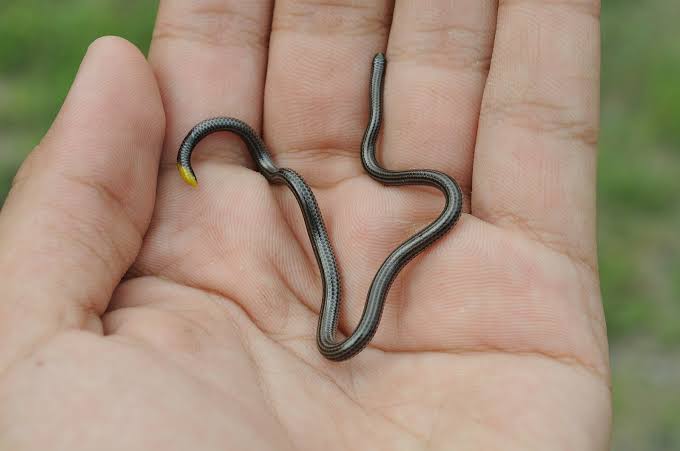
The Barbados threadsnake (Tetracheilostoma carlae), which grows to a maximum length of just 10 centimeters (about 4 inches) and is slender enough to curl on a coin, was recently found during an intensive ecological survey conducted by local and international researchers.
The discovery was announced this week by the conservation organization Re\:wild, in partnership with Barbados’ Ministry of Environment. The team confirmed the snake’s presence in a secluded patch of natural forest, one of the island’s few remaining undisturbed habitats.
The Barbados threadsnake had not been seen in the wild since the early 2000s, leading scientists to fear that it might have disappeared altogether. It was one of 4,800 species listed as “lost to science” by Re\:wild — a term used to describe species not observed in at least 10 years.
“This tiny snake is truly remarkable,” said Dr. S. Blair Hedges, a herpetologist and professor at Temple University who formally described the species in 2008. “Its rediscovery reminds us how much we still don’t know about our natural world and how important it is to protect what little habitat remains.”
Dr. Hedges first identified Tetracheilostoma carlae as a distinct species in 2008, naming it after his wife, Carla Ann Hass. Though originally documented in 1889, the snake’s tiny size, cryptic burrowing behavior, and habitat loss had made it incredibly difficult to detect in the wild.
Blind and fossorial, the threadsnake lives underground and feeds primarily on termite and ant larvae. Its extremely narrow range and elusive habits mean that its survival depends heavily on the conservation of native forests in Barbados.
Environmental groups hope this rediscovery will galvanize further protection for the island’s ecosystems, which have been heavily fragmented due to development and agriculture.
“This is an important wake-up call,” said Dr. Donnéil Cain, a regional biodiversity specialist working with Re\:wild. “If such a minute and vulnerable creature can still survive, it means other ‘lost’ species might also be out there, waiting to be found. But we must act quickly to preserve their habitats.”
Efforts are now underway to conduct a more comprehensive population survey of the Barbados threadsnake, assess its conservation status, and develop strategies to protect its remaining habitat.
The discovery adds to a growing list of so-called “Lazarus species” — animals once believed extinct but later found alive — and highlights the importance of continued biodiversity research, especially in small island nations rich in endemic wildlife.
Source: The Associated Press (AP)
Contributors: Re\:wild Conservation Group, Barbados Ministry of Environment, Temple University.