C Mahesh
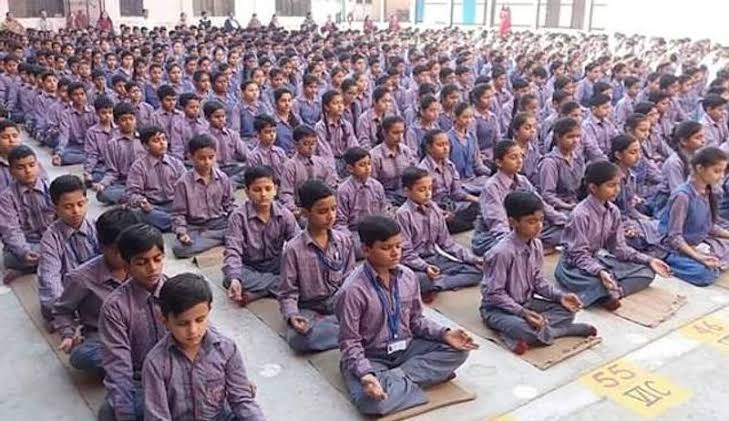
New Delhi – With a quiet but determined spread over decades, the Rashtriya Swayamsevak Sangh (RSS) has built one of India’s most expansive non-governmental educational networks, touching both mainstream and remote corners of the country. Spearheaded by Vidya Bharati Akhil Bharatiya Shiksha Sansthan, the education arm of the RSS, this vast system combines formal schooling, tribal outreach, and emerging ventures in higher education.
At its core, the network aims to instill a “Bharatiya” (Indian-centric) ethos in students—integrating traditional knowledge, Sanskrit, moral science, and patriotic values alongside the standard CBSE or state curriculum.
While supporters laud its discipline-oriented model and emphasis on cultural identity, critics warn of ideological slants that promote Hindu nationalist narratives. Yet, the sheer scale of the RSS’s presence in the education sector is undeniable.
- Formal School System: Over 25,000+ Schools Nationwide
Schools under the Vidya Bharati umbrella operate under names like Saraswati Shishu Mandir (primary) and Saraswati Vidya Mandir (secondary), with a strong footprint in both rural and urban areas.
North India
Uttar Pradesh: ~2,000 schools, among the largest state-wise concentrations.
Madhya Pradesh: A staggering ~3,000 schools, indicating deep rural integration.
Rajasthan: 1,000+ schools across the state.
Uttarakhand: 600+ schools, even in difficult terrains.
Punjab, Haryana, Himachal Pradesh, Delhi, J&K: Over 500 combined.
East & Northeast India
Odisha: 900+ schools, reflecting grassroots success.
Assam: Over 400 institutions.
West Bengal: 300+ schools despite historical political resistance.
Bihar & Jharkhand: Over 600 schools combined.
Other NE States & Andaman: A growing presence in Arunachal Pradesh, Manipur, Meghalaya, Nagaland, Tripura, and islands.
South India
Karnataka: 400+ schools and home to new higher-ed ventures.
Kerala: 379 schools under Bharatiya Vidya Niketan.
Andhra Pradesh & Telangana: Nearly 400 schools together.
Tamil Nadu: ~200 schools, many supported by Vivekananda Kendra.
West & Central India
Gujarat: 400+ schools across the state.
Chhattisgarh: Over 1,200 schools, especially in tribal belts.
Maharashtra & Goa: A steady expansion, particularly in semi-urban areas.
- Non-Formal & Tribal Education: The Ekal Vidyalaya Model
In some of India’s most inaccessible regions, the RSS’s educational outreach continues through Ekal Vidyalaya – a network of “one-teacher” schools. These aim to impart basic literacy, hygiene awareness, and cultural values to tribal and rural children.
Scale: Tens of thousands of Ekal schools are now operational.
Focus: Literacy, national identity, basic math and science, often through oral tradition and storytelling.
Criticism: NGOs and academics have raised concerns over lack of regulatory oversight and ideological framing.
- Higher Education & Professional Training: A Growing Frontier
The RSS’s newer focus on higher education is evident in its recent ventures:
Chanakya University (Karnataka): A multidisciplinary university in Bengaluru promoting Indian knowledge systems.
Rajju Bhaiyya Sainik Vidya Mandir (U.P.): A military school designed to groom future soldiers with cultural values.
Uchch Shiksha Sansthan: The umbrella for future expansion into colleges, vocational training, and teacher education.
While a consolidated list of higher institutions remains under wraps, insiders suggest this is the RSS’s next major frontier.
Debate and Dialogue
The educational model is praised for its emphasis on discipline, yoga, and values-based learning, often filling gaps left by government schools. However, civil society groups and academic critics have warned that saffronisation of education—blending schooling with ideological narratives—may blur lines between learning and indoctrination.
As India debates the direction of its educational future, the RSS continues to scale its influence, shaping generations through an ever-expanding school and college network rooted in a particular vision of Indian identity.