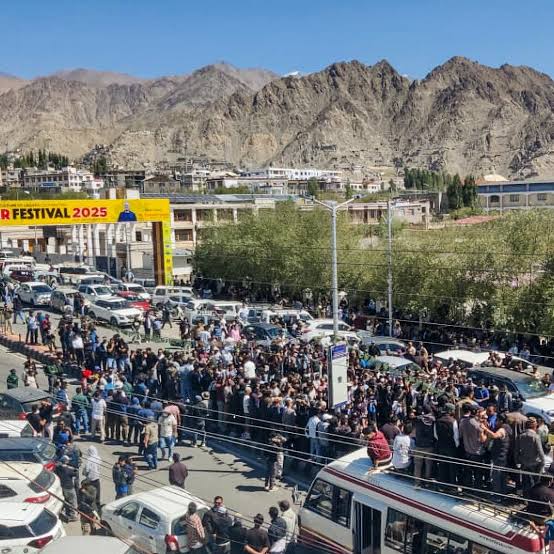
On 24 September 2025 large protests in Leh (Ladakh) demanding statehood and Sixth-Schedule protection turned violent. Security forces used tear gas and baton-charges; police fired during clashes. At least four people were killed and dozens injured. The administration imposed a curfew / restrictions on public assembly in Leh.
Protesters set fire to the local BJP office and torched vehicles, including a police/CRPF van, according to multiple eyewitness and media reports. Local leaders and national politicians have traded blame in the immediate aftermath.
Who is being blamed publicly (official & political narratives)
- Central government / Home Ministry line: Officials and some central spokespeople have alleged that statements by activist Sonam Wangchuk and others helped inflame the crowd. The Ministry/Administration described parts of the demonstration as having been instigated and has indicated action against alleged instigators.
- Ruling party / BJP line: BJP leaders and allied voices accused opposition figures of “fantasising” about unrest and pointed to specific local political activists (including a named Congress councillor in social posts) as active participants in the violent episodes. Several BJP accounts publicly pinned responsibility on opposition organisers.
- Opposition & activists’ response: Sonam Wangchuk and other protest organisers say the movement was peaceful and that the violence was driven by a smaller violent element; they blame a heavy-handed security response and say the original movement was about statehood, land protection, and ecological concerns.
Bottom line: multiple, competing narratives are public — the administration and BJP point to identifiable organisers/instigators, while protest leaders insist the core demand was peaceful and grassroots. Independent verification of the precise chain of events leading to the violence remains limited in the chaotic immediate aftermath.
Demographics of Leh / Ladakh (why “who’s behind it” has a local communal context)
Leh district demographic profile (2011 census & official district pages): Buddhists form the majority in Leh district (roughly ~66% in district-level figures), Muslims and Hindus are present as minorities (district figures vary by urban/rural breakdown — city wards show higher Hindu share in the municipal population). At the broader Ladakh level (Leh + Kargil), the religious balance differs: Kargil is Muslim-majority, while Leh is Buddhist-majority. These differences shape local politics and sensitivities.
Why demographics matter: demands for statehood, land rights, Sixth-Schedule protections and political representation are read through the prism of these communal / district differences. Local leaders on different sides warn that changes in administrative status or land policy could affect community interests — which raises the risk that political mobilisation can acquire communal overtones even when the stated goals are administrative (statehood/ Sixth Schedule).
Reactions at different levels
Local administration (Leh district / UT authorities): Imposed curfew / prohibitory orders and warned of strict action; described the situation as serious and moved to restore order. The Lt Governor and district officials emphasised restoring security and announced investigations.
Central government: Expressed concern, blamed alleged instigators in media statements, and indicated talks and follow-up (a scheduled round of talks was already on the calendar). Home Ministry commentary singled out particular activists for allegedly inciting violence.
Political parties: BJP criticised opposition leaders (social posts and spokespeople accused Congress actors of involvement); opposition leaders, regional politicians and activists blamed central policy and poor handling of longstanding grievances. National politicians from multiple parties reacted — some condemning violence, others calling for faster political resolution.
Civil society / community leaders: Local civil society appealed for calm, called for independent inquiry into deaths, and demanded urgent dialogue on the substantive grievances (statehood, land protections, Sixth-Schedule).
Is there credible evidence of foreign assistance or outside direction to “lead nationwide riots”?
No credible public evidence so far. Major domestic and international media reports, and official statements released in the immediate aftermath, attribute the unrest to local grievances (statehood, Sixth Schedule, land and ecological concerns), local organisers, and the dynamics of a large, fast-moving protest. Journalistic coverage and official statements have focused on local triggers (e.g., hunger strikers, activists, and young protesters) and the government’s response —