NEW DELHI:
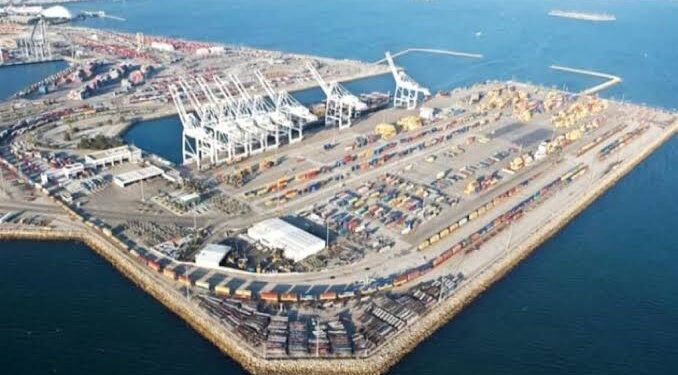
In a significant diplomatic breakthrough, the United States has granted India a six-month exemption from sanctions related to operations at Iran’s Chabahar Port, India’s Ministry of External Affairs (MEA) confirmed on Thursday.
The decision, following weeks of high-level negotiations between New Delhi and Washington, ensures the continuity of one of India’s most strategically important regional connectivity projects—linking South Asia with Central Asia, Russia, and beyond.
Waiver Extension Secured After Intense Talks
According to diplomatic sources, the previous waiver had expired around October 28, following an initial US deadline set for September 29. The fresh extension now allows India’s operations to continue until April 2026, offering vital breathing room for both strategic and humanitarian initiatives connected to the project.
MEA spokesperson Randhir Jaiswal confirmed the development, stating:
“The United States has granted India a six-month exemption from American sanctions on the Chabahar Port. India remains in close engagement with the US to ensure the smooth continuation of this project and to advance bilateral trade discussions.”
This renewal comes after sustained lobbying by New Delhi, highlighting the port’s critical role in regional connectivity, humanitarian assistance to Afghanistan, and in supporting the International North-South Transport Corridor (INSTC)—a 7,200-kilometre trade network linking India, Iran, Russia, and Europe.
Why Chabahar Matters
Located on Iran’s Gulf of Oman coast, just 170 kilometres west of Pakistan’s Chinese-operated Gwadar Port, Chabahar has long been a cornerstone of India’s strategic and economic outreach to the broader region.
1. Gateway to Afghanistan and Central Asia
The port provides India’s only direct maritime access to Afghanistan and Central Asia, bypassing Pakistan’s overland restrictions. Through Chabahar, India has delivered thousands of tonnes of wheat, medicines, and COVID-19 relief supplies to Afghanistan since 2017.
2. Key to INSTC and Eurasian Trade
Chabahar forms a vital node in the International North-South Transport Corridor (INSTC) — a multimodal rail, road, and sea route that connects Mumbai to Moscow via Iran and the Caspian Sea.
Recent integration of the Chabahar-Zahedan rail link with Iran’s national rail network allows Indian goods to reach Afghanistan, Turkmenistan, Uzbekistan, and eventually Russia through the Caspian corridor.
According to trade officials, the INSTC route cuts transit time by up to 40% and shipping costs by nearly 30%, compared to the traditional Suez Canal route.
3. Strategic Counterbalance to China’s Belt and Road
Analysts view Chabahar as India’s strategic counterweight to China’s Gwadar Port in Pakistan, which forms part of Beijing’s Belt and Road Initiative (BRI). While Gwadar gives China access to the Arabian Sea, Chabahar offers India parallel influence along the same maritime frontier, bolstering its presence in the western Indian Ocean.
US Position: Balancing Strategy and Sanctions
Although Washington maintains its broader “maximum pressure” sanctions regime against Iran under the Iran Freedom and Counter-Proliferation Act (IFCA), it has repeatedly acknowledged Chabahar’s role in supporting Afghanistan’s stability and regional trade.
A senior US State Department official, speaking to multiple media outlets on condition of anonymity, said:
“The Chabahar project supports regional connectivity, stability in Afghanistan, and aligns with humanitarian goals. The waiver recognizes these unique circumstances.”
The India Ports Global Limited (IPGL) — which signed a 10-year agreement with Iran earlier this year to operate the Shahid Beheshti terminal — will continue to manage cargo handling, logistics upgrades, and modernization work at the site under the renewed waiver.
Impact on Trade and Connectivity from South Asia to Eurasia
The US waiver’s extension is expected to accelerate several ongoing rail and shipping initiatives that connect India to Eurasia:
- Chabahar–Zahedan Railway: A 628 km rail link connecting the port to Iran’s main rail network at Zahedan, facilitating cargo movement to Afghanistan and the Caspian Sea.
- Zahedan–Sarakhs–Turkmenistan Link: Enables overland trade with Central Asia and Russia, enhancing India’s presence in the region’s logistics chain.
- Integration with INSTC: The port serves as a maritime gateway to the Russia–Iran–India corridor, which experts believe will become a key alternative to the Suez Canal for Eurasian trade.
The combined route is expected to shorten freight transit time from Mumbai to Moscow to about 16 days, compared to nearly 40 via the Suez Canal.
Strategic and Economic Implications
Analysts say the waiver not only strengthens India’s geopolitical leverage but also signals US acknowledgment of India’s independent strategic interests, especially amid growing global competition in Eurasia.
“This waiver is more than just a policy exception—it’s a strategic green light,” said Prof. C. Raja Mohan, senior fellow at the Asia Society Policy Institute. “It shows Washington’s understanding that a functional Chabahar benefits regional stability and counters China’s maritime dominance.”
The development also bolsters India’s ambitions to establish itself as a connectivity bridge between South Asia, the Middle East, and Europe, particularly in light of the stalled India-Middle East-Europe Economic Corridor (IMEC) proposal.
Looking Ahead
India is expected to deepen cooperation with Iran and Central Asian republics under the INSTC framework, even as it navigates the complex web of US sanctions and Middle East geopolitics.
Meanwhile, both New Delhi and Washington have reiterated their shared goal of promoting “regional stability, open trade, and connectivity without coercion.”
For now, the Chabahar waiver marks a major diplomatic and strategic success for India, affirming its role as a responsible stakeholder in regional development — and as a key partner in balancing great-power competition across the Indo-Iranian and Eurasian corridors.
Sources
- Ministry of External Affairs, Government of India – Official Statement (October 2025)
- US Department of State – Press Briefing (October 2025)
- Carnegie India & Observer Research Foundation (ORF) – Strategic Analysis Reports, 2025
- Moscow Times / Iran Daily / Al Jazeera English (Regional Trade Reports)