Kozhikode:
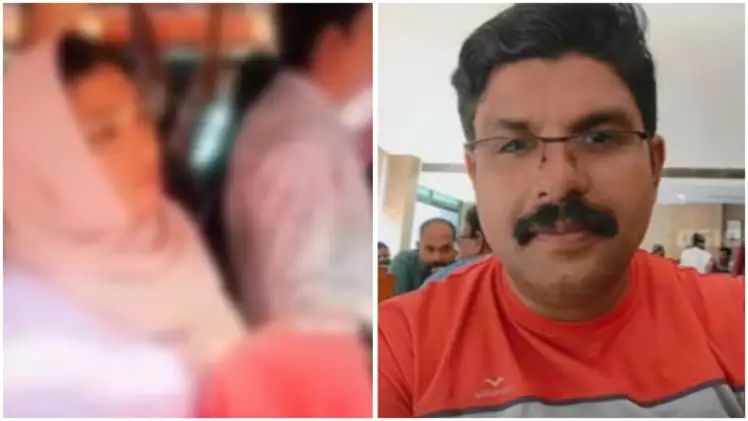
The State Human Rights Commission has intervened in the case where a young man, Deepak, was found dead by suicide following the circulation of a social media video by a woman content creator alleging sexual harassment on a bus. The Commission has directed the North Zone Deputy Inspector General (DIG) to conduct a detailed inquiry and submit a report within one week. Judicial Member of the Commission, K. Baijunath, issued the order, and informed that the case will be considered at the sitting scheduled on February 19 at the Kozhikode Public Works Rest House.
Background of the Incident
The controversy began when a woman shared a video on social media claiming that she was sexually harassed while travelling on a bus. As the video went viral, the identity of the accused youth was allegedly revealed directly or indirectly, leading to widespread public scrutiny and online vilification. According to complaints, this triggered severe mental distress for Deepak. Shortly thereafter, he was found dead by suicide. Kozhikode Medical College Police have registered a case of unnatural death and initiated an investigation.
Observations of the Human Rights Commission
The Commission noted that complaints received indicate that after the video was made public, the young man became extremely anxious, and that the social media exposure may have pushed him towards suicide. The Commission acted on complaints filed by Advocate V. Devadas and Abdul Raheem Pookkath.
Legal Action Sought by Rahul Easwar
Men’s rights activist Rahul Easwar has approached the Chief Minister and the Director General of Police, alleging that the circulation of a fake or misleading video led to Deepak’s death. He has demanded registration of a case under Section 108 of the Bharatiya Nyaya Sanhita (BNS) for abetment to suicide. He also sought full legal and financial assistance for Deepak’s family. Rahul Easwar has argued that the viral video was fabricated, and that urgent legal action is required against the woman based on facts reported by mainstream media. As a men’s commission activist, he has assured all legal support to the bereaved family through “Team Rahul Easwar.”
Deepak’s Personal Background
Relatives state that Deepak had been working as a sales manager at a textile business for seven years and had no prior complaints or criminal cases against him. They said he was under intense psychological stress after the video went viral. Friends have also raised doubts over whether the video was created purely for social media reach and content monetisation.
Meanwhile, the police continue their investigation into the unnatural death.
Legal and Social Debate
Are Women Protection Laws Being Misused?
While laws protecting women against sexual offences are essential and non-negotiable, legal experts caution against the growing trend of branding individuals as criminals in the public domain before due investigation. They stress that while every complaint must be taken seriously, false or unverified allegations should also attract legal consequences to preserve public trust in the justice system.
Social Media Misuse and Bharatiya Nyaya Sanhita
- BNS Section 108 (Abetment to Suicide): If an individual’s actions or statements are found to have instigated suicide, criminal liability may arise.
- Defamation and Privacy Violations: Publishing identifiable details without verification can amount to defamation and breach of privacy.
- Information Technology Laws: Legal provisions exist to act against the spread of false or misleading online content.
Men as Victims: Court Observations
In recent years, the Supreme Court and various High Courts have acknowledged the mental and social trauma faced by men due to false allegations. Courts have repeatedly cautioned against arrests and social condemnation without evidence, observing that misuse of laws erodes faith in the justice system.
Key Supreme Court and High Court Rulings on Social Media Misuse
Supreme Court
Shreya Singhal vs Union of India (2015):
The Court struck down Section 66A of the IT Act, holding that vague terms such as “offensive” cannot be grounds for arrest. Freedom of expression on social media can be curtailed only when it directly incites violence.
Subramanian Swamy vs Union of India (2016):
The Supreme Court upheld criminal defamation, stating that reputation is an integral part of the right to life under Article 21. Viral reach does not justify defamatory content.
Pravin Togadia Case (2018):
The Court warned against “digital lynching” and media trials, stating that declaring someone guilty before investigation threatens democracy.
High Courts
Kerala High Court – Faisal vs State of Kerala (2021):
Held that social media is not a court of law and publishing allegations with identifiable details amounts to a criminal offence.
Kerala High Court – Shaji vs State of Kerala (2022):
Observed that women protection laws should not be turned into weapons and cautioned police against acting solely on social media content.
Delhi High Court – Amit Malhotra Case (2020):
Ruled that delayed social media allegations cannot be blindly accepted and that trending content is not evidence.
Bombay High Court – Kunal Kamra Case (2021):
Held that humour or criticism cannot extend to character assassination, and that influencers carry higher responsibility.
Courts’ Consistent Stand on False Allegations
- False accusations increasingly lead to suicides.
- Arrests should not precede proper investigation.
- Social media allegations do not automatically translate into FIRs.
- Laws are meant for protection, not retaliation.
Conclusion
While social media remains a powerful democratic tool, courts repeatedly warn that its misuse can become a weapon that destroys lives. The Deepak case underscores the grave dangers of online trials and unverified allegations. The DIG-level inquiry ordered by the Human Rights Commission is expected to bring clarity, as authorities reiterate that no individual should be declared guilty or innocent until due legal process is completed.