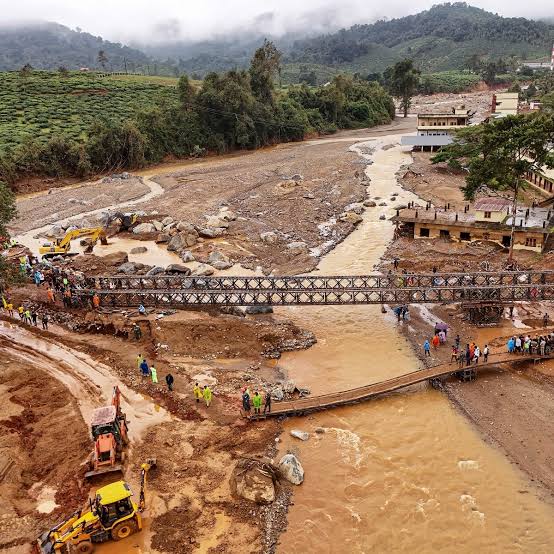
Experts point to the growing environmental exploitation — including deforestation, illegal mining, wetland encroachment, and unscientific urbanization — as major factors destabilizing the once-predictable monsoon.
Kerala, often celebrated for its lush greenery and harmonious balance with nature, is now frequently in the headlines for catastrophic monsoon-related disasters. From the deadly floods of 2018 to the recurring landslides and overflowing rivers every year, monsoon season has transformed from a life-sustaining force into a source of anxiety and devastation.
But is the destruction caused by the monsoon truly a natural disaster — or is it the result of human negligence and ecological mismanagement?
A Climate in Crisis
The monsoon is a vital component of Kerala’s ecosystem and economy, especially for agriculture. However, the monsoon has become increasingly erratic in recent years. Cloudbursts, delayed rains, and sudden intense downpours have disrupted traditional farming cycles and endangered lives.
Climate scientists attribute this unpredictability to global climate change. Rising global temperatures have altered atmospheric dynamics, resulting in more extreme weather patterns, including intense rainfall over shorter periods — a phenomenon now observed in Kerala’s monsoon.
Human-Induced Vulnerabilities
Though climate change plays a significant role, the scale of devastation in Kerala points to deeper, man-made causes:
1. Deforestation and Encroachment
Large-scale deforestation, especially in the Western Ghats, has weakened natural barriers that once controlled water flow and prevented soil erosion.
Encroachments into forest areas and wetlands have reduced the land’s capacity to absorb excess rainwater, leading to flash floods.
2. Unregulated Quarrying
Kerala has over 5,000 quarries, many of them illegal or operating without proper environmental clearances.
Blasting and excavation in hilly terrains have destabilised slopes, making them prone to landslides during heavy rainfall.
3. Urbanisation Without Planning
Rapid and unregulated urban growth has led to the disappearance of ponds, paddy fields, and drainage systems.
Cities like Kochi and Thiruvananthapuram now face urban flooding due to blocked canals and concretised surfaces that prevent natural water percolation.
4. Dam Mismanagement
Poor coordination in dam water release has been blamed for worsening flood conditions.
During the 2018 floods, the sudden opening of multiple dams without adequate warnings led to widespread inundation downstream.
Recurring Tragedies
Kerala has witnessed repeated monsoon tragedies:
2018: The worst flood in a century killed over 480 people and displaced more than a million.
2019: Massive landslides in Wayanad and Malappuram buried entire villages.
2020-2024: Successive years brought similar patterns of damage, yet corrective measures remained insufficient.
2025: Already, early monsoon reports suggest above-average rainfall, with landslides reported in Idukki and Pathanamthitta.
Government and Policy Response
While the Kerala government has initiated projects like “Rebuild Kerala” and set up flood warning systems, critics argue that implementation has been slow and often compromised by political and commercial interests.
Recommendations by expert bodies such as the Gadgil Committee and the Kasturirangan Report, which advocate for eco-sensitive zones and regulated development in the Western Ghats, have faced opposition and have not been fully enforced.
Conclusion
Kerala’s monsoon disasters are no longer just “natural calamities.” They are amplified by decades of environmental neglect, poor governance, and short-sighted development. As the climate crisis deepens, the need for sustainable, eco-centric planning is urgent.
The future of Kerala’s monsoon lies not just in weather predictions, but in political will, public awareness, and a collective commitment to respect and restore nature’s balance.