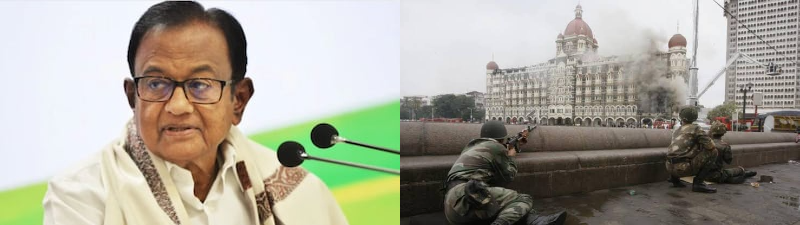
Former Union Home Minister P. Chidambaram has stirred a political storm with his recent revelation that the UPA government decided against a military retaliation after the 2008 Mumbai terror attacks due to intense international pressure and advice from the Ministry of External Affairs.
Chidambaram, who took charge as Home Minister just days after the 26/11 attacks, said that although the idea of retaliation did cross his mind, the decision was heavily influenced by interventions from global powers and India’s diplomatic corps.
He disclosed that then U.S. Secretary of State Condoleezza Rice flew to New Delhi within three days of the attack and personally urged Indian leadership to exercise restraint. “The entire world descended on Delhi, saying, ‘Please don’t react,’” Chidambaram remarked, adding that India’s Foreign Service officials also strongly cautioned against military action.
According to him, senior political leadership, including the Prime Minister and others “who mattered,” were also part of the decision-making process.
The revelation has triggered sharp reactions:
- BJP leaders slammed Chidambaram and the Congress, accusing the UPA of compromising national security under foreign influence. They questioned whether the Congress high command, including Sonia Gandhi, played a role in halting retaliation.
- Critics argue that the disclosure, made nearly 17 years after the attack, amounts to “too little, too late,” and raises questions about India’s missed opportunity to send a strong message against cross-border terrorism.
- References to the 2009 Sharm el-Sheikh joint statement with Pakistan, in which Balochistan was controversially included, have also resurfaced, intensifying criticism of the Congress government’s handling of terror diplomacy.
Security analysts note that while international diplomatic pressure after 26/11 was immense — particularly from the U.S., given its reliance on Pakistan during the “War on Terror” — the decision not to retaliate militarily remains one of the most debated chapters in India’s counter-terrorism history.
Chidambaram’s remarks have reopened old wounds for many survivors and families of the 166 people killed in the Mumbai attacks, and have reignited the political debate over whether India’s response at the time was adequate.