Introduction & Significance of 100 Years
The Rashtriya Swayamsevak Sangh (RSS), founded in 1925, completed a century of existence in 2025. Over these 100 years, it has transformed from a small cultural/militant-inspired organization into one of India’s most influential socio-cultural and political forces. Its centenary is framed not merely as a celebration, but as a moment of introspection, consolidation, and projection of future goals.
The RSS itself presents the centenary as an opportunity to renew commitment to its vision and to present its self-narrative of “service, discipline, national regeneration.”
Below is a detailed, multi-layered account of the RSS: its origins, organizational structure, affiliated bodies (including in politics, education, social service), controversies, and its domestic and international footprint.
Origins & Early Years
Founding
- The RSS was founded on 27 September 1925 (on the Hindu festival of Vijayadashami) in Nagpur by Dr. Keshav Baliram Hedgewar with about 20 volunteers.
- Hedgewar envisioned an organization committed to character building, cultural regeneration, and fostering unity among Hindus, without overt political alignment at inception.
- The early decades were a period of consolidation: establishing local shakhas (weekly branches), ideological training camps (shiksha vargs), and spreading into various parts of India.
Ideological Foundations & Shift from Politics
- RSS ideology is centered on Hindutva — the view of Hindu cultural identity as central to the nation’s spiritual and civilizational core.
- For much of its early life, the RSS avoided formal political activity, preferring to influence society from the grass-roots cultural level.
- Its decision to stay “outside direct politics” in colonial and early postcolonial India was both strategic and ideological: to maintain organizational unity and longevity, and to influence broader society rather than contest elections directly.
Key Leaders & Transition
- After Hedgewar’s death in 1940, M. S. Golwalkar became the second Sarsanghchalak and led the organization in formative decades (1940–1973). Golwalkar’s tenure is marked by stronger articulation of Hindutva, deeper organization, and controversies over pluralism and minorities.
- Under Golwalkar, RSS sought to build its institutional base, various departments, external links, and articulate ideological positions in a newly independent India.
- Later, leaders like Bhaurao Deoras and Rajendra Singh (“Rajju Bhaiya”) further expanded organizational depth. Today, Mohan Bhagwat serves as the Sarsanghchalak, with Dattatreya Hosabale as Sarkaryavah (General Secretary).
Organizational Structure & Core Activities
Units and Cadre Types
- Shakha: The basic unit. In its centenary era, RSS claims over 50,000 daily shakhas across India, where physical training, ideological lectures, cultural education, and community service are conducted.
- Swayamsevaks: Volunteers who attend these shakhas. Some are part-time (grahastha karyakartas), others are full-time, celibate workforces known as pracharaks.
- Approximately 5% of karyakartas are full-time pracharaks who devote their lives to organizational work.
- Hierarchical administrative levels: from local shakhas to district, state, and national bodies. Positions include mukhya shikshak, karyavah, gatanayak, etc.
Key Activities & Fields of Work
RSS frames its work across the following fields:
- Physical & Cultural Education
- Training in discipline, fitness, yoga, martial arts, drills
- Lectures on cultural, historical, and ethical topics
- Ideological orientation sessions
- Social Service & Relief
- Disaster relief (e.g., floods, earthquakes)
- Health camps, blood donation, sanitation drives
- COVID-19 relief and vaccination drives
- Rural development projects
- Village adoption programs
- Education & Schools
- Vidya Bharati is the educational arm: it runs numerous schools across India with a curriculum combining general education with cultural and value education.
- These schools are reputed to serve millions of students.
- RSS also influences other educational spaces, including encouraging “RSS Literature Corners” in university libraries (e.g. in Haryana) as a commemorative gesture.
- Cultural Propagation & Ideology
- Promotion of Hindu culture, Sanskrit, Vedic traditions
- Commemorative events, public lectures, festivals
- Publishing, media outreach
- Organizational Expansion & Coordination
- Annual and periodic camps, training sessions (shiksha vargs, pathshalas)
- Coordination bodies to interface with politics, media, civil society
- Mobilization drives during national moments
- Political Symbiosis (Indirect)
- Though RSS does not contest elections directly, it forms an ideological mentor role to allied political and civic organizations (e.g. BJP).
- It influences candidate selection, political messaging, grassroots mobilization, and cadreship within allied parties.
- RSS often uses mass mobilization, moral authority, and networks to support policy or public initiatives that align with its worldview.
The Sangh Parivar: Affiliates, Offshoots & Political Connections
Over decades, a constellation of organizations and entities, collectively known as the Sangh Parivar (“family of the Sangh”), have grown around RSS. These include political parties, social and cultural wings, legal, professionals’ groups, women’s organizations, and more.
Political & Electoral Entities
- Bharatiya Janata Party (BJP)
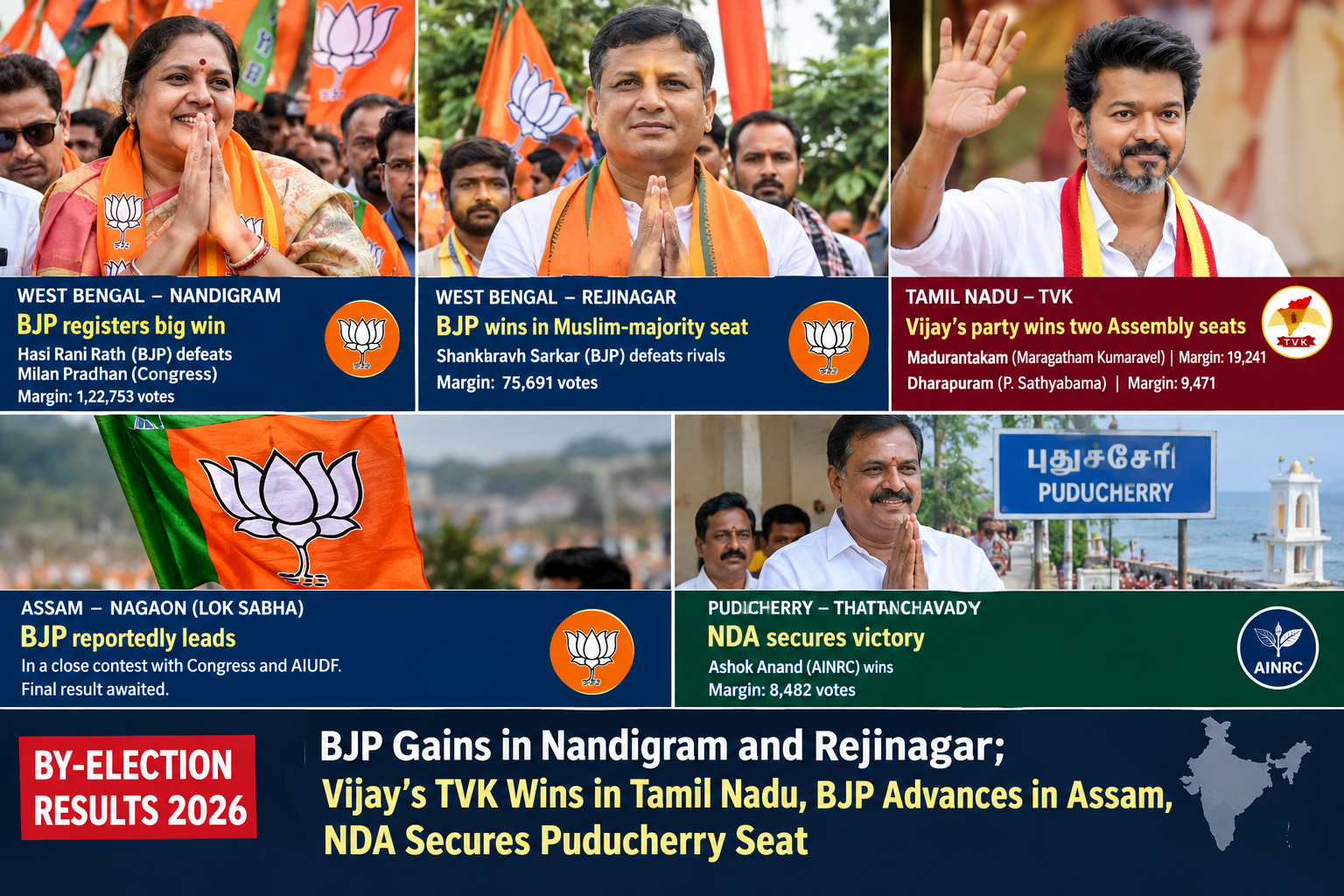
The primary political arm widely acknowledged as the RSS’s political affiliate. BJP contests elections, forms governments, and provides electoral legitimacy. The relationship is such that BJP draws its ideological canon, some cadre support, and electoral discipline from RSS.
Over time, RSS has strengthened its strategic synergy with BJP, aligning political goals with cultural narratives. - Other Political Offshoots
Historically, RSS ideologues contributed to founding or influencing the Bharatiya Jana Sangh, the precursor to BJP.
Some local or regional parties and associations may have informal or ideological links to RSS or Sangh Parivar groups. - Here is an expanded section on RSS influence in Indian elections — “bottom-to-top” mechanisms — showing how the RSS operates at grassroots, booth, assembly, national levels, with examples and evidence. This complements the earlier report.
RSS Influence in Indian Elections: Bottom-to-Top
RSS does not formally contest elections, but its influence in Indian elections is widely acknowledged by analysts. Below are the layers of influence and how RSS operates at each level, with concrete recent examples.
Grassroots / Booth-Level Mobilization
Voter Awareness & Turnout Drives
RSS undertakes large-scale door-to-door / booth level campaigns to ensure voters are aware, registered, and motivated to turn out. For Lok Sabha 2024, for example, RSS conducted:
“2.88 lakh voting‐awareness meetings across booths in Uttar Pradesh, around 50,000 in Mumbai, 44,000 in Delhi prant (RSS administrative sector) and around 9,000 in Nagpur.”
Targeted Outreach
Teams of swayamsevaks are deployed in villages and local units, sometimes block-by-block, to engage with households. They often do this work quietly before formal campaigns begin. Their messaging tends to emphasize nationalism, development schemes, identity issues (Hindutva, etc.), and local grievances.
Issue & Community Focus
RSS forms small teams to engage specific groups: women, Dalits, tribals, youth, etc., often addressing local issues. In Delhi, ahead of assembly polls, RSS formed groups to talk with different target groups (tribals, Dalits, women) separately.
Monitoring & Feedback
RSS volunteers often feed back local sentiment, polling data, issues back to BJP leadership, influencing campaign strategy like which candidate to field, which promises to emphasize. For example, in Haryana, rural dissatisfaction led RSS to reorganize its outreach, candidate visibility, etc.
Local and Vidhan Sabha / State Assembly Level
Influencing Candidate Selection
While RSS claims it does not formally pick candidates, it seems to play an advisory role (or exert pressure) on ticket distribution, particularly to ensure local acceptability, social identity salience, and faith with RSS networks. For example, in the Delhi election campaign, RSS involvement was said to avoid errors in candidate/ticket selection.
Uniting Alliances & Preventing Splits
RSS sometimes intervenes as a bridge for alliances or to prevent vote splits among Hindutva-leaning parties. For example, the RSS played a role in bringing BJP and Shiv Sena together in a pre-poll pact to avoid splitting votes.
Prepare Local Base for BJP/NDA
Through its shakhas and affiliated bodies, RSS helps keep party presence alive in areas even when BJP may not be in power. This means maintaining networks, social trust, influence among local leaders — so that during elections, there is a ready structure for mobilization. (E.g., the Bihar case: RSS volunteers being mobilized in villages ahead of assembly polls to smoothen the pitch for NDA.)
State / National Level Coordination
Strategic Campaigning & Messaging
RSS inputs into campaign themes, messaging at state or national level. For example, in Uttar Pradesh’s upcoming assembly elections (planned), RSS is pushing BJP strategy to emphasize nationalism over caste divides.
Silent or Quiet Campaigns
RSS deploys “silent campaigns” or subtle influence (i.e. small-meetings, family discussions, drawing room meetups) which help set the frame of discourse and often precede visible political campaigning. In the Delhi assembly election, for instance, these were important.
Booth / Polling Station Management
Though RSS does not officially manage booths or act like a political party, its volunteers often engage in booth-level work: ensuring polling station logistics are known to voters, checking voter lists, helping with mobilization.
Examples: Recent Elections
Delhi Assembly Elections (2025)
RSS began outreach even before formal campaign announcements. It held many small meetings, door-to-door engagements, and issue-based discussions to reinforce BJP’s visibility. The coordinate work between BJP and RSS from the ground was considered decisive.
Haryana Assembly Elections
RSS and BJP together dealt with strong anti-incumbency by deploying volunteers intensively, improving candidate selection, and ensuring that local grievances got addressed through swayamsevaks approaching voters in villages. The strategy emphasized symbolic humility (“approached people with folded hands”) to rebuild trust.
Bihar Assembly Elections (forthcoming / recent)
As of September 2025, RSS is reported to be deploying over 20,000 volunteers in Bihar for assembly polls, working at grassroots level to highlight nationalist themes and government schemes, to build favorable sentiment toward NDA.
Nature & Limits of Influence
Formal vs Informal Role
Officially, RSS claims that it does not contest elections, does not formally select candidates or PM candidates.
But also acknowledges that its members are free to support political entities, especially those aligned ideologically.
Accountability & Transparency
Since much of RSS work is informal (not as election campaign in name), measuring exact influence (how many votes shifted, etc.) is difficult. Survey and political scientist analysis mostly provide qualitative evidence.
Variation by Region & Issue
The strength of RSS influence varies by state, local political context, caste & community patterns, urban/rural divide. Also depends on how keenly BJP aligns its policies and promises with RSS ideology and local needs.
Bottom-to-Top Flow: How RSS Influence “Scales Up”
Putting the pieces together shows a flow of influence from the very grassroots to the highest levels of election outcomes:
Shakhas and Swayamsevaks maintain presence at local level — villages, blocks, wards → building trust, cultural identity, issue awareness.
Issue articulation & community engagement — small meetings, identifying local grievances, mobilizing around development + identity themes.
Booth/Booth committees — mobilizing turnout, ensuring vote registration, keeping local networks ready. Volunteer presence is key at this level.
State Strategy Feedback — local reports feed into state-level strategy: which areas need more outreach, where candidate choice is sensitive, which alliance strategy makes sense.
National/All-India Campaigns & Messaging — RSS amplifies themes set at the top (national security, cultural identity, governance) through grassroots execution.
Elections — the cumulative effect of village-level work, turnout drives, identity salience, candidate selection influences the results in assembly and national elections.
Socio-cultural, Religious & Specialized Wings
- Rashtra Sevika Samiti
The women’s counterpart wing to RSS, carrying out similar training, social service, and ideological work among women. - Muslim Rashtriya Manch (MRM)
A Muslim organization inspired by RSS, aiming to foster communal harmony (as per its own statements) and align some Muslim community concerns with a nationalist framework. - Rashtriya Sikh Sangat
An RSS-linked organization among Sikh communities aiming at bridging Sikh-Hindu perspectives. - Akhil Bharatiya Adhivakta Parishad (ABAP)
A lawyers’ association affiliated with the Sangh, engaging legal activism, advocacy, and judicial reform aligned with nationalist interests. - Legal Rights Observatory (LRO)
A legal rights group alleged to have RSS connection, which files public litigation in various states, especially in the northeast, aligned with ideological causes. - Other Sangh Parivar Organizations
The Sangh Parivar consists of many groups (cultural, youth, students, labor, peasants, professionals) that are ideologically aligned, coordinate during national campaigns, and share personnel.
Because of the broad network, the RSS’s influence extends through these channels into many spheres of public life: politics, law, media, education, and community mobilization.
Electoral Presence: MPs, MLAs & Political Influence
While RSS itself does not contest elections, its influence is often seen in the political performance of BJP and related parties:
- BJP, as the political extension of the Hindutva ecosystem, has significant representation in the Lok Sabha, Rajya Sabha, and state assemblies.
- Many BJP MPs and MLAs are ideologically RSS-aligned or have backgrounds in Sangh activity.
- In states where BJP is in power, administrative appointments, policy priorities, and institutional decisions often reflect the cultural and ideological agenda of RSS.
- The synergy is also visible in recruitment of RSS cadres into political roles, party machinery, or governance roles.
However, precise data on how many MPs or MLAs have direct RSS roles changes with election cycles and is not systematically published in RSS sources. Analysts often trace the networks, prior Sangh involvement, or ideological shifts to map associations.
Educational Institutions & “Bottom to Top” Presence
RSS’s educational footprint is substantial. The phrase “bottom to top” suggests grassroots covering all layers—from village schools to higher institutions and cultural influence.
- Vidya Bharati Schools: The flagship educational network. It runs thousands of schools in India, spanning from primary to secondary levels. Millions of students are educated under its umbrella.
- These schools incorporate cultural, moral, and value-based education aligned with RSS ideology.
- RSS also promotes “RSS corners” or literature collections in public and university libraries, and encourages ideological study among students and youth in higher education. (For example, in Haryana’s GJUST, a library set up an “RSS Sahitya Kunj” corner. )
- The RSS influence also extends through debates, cultural programs, student wings or aligned student organizations that operate in colleges and universities.
Thus, the network aims to inculcate worldview from grassroots to advanced education levels, so that the ideology permeates through generations and strata of society.
Domestic Reach & Mobilization
- On its centenary, RSS planned over 1.03 lakh (103,000+) gatherings across India in “bastis and mandals” (local units), cultural events, dialogues, and outreach programs.
- In recent events (e.g. Indore, Madhya Pradesh), over one lakh volunteers joined a route march spanning multiple locations, marking the centenary.
- These mobilization exercises showcase its cadre strength, logistical organization, and ability to coordinate mass events across states.
- The RSS’s daily shakhas are interspersed across rural, semi-urban, and urban areas, including in remote regions.
International Presence & Global Affiliates
While RSS is primarily an India-based organization, it has extended its ideological reach and affiliate presence internationally.
- Scholars note that RSS-inspired groups are present in at least 39 countries worldwide.
- Outside India and neighbouring Nepal, RSS-related activities are strongest in the United States, United Kingdom, and Australia among the English-speaking countries.
- RSS leadership discusses “global Hindutva” and diaspora engagement as part of its outreach.
- In host countries, affiliated or inspired groups often focus on cultural events, religious solidarity, youth engagement, and academic forums.
- However, such international wings are less formalized and more loosely connected compared to the Indian structure.
Achievements, Critiques & Controversies
Achievements & Self-Narrative
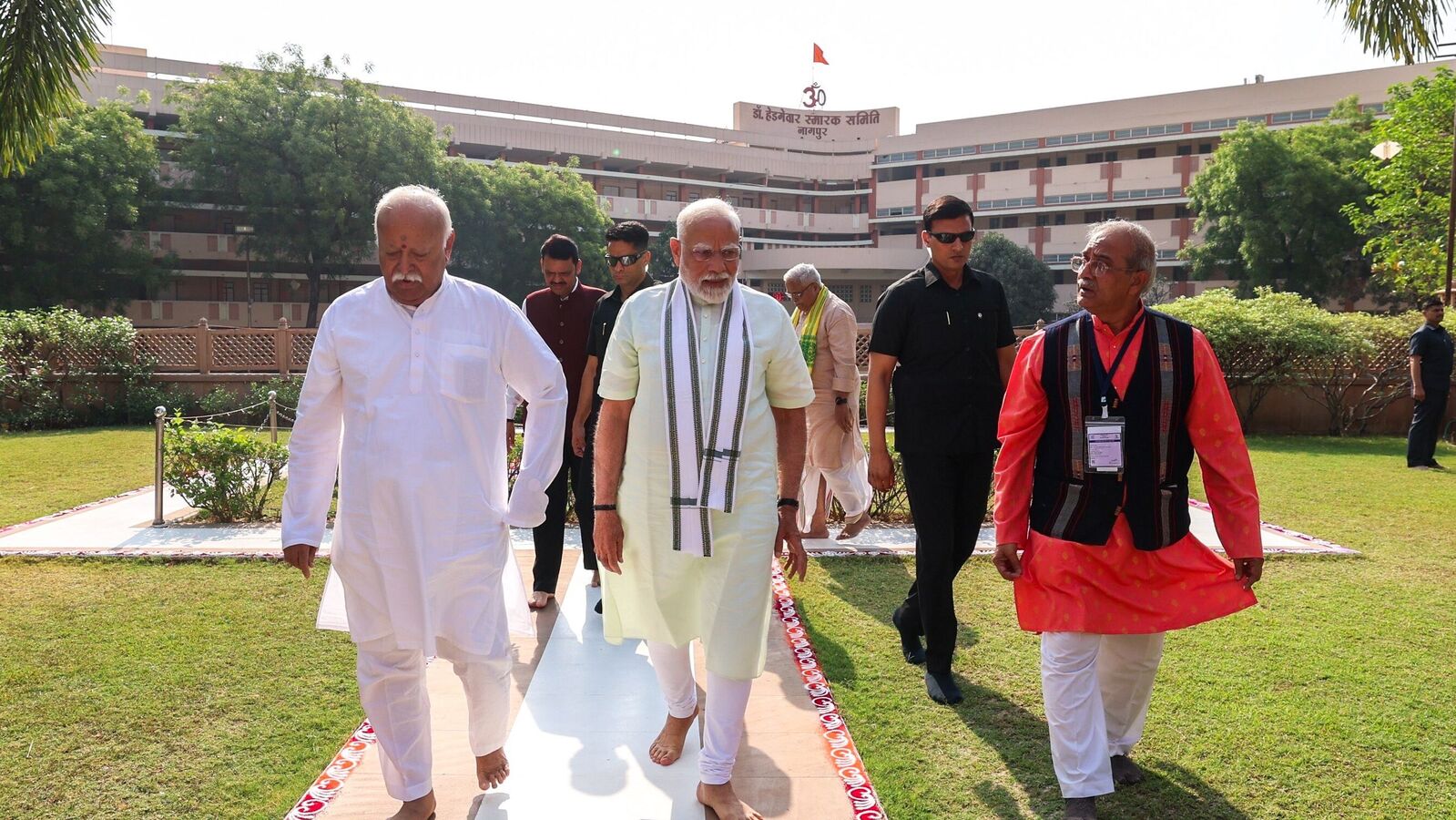
- RSS portrays itself as the world’s largest voluntary organization (or NGO) in terms of membership and reach. For instance, PM Modi referred to RSS as “the world’s biggest NGO” during its centenary celebrations.
- It credits itself with numerous contributions: relief work in crises (partition, wars, natural disasters), social service, fostering cultural confidence, national integration, and bridging civil society with governance.
- Its capacity for disciplined mass mobilization, logistics, and cadre organization is often cited by observers as uniquely powerful.
Critiques & Controversies
- Critics accuse RSS of fostering a majoritarian, exclusivist ideology that marginalizes religious and cultural minorities.
- Its historical stance during colonial India and its limited role in the freedom struggle have been pointed out. Some scholars say RSS avoided open confrontation with the British to maintain survival.
- There have been controversies about statements by leaders, positions on minority rights, caste issues, and gender.
- At times, state governments have banned RSS (e.g. post-independence in certain states) citing concerns of communalism or violence.
- Academic critiques question the balance between its service activities and its ideological agenda, arguing that social service may serve as a legitimizing tool rather than an autonomous mission.
Challenges & Future Trajectories
- Institutional adaptation: As society modernizes, RSS faces the challenge of staying relevant, appealing to youth, technology, and evolving social mores.
- Balancing service and ideology: Maintaining legitimate social service identity while preserving ideological core can strain public perceptions.
- Criticism and scrutiny: Judicial review, media criticism, civil society pushback, and minority activism will remain areas of contest.
- Globalization & Diaspora: How RSS frames its role in the global Hindu diaspora will shape its international credibility and influence.
- Political fluctuations: Reliance on BJP’s electoral fortunes ties part of its influence to political cycles; setbacks in power could challenge its institutional leverage.