New Delhi, October 13, 2025 — In an unprecedented diplomatic development, Afghanistan’s Acting Foreign Minister Amir Khan Muttaqi concluded a series of high-profile engagements in India, signaling a cautious yet strategic thaw between New Delhi and Kabul. The visit, which included interactions with religious scholars, think tank leaders, and journalists — including women — marks a significant recalibration in the Taliban’s approach to India and the wider South Asian region.
After visiting the Darul Uloom Deoband, one of South Asia’s most respected Islamic seminaries, on Saturday, Muttaqi attended a private event organized by the Vivekananda International Foundation (VIF) — a premier Indian think tank known for its ideological and intellectual ties with the Rashtriya Swayamsevak Sangh (RSS), the parent organization of the ruling Bharatiya Janata Party (BJP).
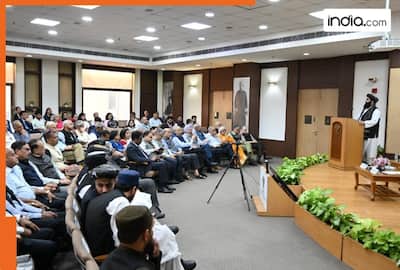
At the VIF headquarters in Chanakyapuri, New Delhi, Muttaqi held a closed-door roundtable discussion with senior Indian diplomats, former intelligence officials, and strategic experts. The conversation reportedly focused on regional security, counterterrorism cooperation, trade opportunities, and the humanitarian situation in Afghanistan.
According to sources close to the event, Muttaqi reiterated the Taliban administration’s intent to “forge a constructive and respectful relationship” with India, emphasizing shared interests in regional stability and economic connectivity.
Symbolism of Deoband and VIF Visits
Muttaqi’s back-to-back visits to Darul Uloom Deoband and Vivekananda International Foundation carry deep symbolic meaning. Deoband is regarded as the intellectual cradle of the Deobandi movement, whose influence shaped much of Afghanistan’s religious education and indirectly inspired the Taliban’s ideological foundation. The visit there was seen as a gesture of respect to the theological roots shared between Afghan and Indian Islamic scholars.
In contrast, the visit to the VIF — an institution aligned with India’s nationalist and strategic policy circles — represents a clear political and diplomatic overture toward New Delhi’s power establishment. Analysts suggest this dual engagement reflects the Taliban’s new diplomatic strategy: blending religious legitimacy with pragmatic outreach to major regional powers.
Meeting with Indian Media and Women Journalists
In a notable gesture of openness, Muttaqi also participated in a press interaction featuring several Indian women journalists, a move that drew both surprise and cautious optimism. While questions surrounding the Taliban’s restrictions on women’s rights in Afghanistan remain pressing, observers noted that the Foreign Minister’s willingness to address female reporters in India reflects an effort to project a softer, more inclusive international image.
Regional and Global Reactions
Muttaqi’s India visit has stirred diplomatic reactions across South Asia.
In Pakistan, which has historically maintained close ties with the Taliban regime, several media outlets and political commentators expressed unease over Kabul’s outreach to New Delhi — long viewed by Islamabad as its strategic rival. Analysts in Islamabad warned that the Taliban’s new engagement with India could “alter the balance of influence in Kabul”, especially as Pakistan grapples with growing border tensions and militant attacks along the Durand Line.
Meanwhile, Iran and China are observing the development closely. Both nations have cultivated working relations with the Taliban government but remain wary of India’s re-entry into Afghan affairs, particularly in infrastructure and intelligence cooperation.
India’s Strategic Calculus
For India, Muttaqi’s visit represents both a diplomatic opportunity and a strategic gamble. New Delhi has avoided formal recognition of the Taliban government but has steadily increased its humanitarian and limited diplomatic engagement since reopening its Kabul embassy in mid-2022.
Foreign policy experts suggest that India’s current approach — engaging through think tanks and Track-II diplomacy rather than official government channels — allows flexibility while maintaining strategic presence in Afghanistan, countering both Pakistan’s and China’s growing footprints.
According to former Indian diplomats, India views Afghanistan as a critical node in regional connectivity projects linking Central Asia, Iran, and the Indian Ocean. Renewed dialogue with the Taliban could eventually help reopen trade routes and safeguard Indian development investments worth billions of dollars.