On October 13, 2025, Hamas began releasing Israeli hostages as part of a ceasefire agreement mediated by the United States. (Reuters)
The first group consisted of 7 Israeli hostages, who were handed over to the Red Cross and then transferred to Israeli custody. (AP News)
Subsequent releases followed, and eventually all 20 living hostages were freed under the terms of the deal. (The Guardian)
Hamas published the names of the 20 hostages to be released, including: Bar Abraham Kupershtein, Evyatar David, Yosef-Chaim Ohana, Segev Kalfon, Avinatan Or, Elkana Bohbot, Maxim Herkin, Nimrod Cohen, Matan Angrest, Matan Zangauker, Eitan Horn, Eitan Abraham Mor, Gali Berman, Ziv Berman, Omri Miran, Alon Ohel, Guy Gilboa-Dalal, Rom Braslavski, Ariel Cunio, David Cunio (Reuters)
In exchange, Israel agreed to release nearly 1,900 Palestinian prisoners, including security detainees, as part of the first phase of the ceasefire deal. (AP News)
The deal also calls for the return of the remains of 28 deceased hostages. (The Guardian)
The hostage release process is being conducted in stages. The first set of 7 hostages was released early in the day, and the others followed in batches. (Axios)
The overall agreement is part of a broader 20-point peace plan chaired by the U.S. aiming to stabilize Gaza, manage future governance, and eventually disarm Hamas. (Reuters)
Quotes & Reactions from Key Players & Media
Israel
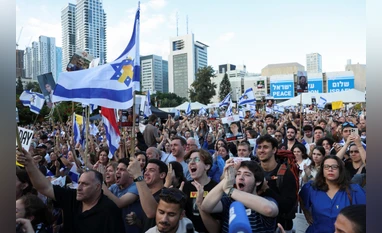
Israeli crowds gathered in Hostage Square (Tel Aviv) to welcome returning captives, with emotional scenes, tears, embraces, and national relief. (The Guardian)
Some freed hostages conveyed messages such as “I have returned — the people of Israel live” via whiteboards as they were evacuated. (Reuters)
Prime Minister Benjamin Netanyahu and his office prepared “welcome kits” including personal items, messages, and equipment. (New York Post)
Public sentiment in Israel includes gratitude, relief, but also lingering criticism over security failures and calls for accountability.(Le Monde fr)
United States / U.S. Role
The agreement is widely seen as a major diplomatic achievement for the Trump administration, which brokered the deal. (Reuters)
Upon arrival in Israel, President Donald Trump was greeted with praise, and he declared that “the war is over” in his speech before the Knesset. (AP News)
U.S. officials emphasized that freeing hostages is a humanitarian imperative, while also acknowledging the complexity ahead — especially regarding Hamas disarmament and Gaza’s governance. AP News )
Arab / Regional Reactions
Arab states and regional mediators (e.g. Egypt, Qatar) played a facilitative role behind the scenes, helping to negotiate ceasefire terms. Although some statements are measured, the release is broadly welcomed as a step toward de-escalation.(AP News )
Media outlets in the Arab world generally describe this as a “turning point” in the Gaza war, promoting the need for reconstruction, humanitarian relief, and a political solution for Gaza. (While I did not find a single high-profile quote, this narrative runs across regional coverage.)
International / Media Views
The Guardian: Describes the return of the last 20 living hostages as a “major step” in ending the two-year conflict.
AP News: Emphasizes that the releases form part of a broader ceasefire and include the release of Palestinian detainees.
Le Monde: Notes that while the hostages’ release is celebrated, the tragedies and losses are deeply imprinted: not all hostages survived, and questions remain about accountability.