C Mahesh
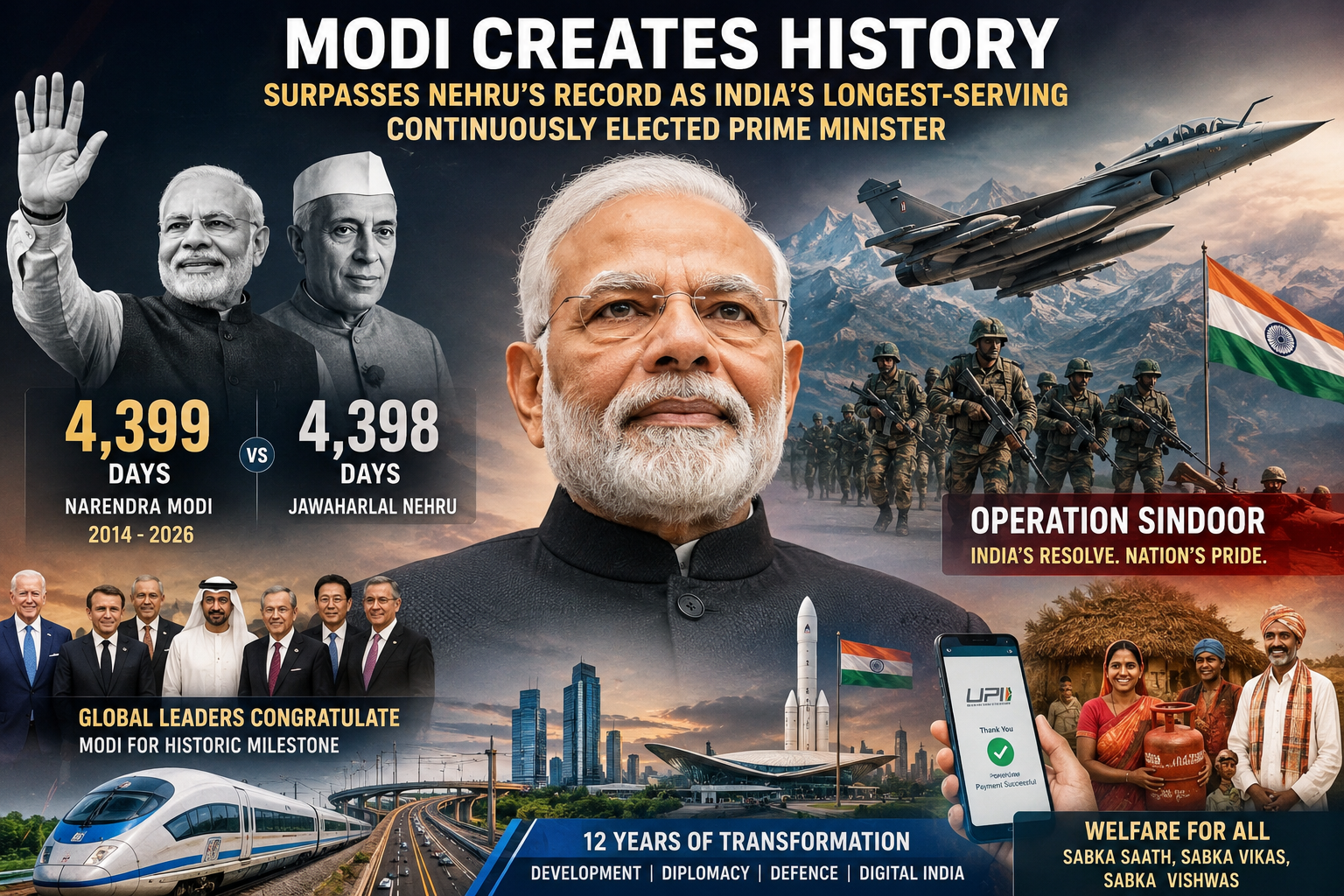
With the historic victory in the 2025 Bihar Assembly Elections, the NDA has achieved a political breakthrough that extends far beyond state-level arithmetic. It signals a major national ‘mood shift’, shaping the direction of Indian politics for the coming years.
Part 1: India’s Changing Political Trend — “Hindutva + Welfare Politics” as the most powerful equation
The Bihar verdict highlights a clear transformation in national political psychology:
1. Hindutva has evolved into a ‘cultural confidence movement’
It is no longer just a religious sentiment.
It now represents:
• civilizational pride
• cultural revival
• national unity
• historical correction
—combined into a single political emotion.
2. Expansion of welfare-nationalism
At the core of the NDA’s strategy lies a three-dimensional formula:
“Hindutva + Welfare Schemes + Strong Governance.”
This combination has become electorally unbeatable.
3. BJP’s rapid expansion among OBC and SC voters
In a heavily OBC-centric state like Bihar,
• Extremely Backward Classes (EBCs)
• Dalit communities
have shifted significantly towards the NDA.
This shift has dealt heavy damage to the Congress and Socialist parties.
Part 2: Constituency-wise Social Voting Patterns (Sample-Based Analytical Assessment)
(Not official ECI data, but derived from on-ground electoral behaviour patterns and survey inferences.)
1. North Bihar (Seemanchal Region)
Traditionally Muslim-dominated.
However:
• OBC–Muslim consolidation weakened
• AIMIM’s influence diminished
• NDA welfare schemes reached even some Muslim pockets
➡ MGB votes splintered, enabling unexpected gains for the NDA.
2. Magadh Region (Patna–Nalanda–Gaya Belt)
The strongest base for the JD(U)–BJP alliance.
• Women voters (especially JEEVIKA groups) leaned heavily towards NDA
• Law and order improvements earned approval
• RJD struggled with its old “jungle-raj” perception
➡ This region delivered large margins for NDA.
3. Bhojpur–Buxar Belt
Dominated by upper castes and strong OBC presence.
• Upper caste voters: unwavering NDA support
• RJD found little space to penetrate
➡ Among BJP’s most secure seat clusters.
4. Mithilanchal (Darbhanga–Madhubani Belt)
Culturally rooted, strongly influenced by Hindu heritage.
• Temple and cultural revival campaigns worked effectively
• The traditional MY (Muslim–Yadav) coalition weakened
➡ NDA performed exceptionally well.
Part 3: Congress’s Collapse — 5 Major Factors
1. A narrow Muslim-centred strategy no longer works
Even with consolidated Muslim support,
Congress failed to attract enough voters from other groups.
2. Reverse-polarisation among Hindu voters
Many Hindus responded with a counter-identity sentiment:
“Does our identity not matter?”
This increased their consolidation behind the BJP.
3. Organisational machinery has collapsed
Congress has lost its grassroots network in most northern states.
4. Lack of impactful leadership
No alternative, assertive leadership has emerged within the party.
5. Narrative loss among youth
Unemployment and poverty issues were overshadowed by
NDA’s powerful welfare delivery system.
Part 4: Decline of Socialist Forces — The Future of RJD, SP, JDU
1. Lohia–JP socialism is now an ‘abstract concept’
It carries little appeal among younger voters.
2. Traditional caste-coalition politics is weakening
OBC voters now prioritise:
1. development,
2. security,
3. welfare benefits
over identity-based social mobilization.
3. Dynastic fatigue
Most socialist parties are trapped in dynastic leadership cycles.
4. BJP’s OBC-outreach has been exceptionally effective
RSS–BJP networks have reached deep, booth-level systems.
Part 5: Future Political Forecast — BJP, RJD, Congress (2025–2030)
BJP
• Will further strengthen its OBC–SC base
• Expected to dominate nearly 75% of North India
• Welfare nationalism remains the core electoral weapon
• Fragmented opposition benefits BJP directly
➡ No significant weakening of NDA leadership until at least 2030.
RJD (Tejashwi Yadav)
• Needs a complete narrative reset targeting youth
• MY coalition is no longer sufficient
• Must reach out to non-Yadav OBC sub-castes
➡ Rebuilding is possible, but requires deep restructuring.
Congress
• Non-BJP politics will no longer revolve around Congress
• North India breakdown seems irreversible
• Only partial relevance in South and Eastern states
➡ Congress will shrink further unless a radical organisational revolution occurs.
Part 6: The New Face of Indian Politics
Emotional nationalism (temples, culture, heritage)
Welfare-state governance
A strong-leader preference
A fragmented, ideologically confused opposition
Caste politics merging with development-oriented politics
Together, these form the spine of Indian politics for the next 5–10 years.