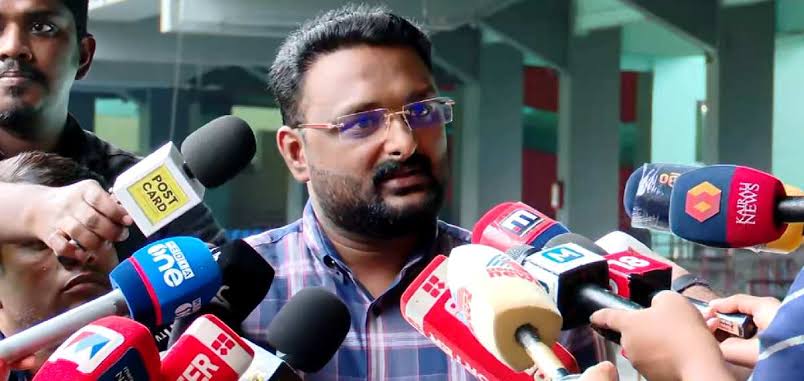
An Interview with Junaid Kaippani, Outgoing EX- Chairman of the Wayanad District Panchayat Welfare Standing Committee
WAYANAD:
After completing his five-year term as Chairman of the Welfare Standing Committee of the Wayanad District Panchayat, Junaid Kaippani says he steps down with a deep sense of fulfilment, shaped by grassroots engagement, ethical public service, and a people-centric vision of development.
Looking Back at Five Years
Reflecting on his tenure (2020–2025), Junaid said he leaves office “with complete satisfaction,” having been able to lead and contribute meaningfully to welfare initiatives in one of Kerala’s most socially and ecologically sensitive districts.
“I am stepping down with the full satisfaction of having been able to lead impactful work in the welfare sector,” he said.
Early Influences
Junaid credited his parents as his strongest moral influence.
“From childhood, my parents taught me never to touch or take anything that does not belong to me — even if it is just a fallen mango. That lesson helped me say a firm ‘no’ to unethical opportunities throughout my public life.”
The 2020 Election Challenge
He recalled that contesting the Vellamunda Division in the 2020 local body elections was a major challenge, as it had been a UDF stronghold for over three decades.
“The COVID-19 pandemic made conventional campaigning impossible. Yet the people’s trust and expectations helped me overcome all odds and win.”
Becoming Welfare Standing Committee Chairman
Junaid described his appointment as Chairman as unexpected, following a rare 8–8 tie between political fronts in the District Panchayat.
“The political arithmetic changed after my victory, and I was entrusted with the chairmanship through the subsequent election process.”
A Transformative Experience
Serving in a district with a large Adivasi population, agrarian livelihoods, and environmental challenges reshaped his understanding of development.
“It was an eye-opening experience to plan welfare and development from the perspective of one of India’s most marginalised regions.”
Biggest Achievement
He said the greatest achievement of his tenure was reframing mainstream development narratives through Wayanad’s lived realities.
“Unlearning entrenched ideas was more challenging than learning new ones. I was a student throughout these five years.”
Key Focus Areas
Among major initiatives he highlighted were:
- Quality enhancement in schools through infrastructure and skill-development projects
- Entrepreneurship promotion among Kudumbashree members
- Gramadaram — recognition programmes for workers across sectors
- Strengthening rural libraries using District Panchayat funds
“These initiatives linked welfare with the district’s overall development trajectory.”
Politics Beyond Stereotypes
Rejecting cynical portrayals of politics, Junaid said most public representatives enter politics with genuine intent.
“Politics is deeply connected to people’s lives and ecological survival. Corruption exists, but reform and integrity must move forward.”
Social Media and Public Communication
Responding to allegations of self-promotion, he said communication is a democratic duty.
“Citizens have the right to know about development initiatives. Communicating that is a responsibility, not self-marketing.”
Participatory Inaugurations
Junaid defended the practice of having ordinary citizens inaugurate projects.
“When tribal friends inaugurate roads or students open school facilities, it is recognition and empowerment — not political gimmickry.”
Learning and Capacity Building
He completed a Certificate Course in Decentralisation and Local Governance in 2022, conducted by KILA and the Digital University under Sree Narayana Guru Open University.
“The academic grounding helped me contribute more effectively to local governance discussions.”
‘Panchayat Talk’ and Global Attention
His YouTube series Panchayat Talk, which received mentions in foreign online publications, focused on decentralisation, planning, and local governance in Kerala.
“The aim was to present complex governance ideas in simple language, rooted in Kerala’s experience.”
Environmental Responsibility
He played an active role in environmental campaigns such as:
- Stand With Nature Panchayat Sabha campaign
- Carbon Neutral District Movement
- Biodiversity fairs under the District Panchayat plan
Respect for the Opposition
Junaid emphasised democratic values and opposition respect as essential for governance.
“Development is possible only when cooperation, mutual respect, and democratic ethics guide public life.”
Corruption-Free Politics
On corruption, he offered a sharp critique:
“Corruption is a by-product of unchecked capital and privatisation of public wealth. Fighting it must be central to opposition politics.”
On Future Political Ambitions
Asked about becoming an MLA, Junaid replied:
“Politics should not be about power chairs but about easing people’s pain. Any opportunity to serve will be used responsibly if entrusted by the party and people.”
Writing and Educational Work
He has authored seven books, including Decentralised Planning: Thought and Practice, which won the Rabindranath Tagore Award from the Red Well Foundation, Kolkata. He also founded Letz Life, a speech and soft-skills training initiative established in 2014.
‘Gramadaram’ — A Philosophy of Respect
Explaining the Gramadaram programme, he said:
“Praise uplifts people; humiliation destroys them from within. The idea was simple — respect everyone, acknowledge their dignity.”
Final Message
Concluding the interview, Junaid said:
“Honest, corruption-free public service has always been my goal. Serving the people is the highest virtue. The love and trust of the people will always remain my greatest motivation.”
He thanked the people of Vellamunda Division and Wayanad district for five unforgettable years of engagement and service, and extended best wishes to the newly elected representatives taking oath.