Hargeisa / Jerusalem —
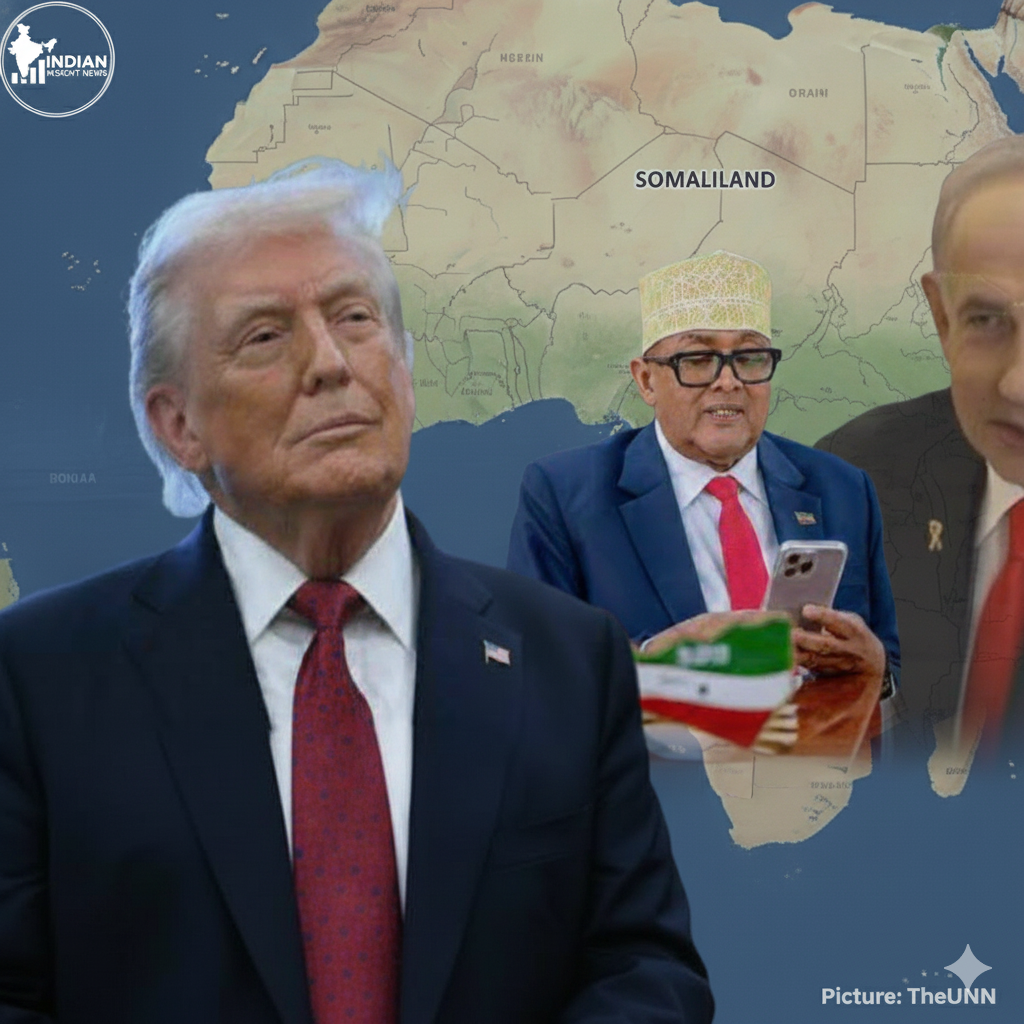
A renewed diplomatic debate has emerged over Somaliland, the self-declared state in the Horn of Africa, amid reports of deepening engagement between Somaliland and Israel. While supporters portray the move as part of Somaliland’s long quest for international recognition, the idea of treating Somaliland as a “new country” aligned with Israel has triggered strong opposition not only from Arab nations but also from former U.S. President Donald Trump, according to diplomatic and policy circles.
What Is Somaliland? A Brief History
Somaliland is located in the northwestern part of Somalia, bordering Djibouti, Ethiopia, and the Gulf of Aden. Its history is distinct from the rest of Somalia:
- 1884–1960: Somaliland was a British protectorate, known as British Somaliland.
- June 26, 1960: It gained independence as the State of Somaliland.
- July 1, 1960: Five days later, it voluntarily united with Italian Somaliland to form the Somali Republic.
- 1991: Following the collapse of Somalia’s central government and years of civil war, Somaliland unilaterally declared independence, citing genocide and marginalization under the Siad Barre regime.
Since 1991, Somaliland has functioned as a de facto state with its own:
- Government and constitution
- Currency (Somaliland shilling)
- Security forces
- Regular elections widely regarded as more stable than those in Somalia
However, no UN member state has formally recognized Somaliland as a sovereign country.
Why Israel Matters
Israel has reportedly explored quiet diplomatic and strategic contacts with Somaliland over the years. The interest is largely geopolitical:
- Strategic Location: Somaliland’s long coastline along the Gulf of Aden, near the Bab el-Mandeb strait, is one of the world’s most critical maritime chokepoints for global trade and energy supplies.
- Regional Security: Israel views the Horn of Africa as increasingly important due to Iranian influence, Red Sea security, and Houthi activity.
- Diplomatic Leverage: Recognition of Somaliland by Israel would challenge long-standing regional alignments and potentially encourage other non-Arab or Western states to reconsider Somaliland’s status.
Supporters of the idea argue that Somaliland meets the Montevideo Convention criteria for statehood—a defined territory, permanent population, functioning government, and capacity to enter relations with other states.
Arab World’s Strong Opposition
Arab nations, particularly those aligned with Somalia and the Arab League, have firmly opposed any move toward recognizing Somaliland:
- The Arab League recognizes Somaliland as an integral part of Somalia.
- Several Gulf states fear recognition would encourage separatist movements elsewhere in the Arab world.
- Many Arab governments also view any Israel-backed recognition as part of a broader strategy to reshape Red Sea and Horn of Africa politics, undermining Arab influence.
Somalia’s federal government in Mogadishu has repeatedly warned that recognition of Somaliland would be a violation of Somalia’s sovereignty and international law.
Why Donald Trump Opposes the Move
Despite being closely associated with pro-Israel policies, former U.S. President Donald Trump is reportedly skeptical of recognizing Somaliland, for several reasons:
- Precedent Concerns: Trump-era policymakers worried that recognizing breakaway regions could encourage separatism globally, complicating U.S. foreign policy.
- Somalia Policy: The U.S. has long backed Somalia’s territorial integrity, particularly due to counterterrorism operations against Al-Shabaab.
- African Union Position: The African Union strongly opposes unilateral secession, and Trump advisers feared alienating African partners.
- Domestic Politics: Recognition of a new state without broad international consensus could have triggered backlash even within U.S. conservative circles.
As a result, despite lobbying by Somaliland representatives during Trump’s presidency, Washington stopped short of formal recognition.
Is Somaliland Becoming a ‘New Country’?
In practical terms, Somaliland already functions as a state. However, international legitimacy remains elusive. Any unilateral recognition by Israel—if it happens—would be symbolically powerful but diplomatically explosive, potentially isolating Somaliland further rather than integrating it into the global system.
Analysts note that without backing from major powers such as the United States, European Union, African Union, or the United Nations, Somaliland’s status is unlikely to change in the near future.
The Bigger Picture
The Somaliland–Israel discussion highlights a broader realignment in Red Sea geopolitics, where regional conflicts, maritime security, and great-power competition intersect. For now, Somaliland remains a state in practice but not in law, caught between its quest for recognition and the geopolitical calculations of global and regional powers.
Whether Somaliland will ever be formally accepted as the world’s newest country remains an open—and highly contested—question.