New Delhi:
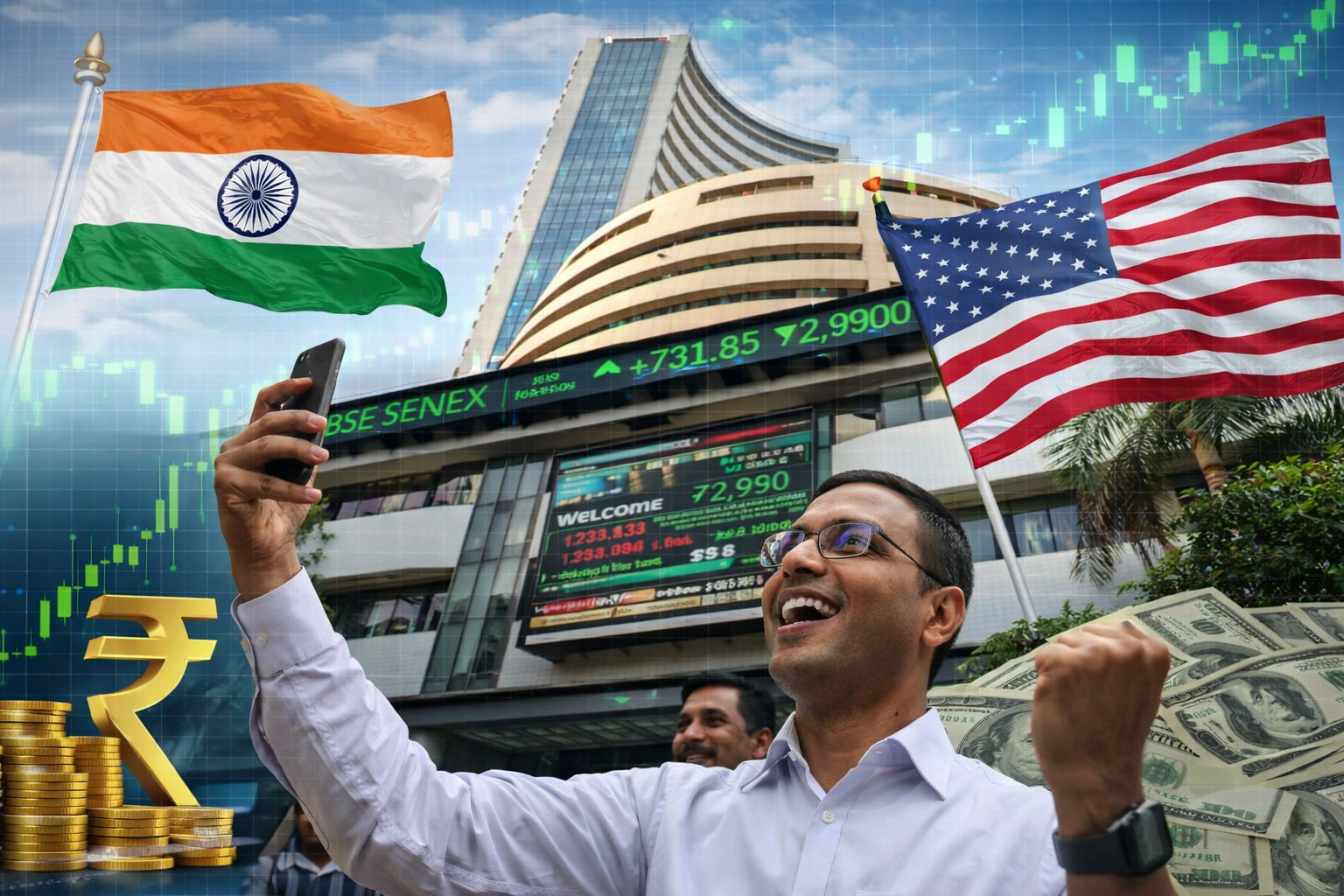
Indian financial markets rallied sharply after the United States decided to reduce tariffs on Indian exports, a move widely seen as a major breakthrough in bilateral trade relations. Investors responded with strong buying across sectors, pushing benchmark indices higher and strengthening the Indian rupee against the U.S. dollar.
According to market analysts, the tariff cut improves India’s global trade competitiveness and could open new export opportunities for key industries such as manufacturing, pharmaceuticals, and technology.
Sensex and Equity Markets React
The benchmark BSE Sensex jumped more than 700 points, while the Nifty 50 crossed the 24,600 mark, reflecting renewed investor confidence following the announcement. Banking, IT, and export-oriented stocks led the rally as traders priced in stronger earnings potential from improved access to U.S. markets.
Market experts noted that easing trade tensions between two of the world’s largest economies reduces uncertainty for global investors and encourages capital inflows into emerging markets like India.
“Lower tariffs significantly improve India’s relative trade position,” forex participants said, highlighting expectations of increased investment and export activity.
Rupee Strengthens Sharply
The Indian rupee recorded a notable gain after the announcement, supported by stronger foreign investment sentiment and optimism over future trade flows. Analysts believe the currency could remain stable if export growth accelerates and capital inflows continue.
Currency traders added that improved trade terms often boost demand for the local currency because exporters bring more dollars into the economy.
Why the Deal Matters
Economists view the agreement as more than a short-term market trigger. Key expected benefits include:
- Higher exports: Reduced tariffs make Indian goods more competitive in the U.S.
- Investment boost: Greater policy clarity attracts foreign institutional investors.
- Economic momentum: Stronger trade ties may support India’s long-term growth outlook.
However, some analysts caution that sustained gains will depend on how quickly businesses capitalize on the new trade environment and whether global economic conditions remain supportive.
Bigger Picture
The development signals a strategic deepening of India–U.S. economic ties at a time of shifting global supply chains. If momentum continues, experts believe the deal could help India expand its role in international trade while strengthening financial market stability.
For now, Dalal Street’s message is clear: investors see the agreement as a positive step toward stronger growth and global integration.