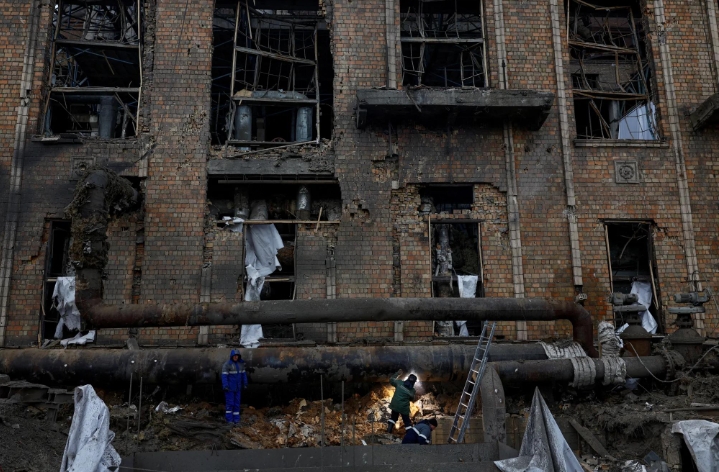
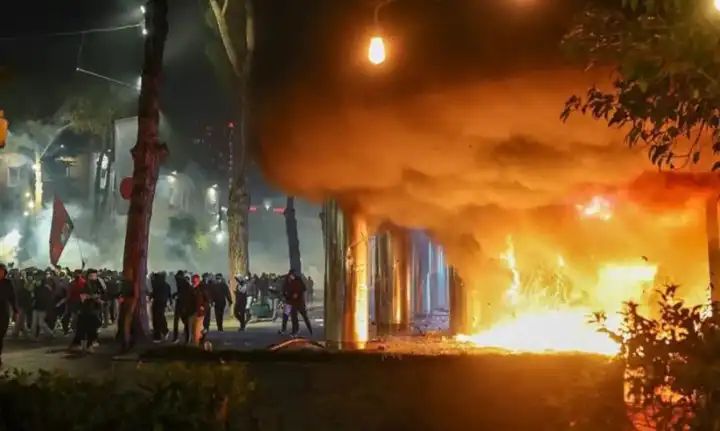
Tehran:June 22 – In a dramatic escalation of geopolitical tensions in the Middle East, the United States has reportedly carried out precision airstrikes on three major Iranian nuclear facilities – Fordow, Natanz, and Isfahan. The move is being interpreted by analysts as a direct response to what Washington perceives as Tehran’s growing assertiveness and disregard for international norms.
Targeted Facilities:
Fordow Fuel Enrichment Plant – Located deep within a mountain near Qom, Fordow has long been at the center of Western concerns due to its fortified structure and uranium enrichment capabilities.
Natanz Nuclear Facility – One of Iran’s most important enrichment sites, Natanz has been targeted in the past by cyberattacks and sabotage operations attributed to Israel and the West.
Isfahan Nuclear Technology Center – Known for its uranium conversion activities, the facility in Isfahan is considered crucial to Iran’s nuclear fuel cycle.
International media, including Reuters, BBC, and Al Jazeera, report that the attacks came after weeks of mounting rhetoric and intelligence assessments suggesting that Iran was accelerating aspects of its nuclear program. The Biden administration, while yet to officially confirm the strikes, is believed to have greenlit the operations in coordination with strategic allies.
The White House, in an off-record statement to The New York Times, emphasized that the objective was to deliver a “strategic warning” to Tehran rather than to initiate an extended military conflict.
Global Reaction:
Iran has condemned the strikes as an “unprovoked act of war.” The Iranian Revolutionary Guard (IRGC) has vowed retaliation, calling the U.S. attack a violation of its sovereignty and a threat to regional peace.
Russia and China have urged immediate de-escalation, with Moscow warning against “unilateral use of force that destabilizes global security.”
Israel has reportedly increased its regional military alert, anticipating potential Iranian responses involving its proxies in Lebanon and Syria.
Expert Analysis:
Dr. Michael Rubin, a senior fellow at the American Enterprise Institute, told CNN, “This operation seems to be a calculated blow aimed at checking Iran’s nuclear ambitions without triggering a full-scale war.”
On the other hand, Middle East analyst Tara Kangarloo stated on Al Jazeera, “This could backfire. The Iranian regime thrives on external threats to consolidate internal unity. This might lead to more regional proxy flare-ups.”
The airstrikes raise serious questions about the future of the Joint Comprehensive Plan of Action (JCPOA), which has already been on life support following the U.S. withdrawal in 2018. International Atomic Energy Agency (IAEA) officials have expressed concern that the targeting of nuclear facilities could lead to environmental hazards and complicate inspections.
While the full extent of the damage remains unconfirmed, the strikes mark a significant turning point in US-Iran relations. As the world watches closely, calls for diplomacy are growing louder — but so are the drums of war.